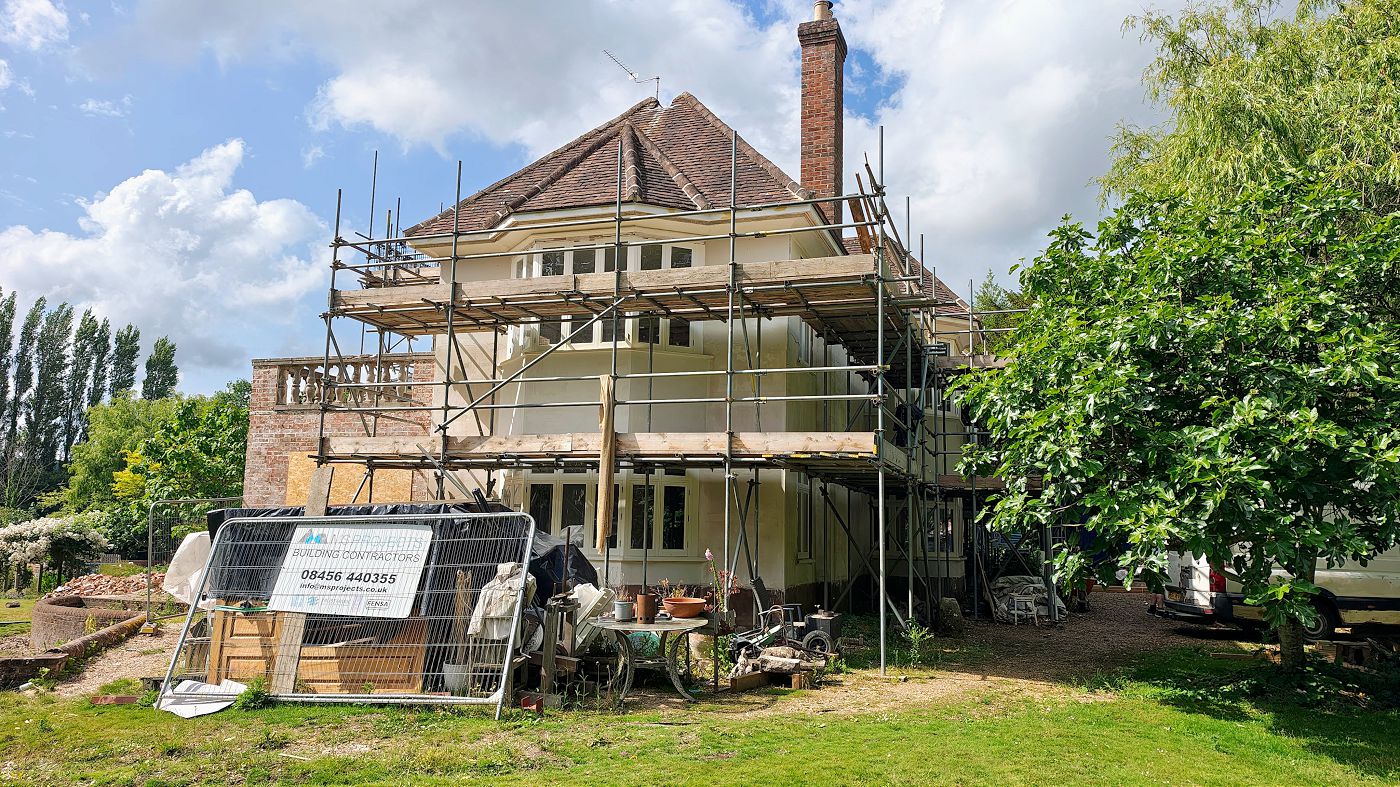
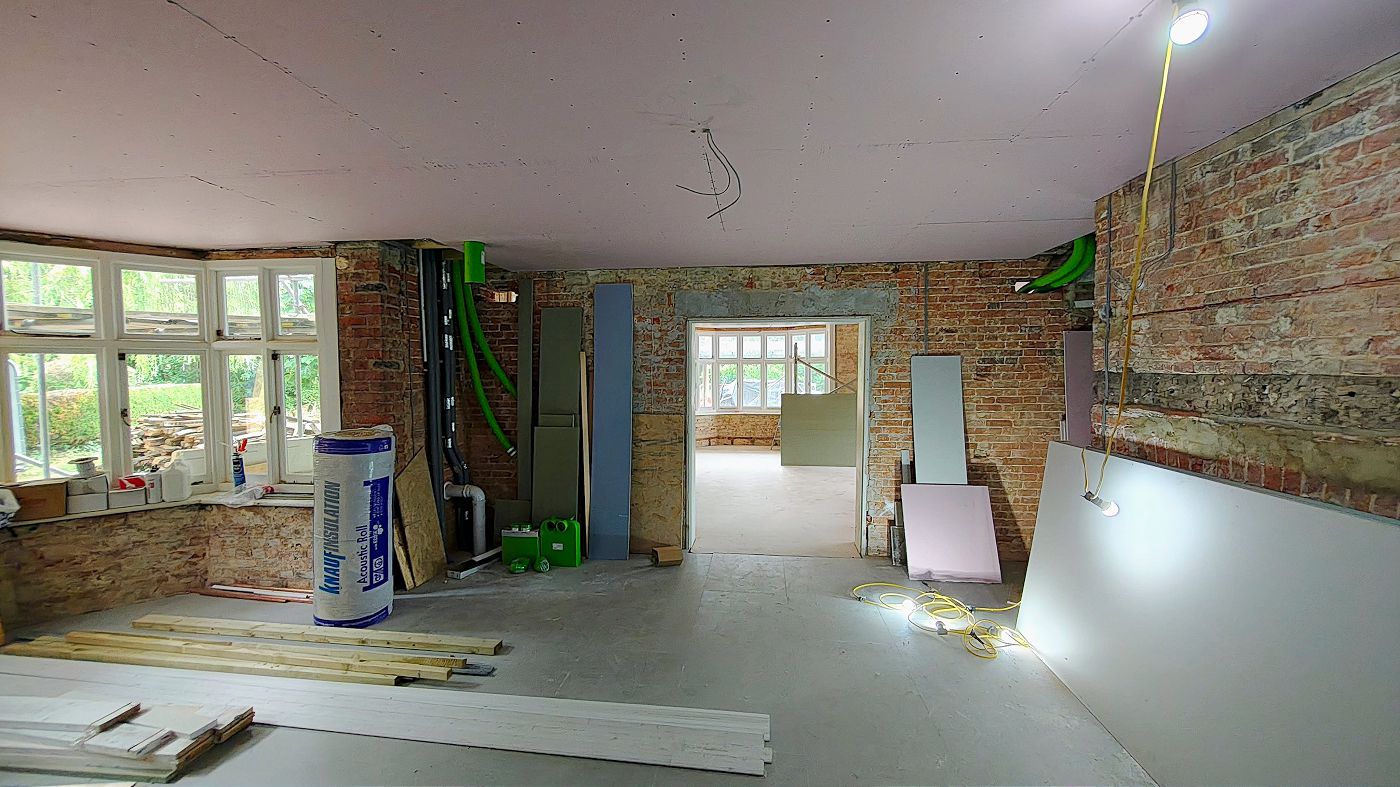
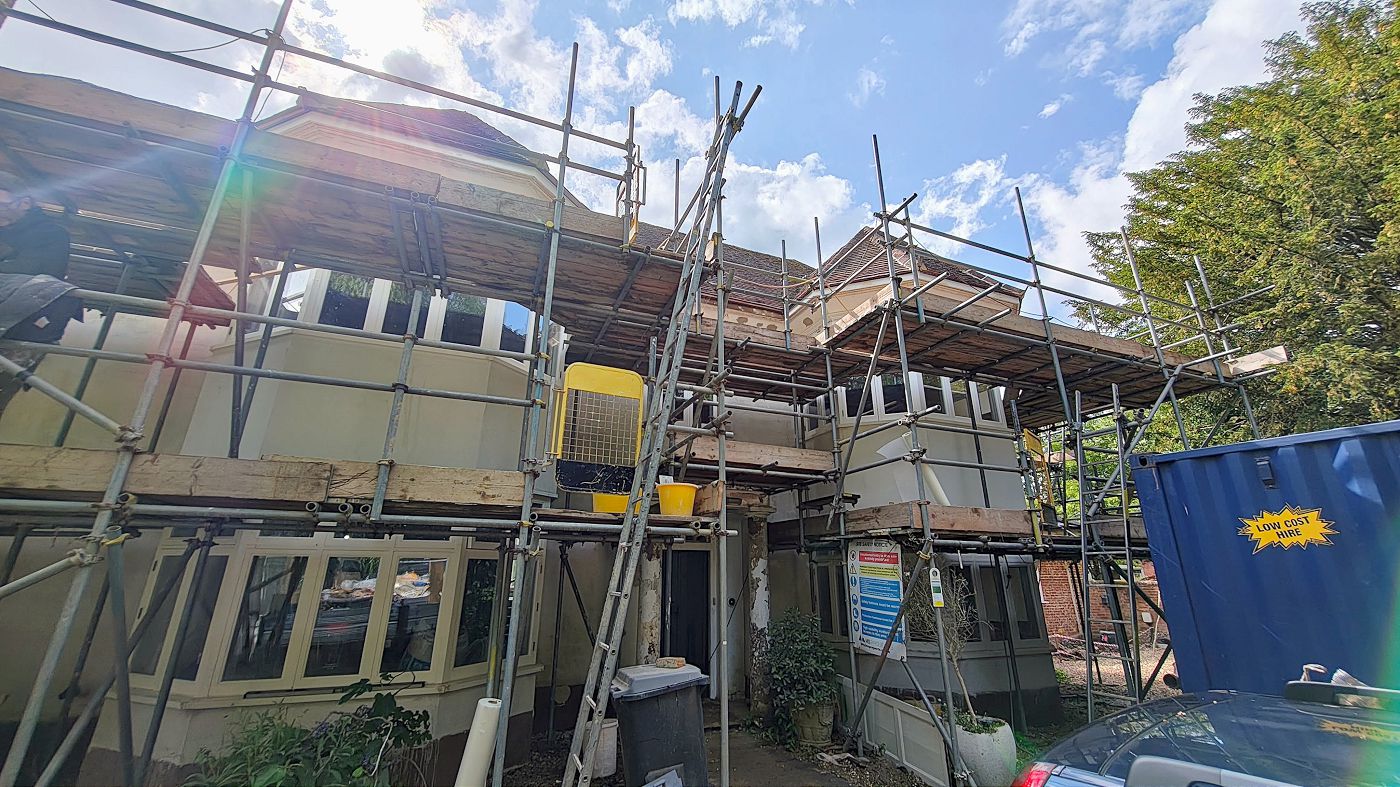
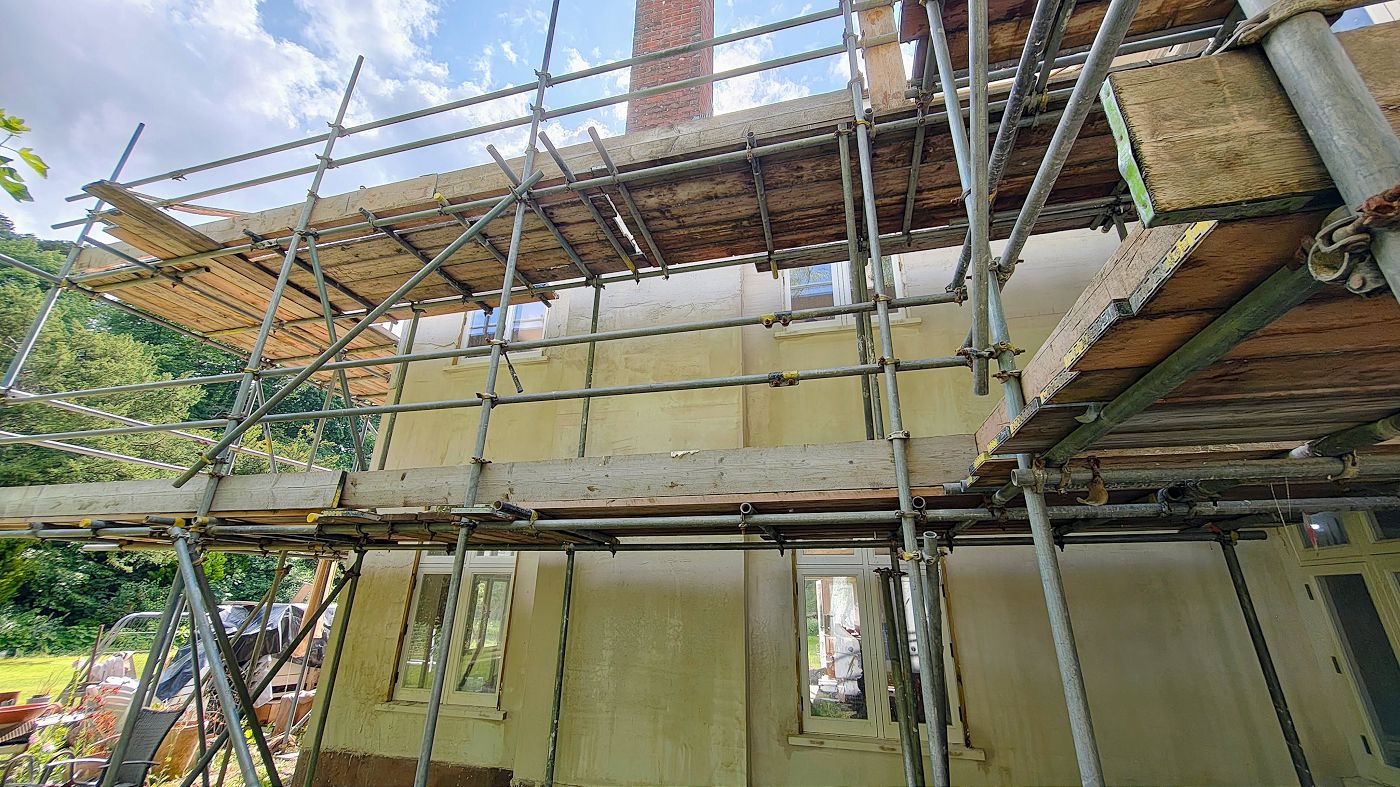
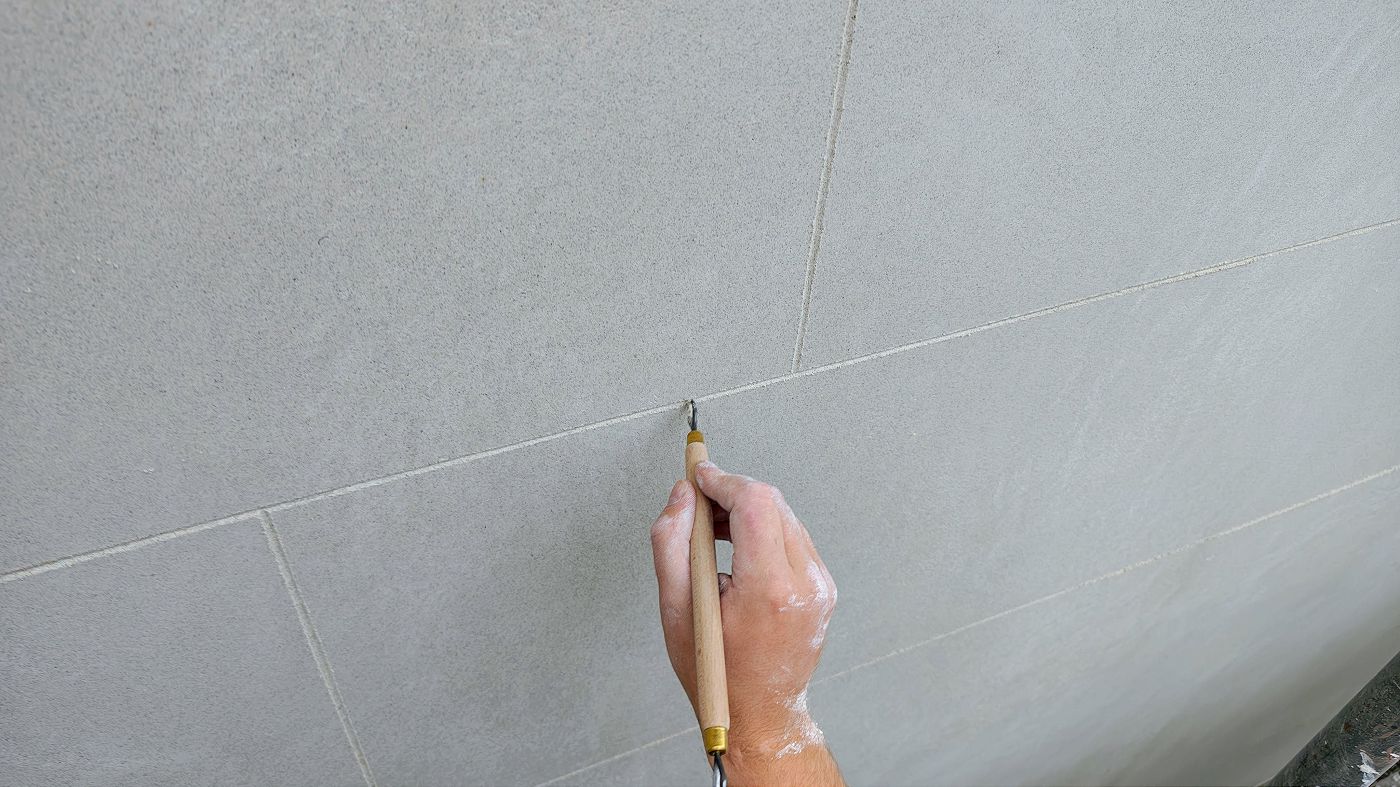
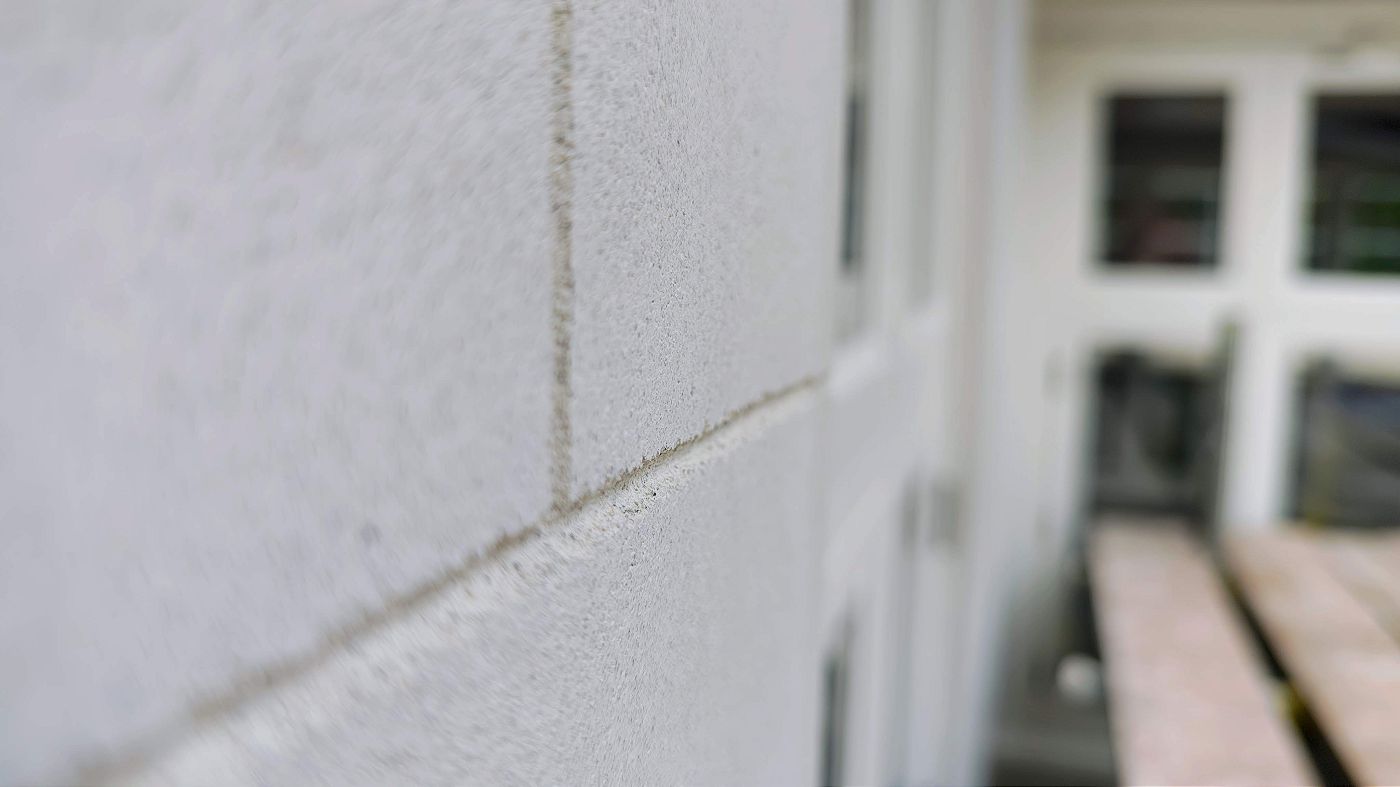
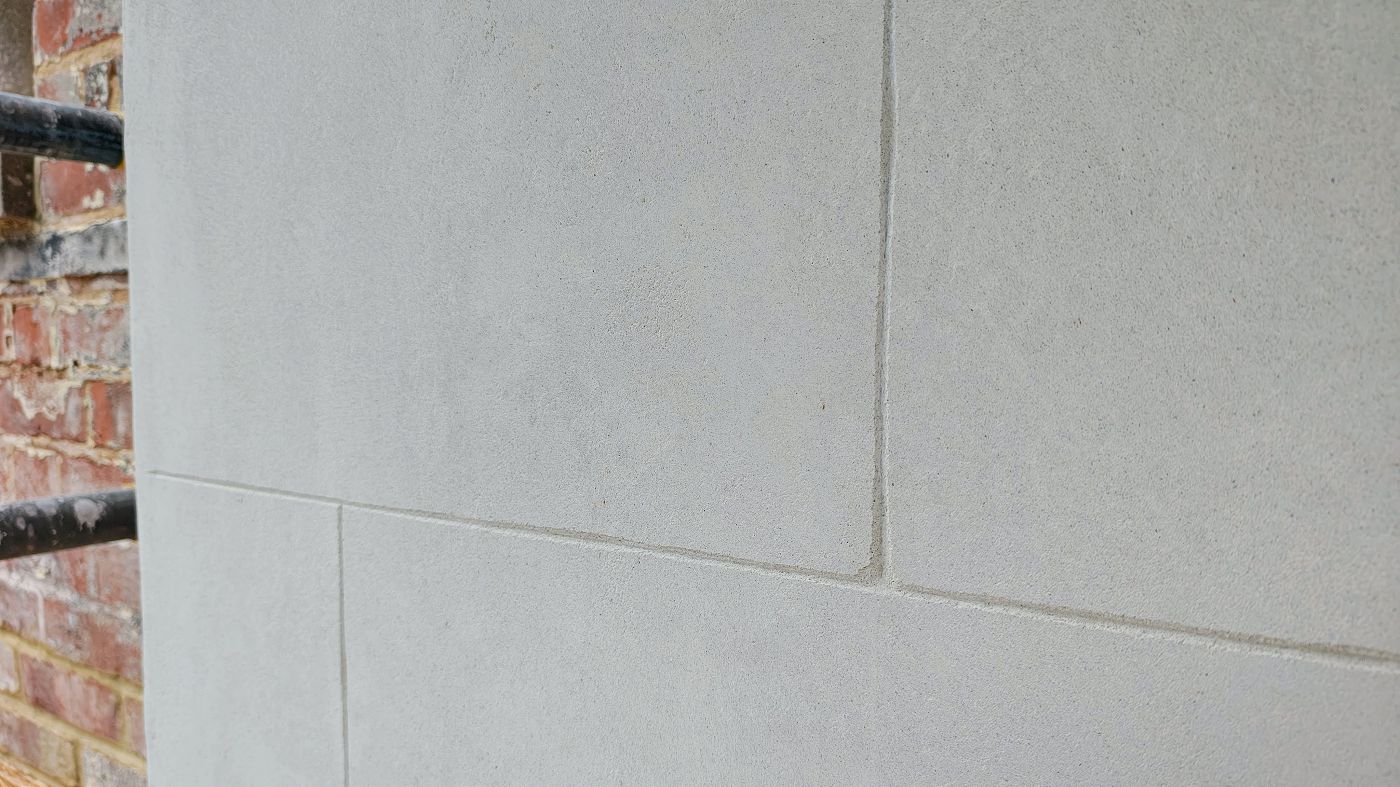
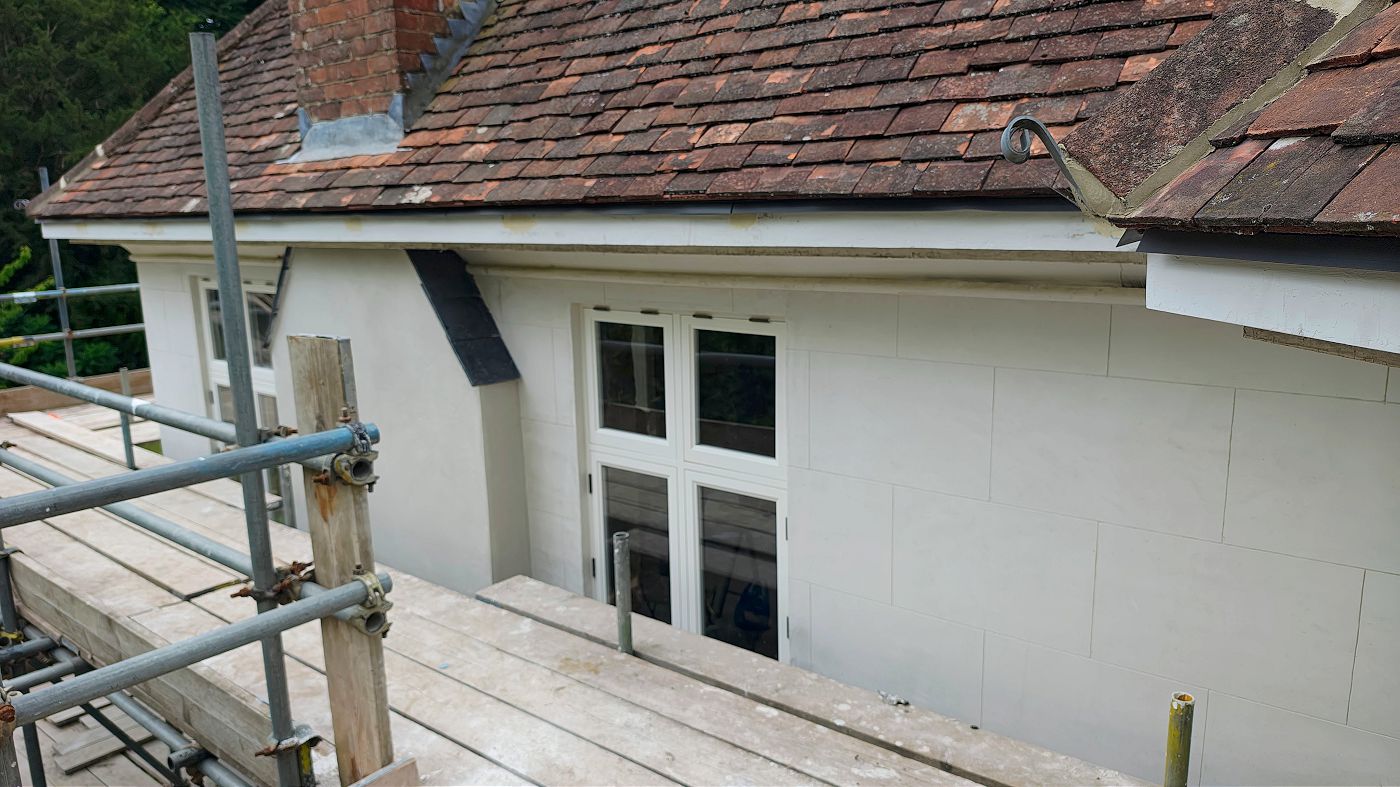

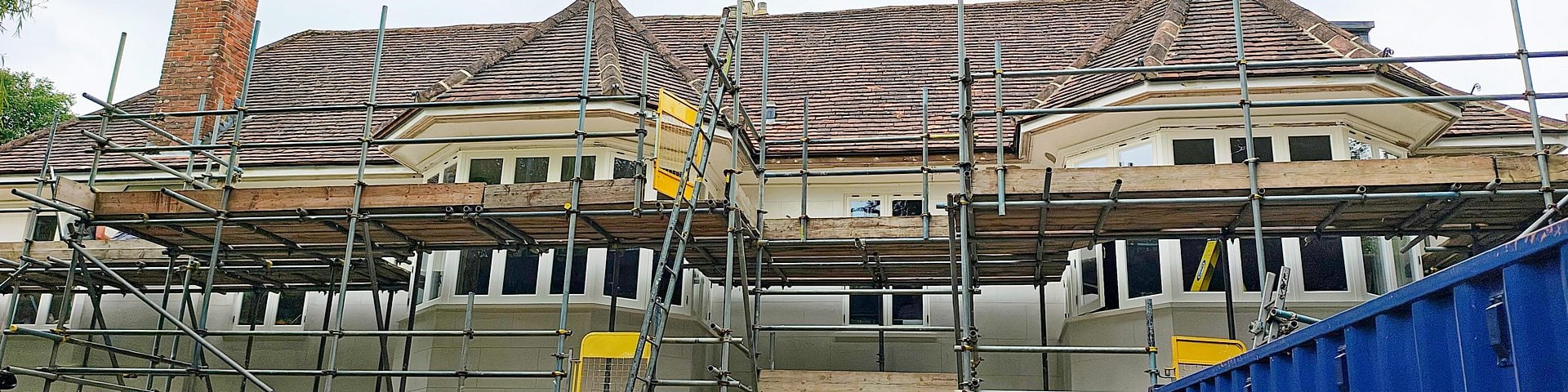
This project involved the full refurbishment of a 200-year-old listed private residence, with a clear objective: to improve thermal performance while preserving the integrity and behaviour of the original building fabric.
From the beginning, the approach was firmly rooted in conservation principles. All materials had to be compatible with traditional construction, meaning a fully breathable, lime-based system throughout. The owner was highly knowledgeable about old buildings and very conscious of the risks associated with modern impermeable materials. As a result, MGN’s lime plaster systems were selected for their proven quality, durability and compatibility with historic masonry.
The most significant challenge was the external rendering. The aim was not simply to insulate the building, but to do so in a way that actively manages moisture. In traditional solid-wall construction, moisture is inevitable — the critical question is how it is handled.
Modern systems typically rely on impermeable layers to keep water out, but in historic buildings this often leads to trapped moisture, salt accumulation and long-term fabric damage.
The requirement here was different:
Achieving all of these simultaneously is where traditional lime technology, enhanced with modern materials, becomes particularly effective.
The external render system was built using a fully breathable, mineral-based approach, with each layer performing a specific function:
Rinzaffo MGN – Moisture Control Base Coat
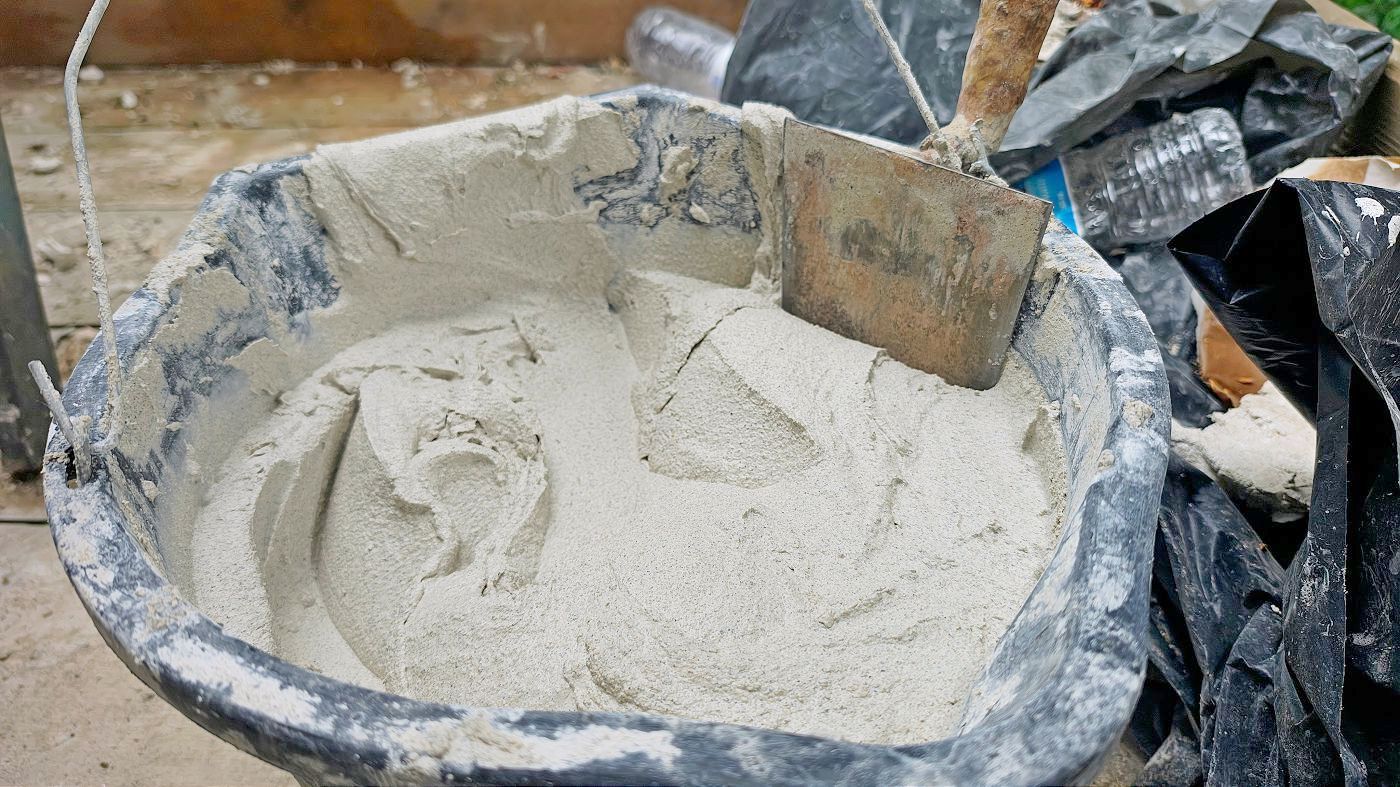
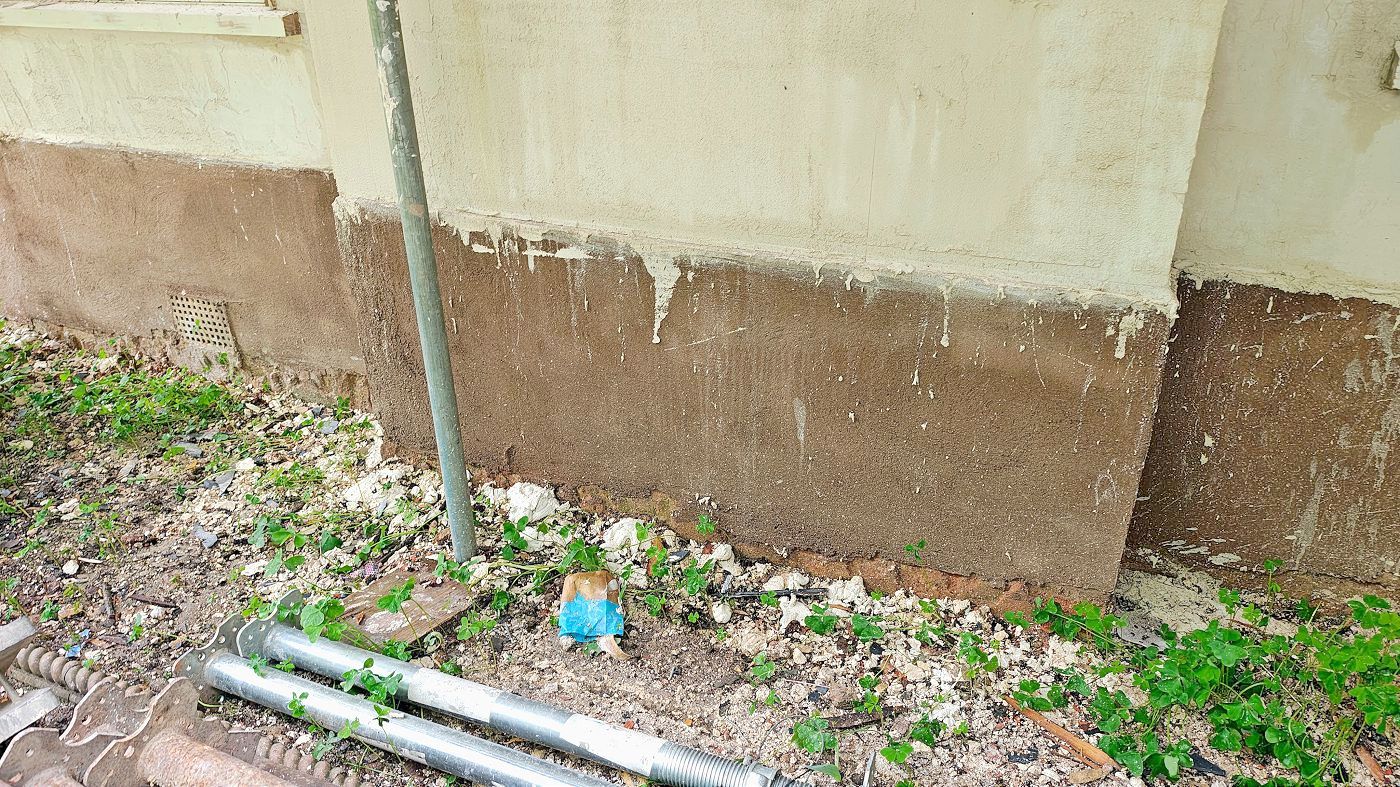
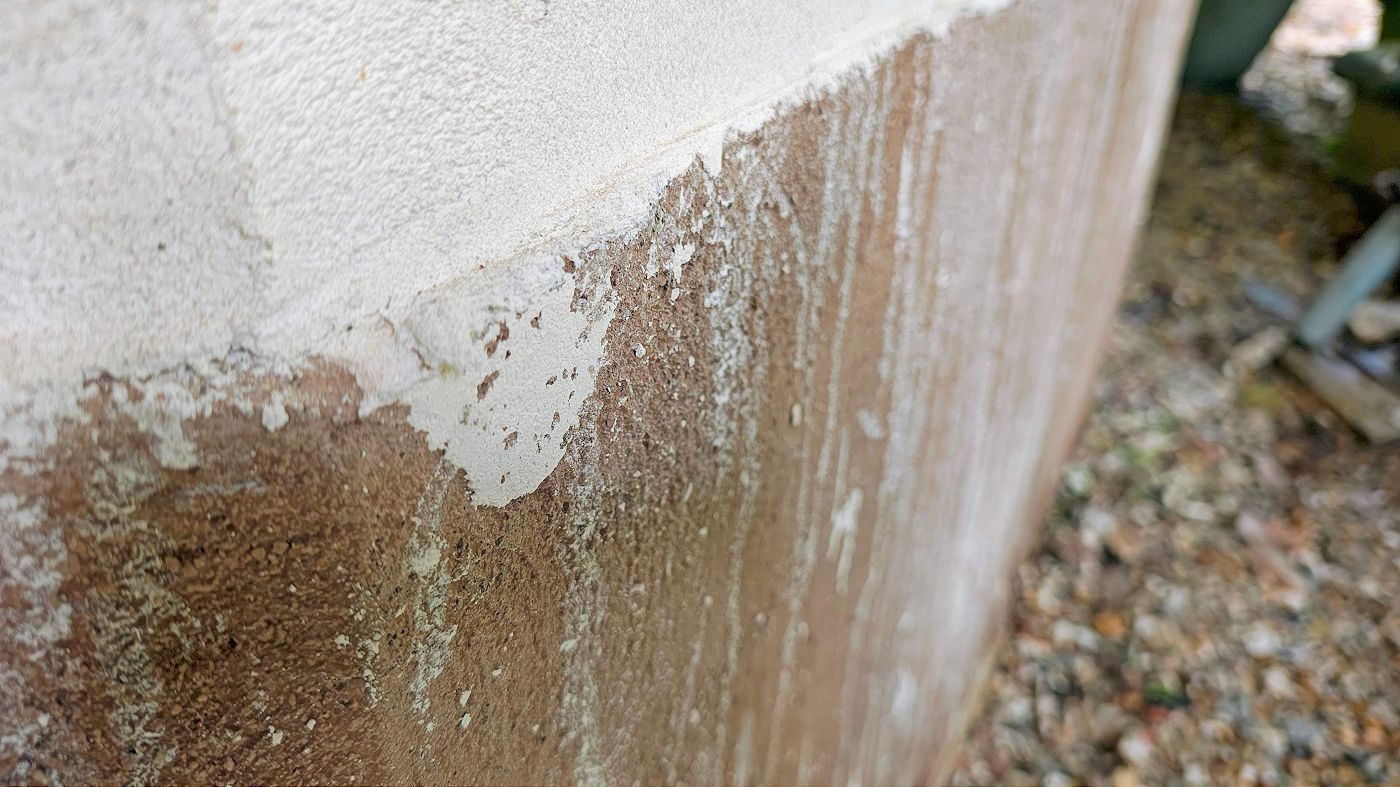
This Roman pozzolanic lime plaster forms the foundation of the system. Its microstructured pore network blocks liquid water while remaining vapour permeable. In practical terms, it acts as a breathable barrier, preventing moisture ingress while allowing the wall to dry. This shifts the evaporation zone outward and protects the underlying masonry from long-term damp and salt damage.
Termorasante Aerogel MGN – Insulating Layer
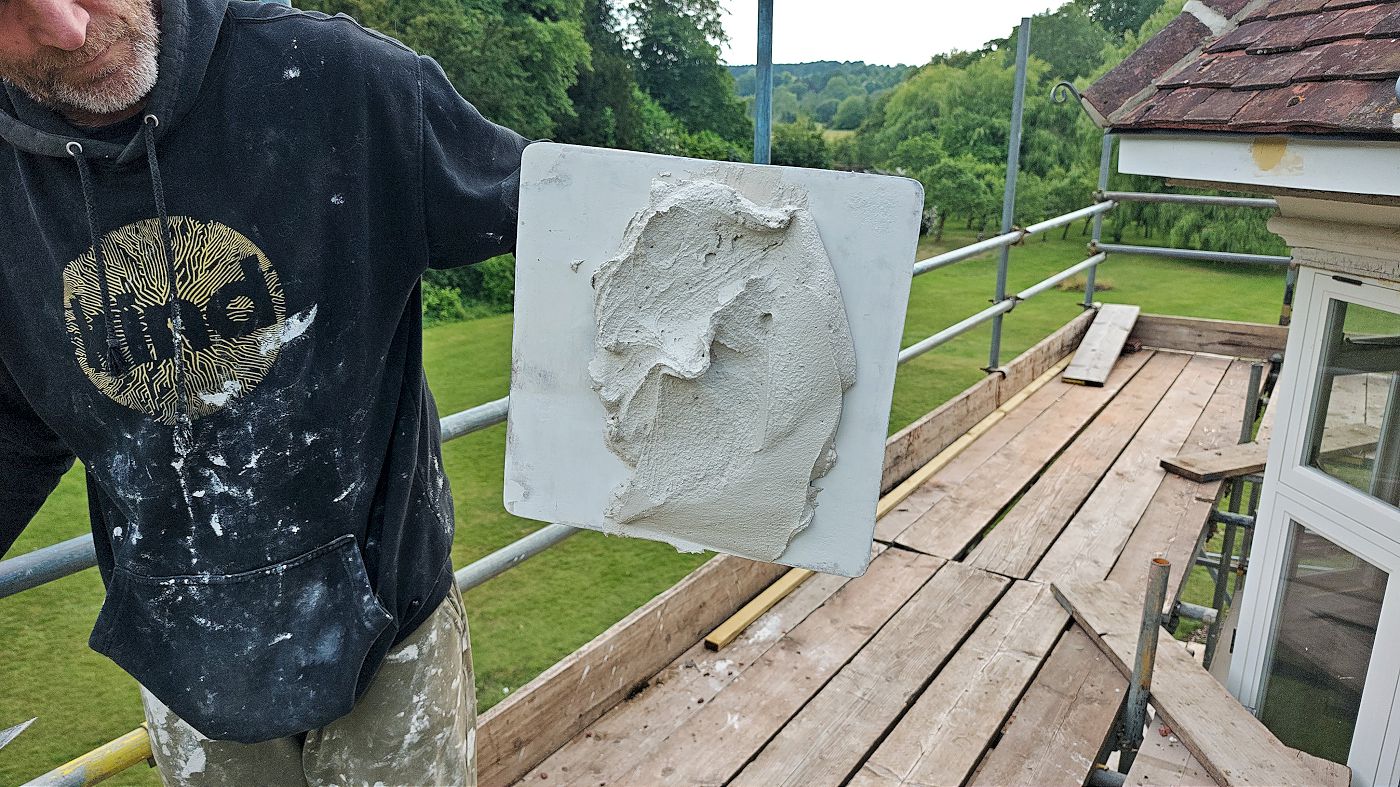
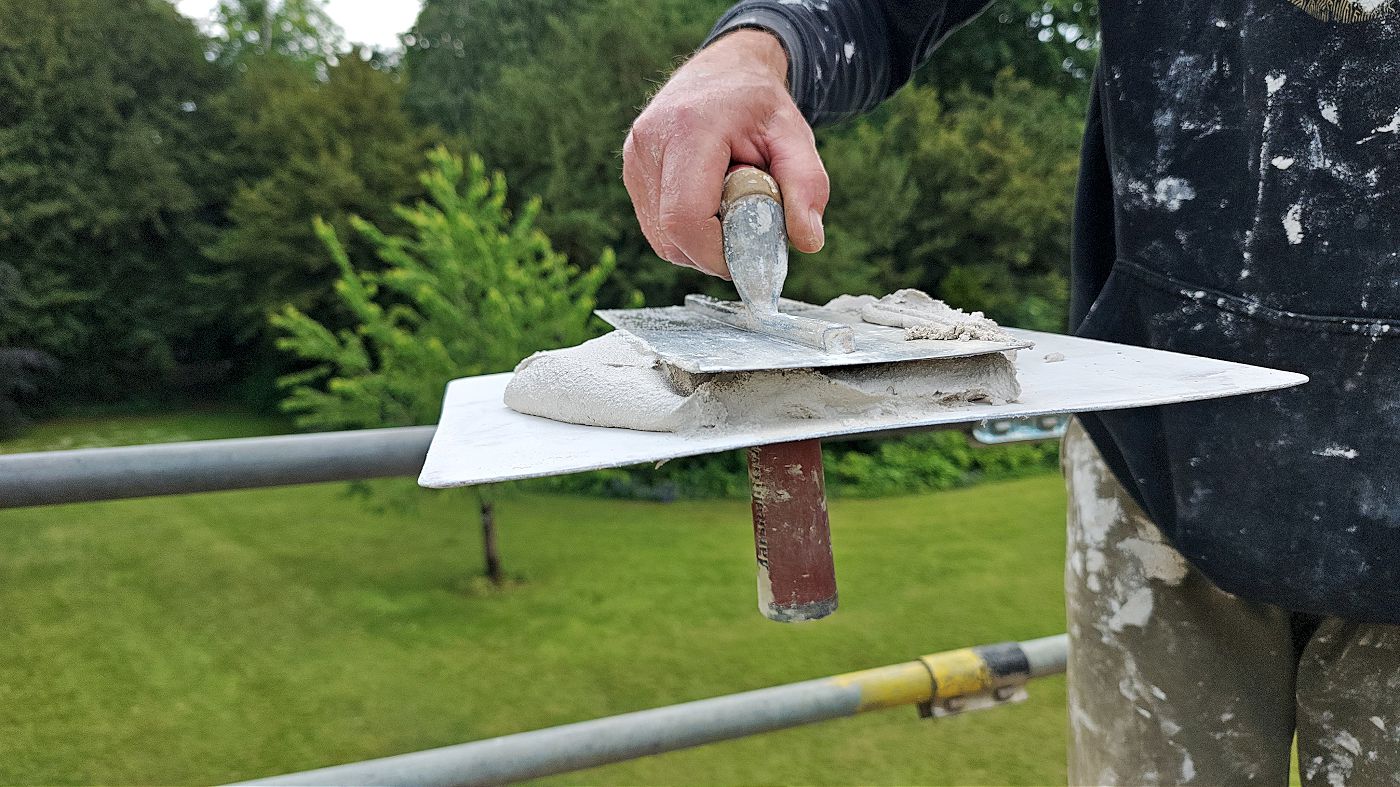
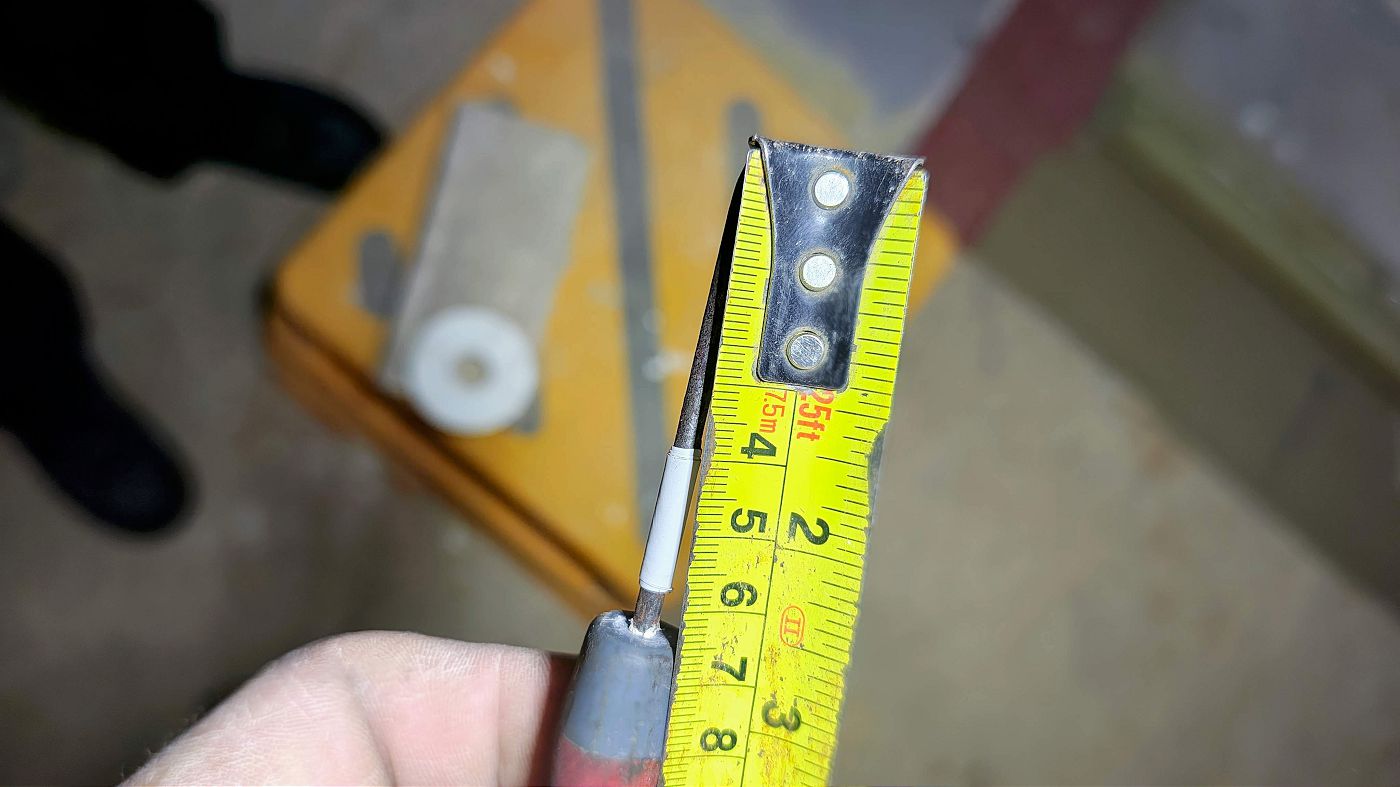
Applied above the Rinzaffo, this lime-aerogel render provides the thermal upgrade. Using an air lime binder combined with aerogel, it delivers exceptional insulation while remaining fully breathable. At approximately 40 mm thickness, it achieves a 0.3 U-value, a performance comparable to around 100 mm of conventional foam insulation, while allowing the wall fabric to breathe.
Rasante B2007 MGN – Protective Finish
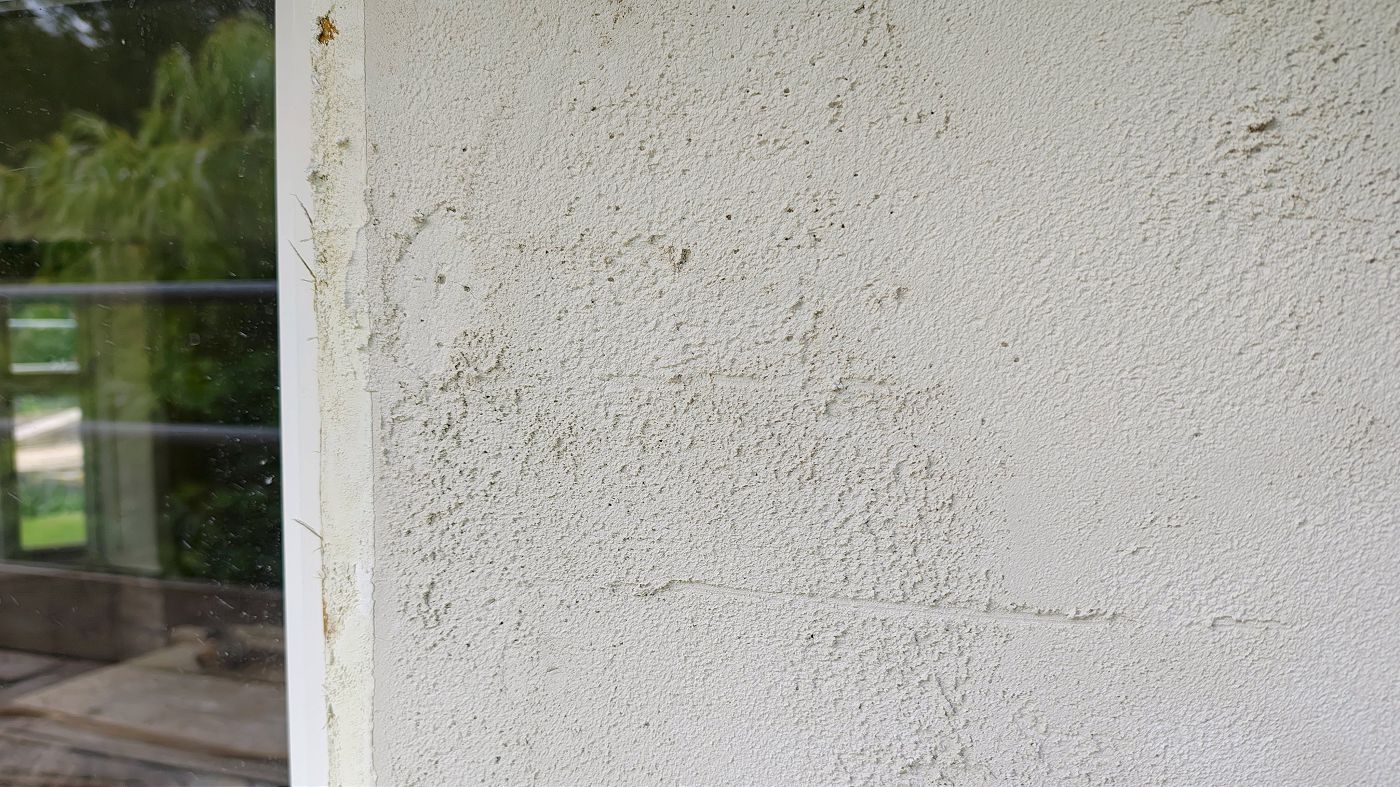
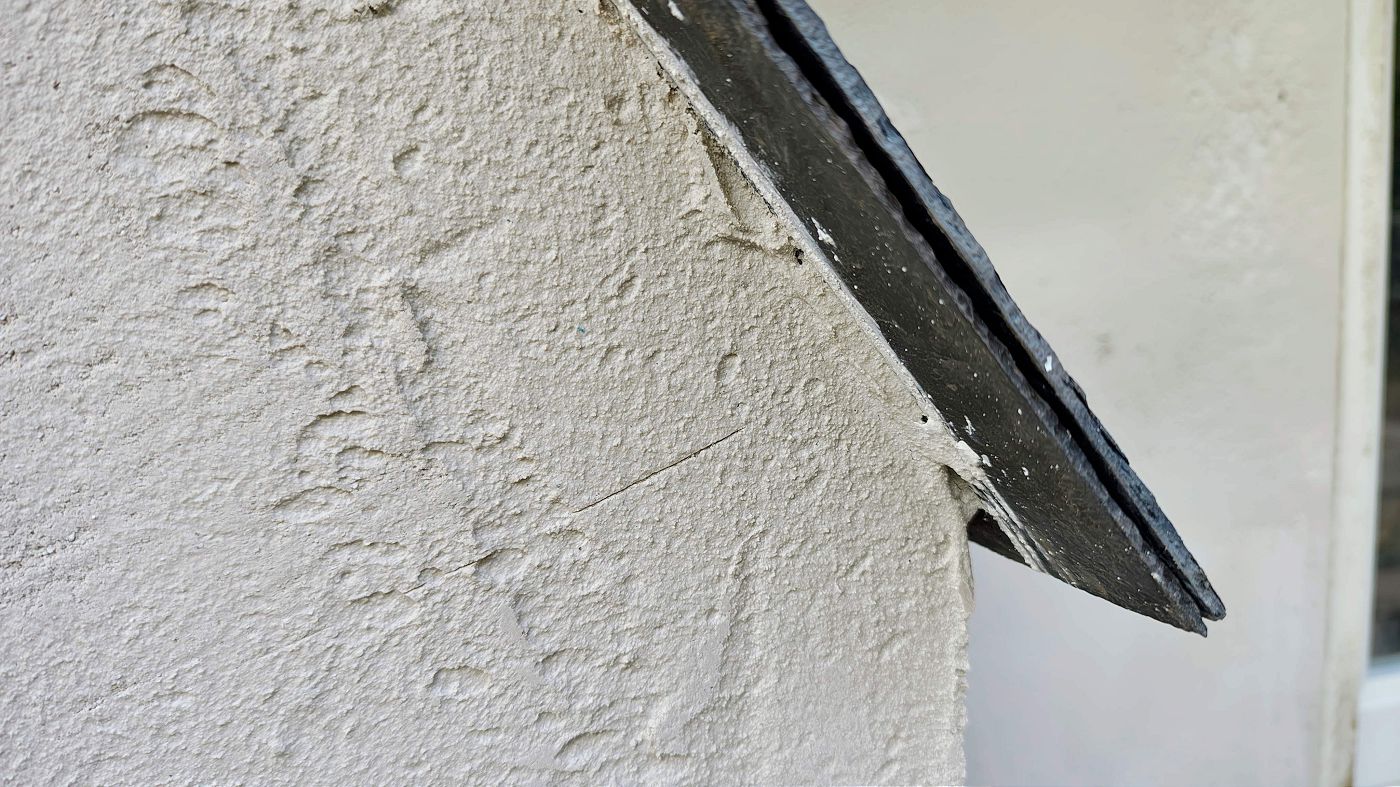
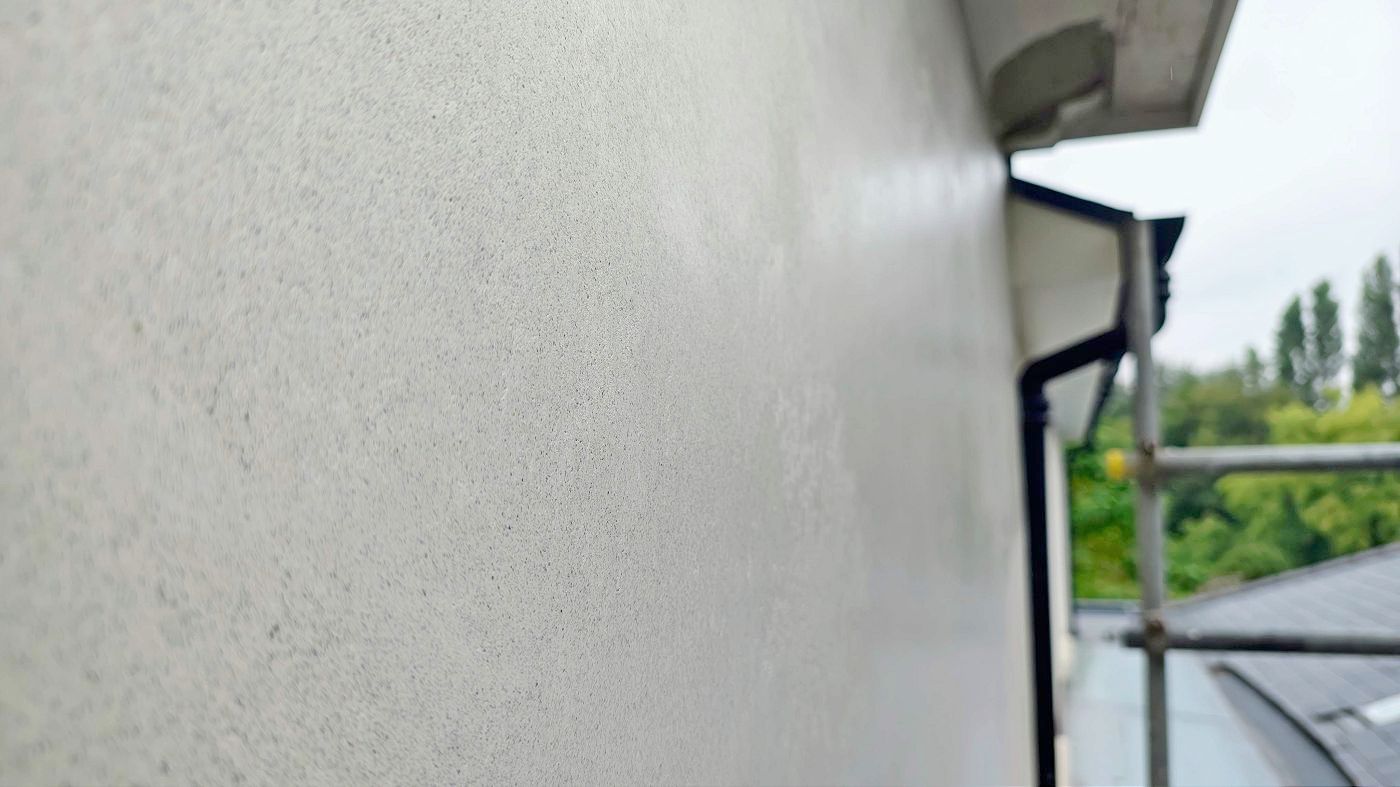
The system is completed with a breathable decorative finish that also provides water repellency. Using natural additives rather than synthetic chemicals, it helps shed rainwater at the surface, keeping the insulation layer dry while maintaining full vapour permeability.
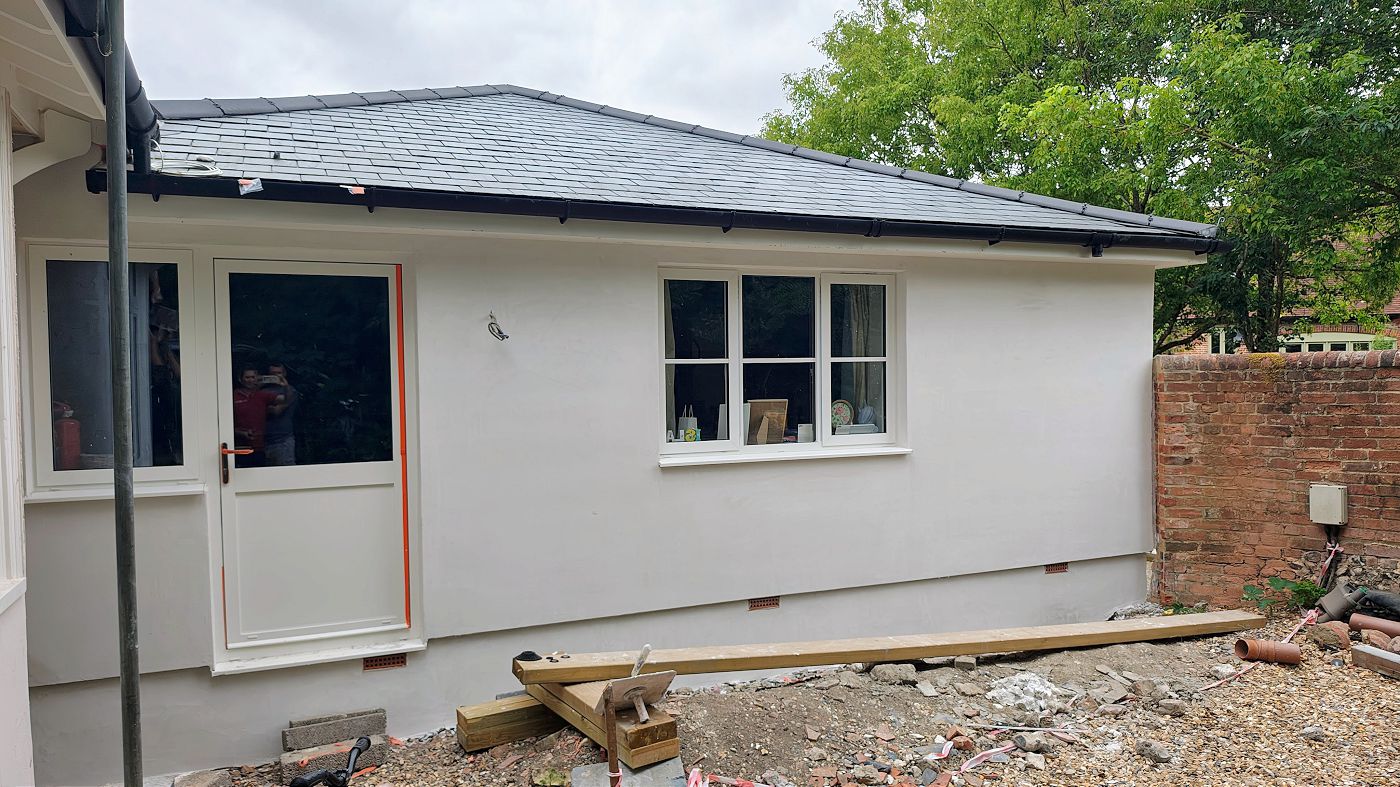
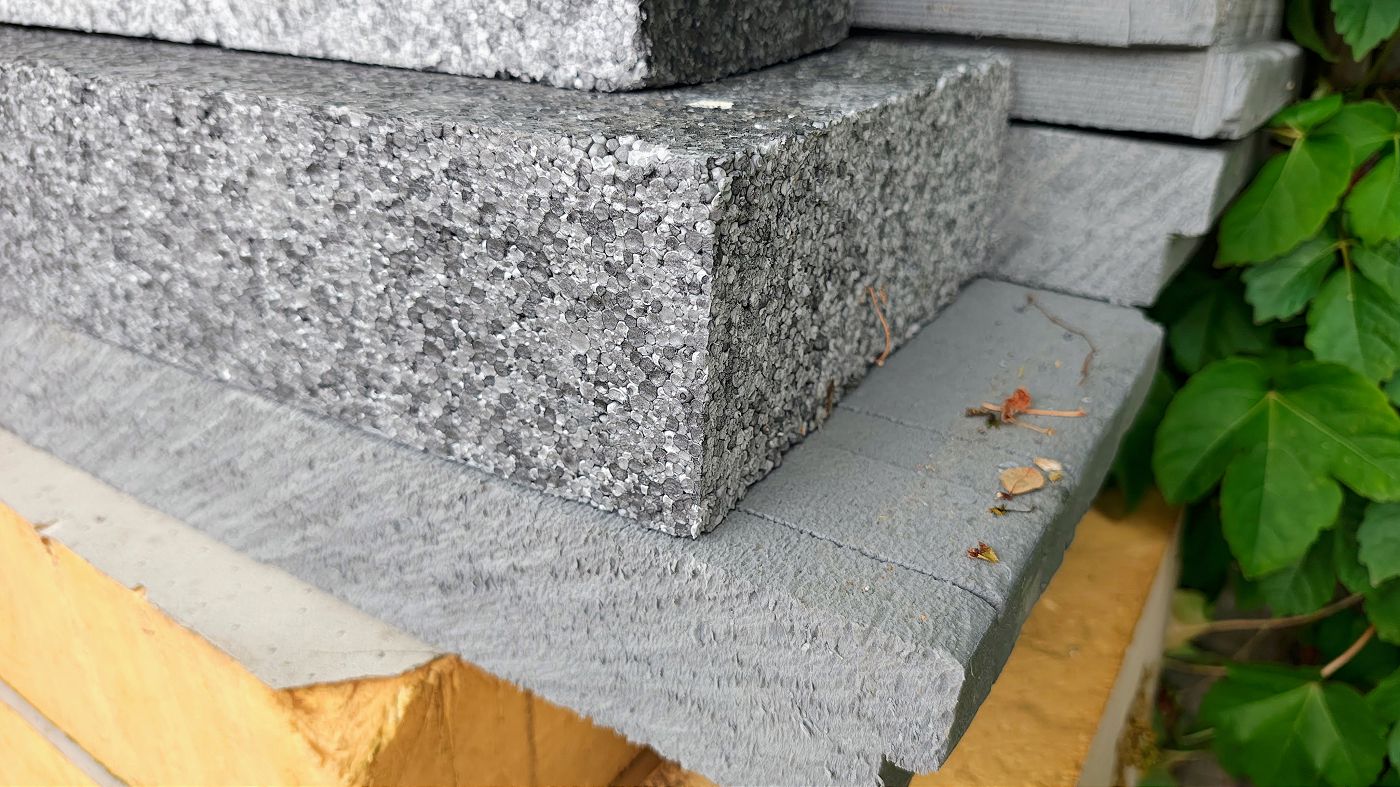
Alongside the refurbishment, a new extension was constructed using modern building methods and insulated with 100 mm of conventional foam insulation, in line with current standards.
This created a direct comparison between two fundamentally different approaches:
Following completion, the building was assessed during winter conditions using a high-resolution thermal imaging camera. This provided a real-world evaluation of performance rather than relying solely on theoretical calculations.
The results were striking. The original building, upgraded with 40 mm of lime-aerogel system, performed on par with — and in some areas slightly better than — the new extension insulated with 100 mm modern foam materials.
This confirms an important principle in building physics: when moisture is properly managed and the structure is allowed to breathe, thermal performance can match or exceed that of impermeable systems.
At the same time, the breathable approach avoids the risks commonly associated with modern materials in historic buildings, such as trapped moisture, interstitial condensation and salt-related decay.
This project demonstrates that high levels of thermal performance can be achieved in historic buildings without compromising their fabric or behaviour. By combining traditional lime technology with advanced materials such as aerogel, it is possible to deliver traditional appearance, modern comfort standards while maintaining long-term durability and compatibility.
Rather than forcing old buildings to behave like new ones, this approach works with the building — allowing it to manage moisture naturally, remain dry and perform efficiently over time.
These solutions were implemented during the project:
Here are some related pages with more technical information related ot this project.
Have a similar project? If you have any questions about anything - please get in touch using the contact form below. Give us as much detail as you can about your project so we can get back to you with more relevant answers.
Here are some photos demonstrating this solution. Click on any image to open the photo gallery.
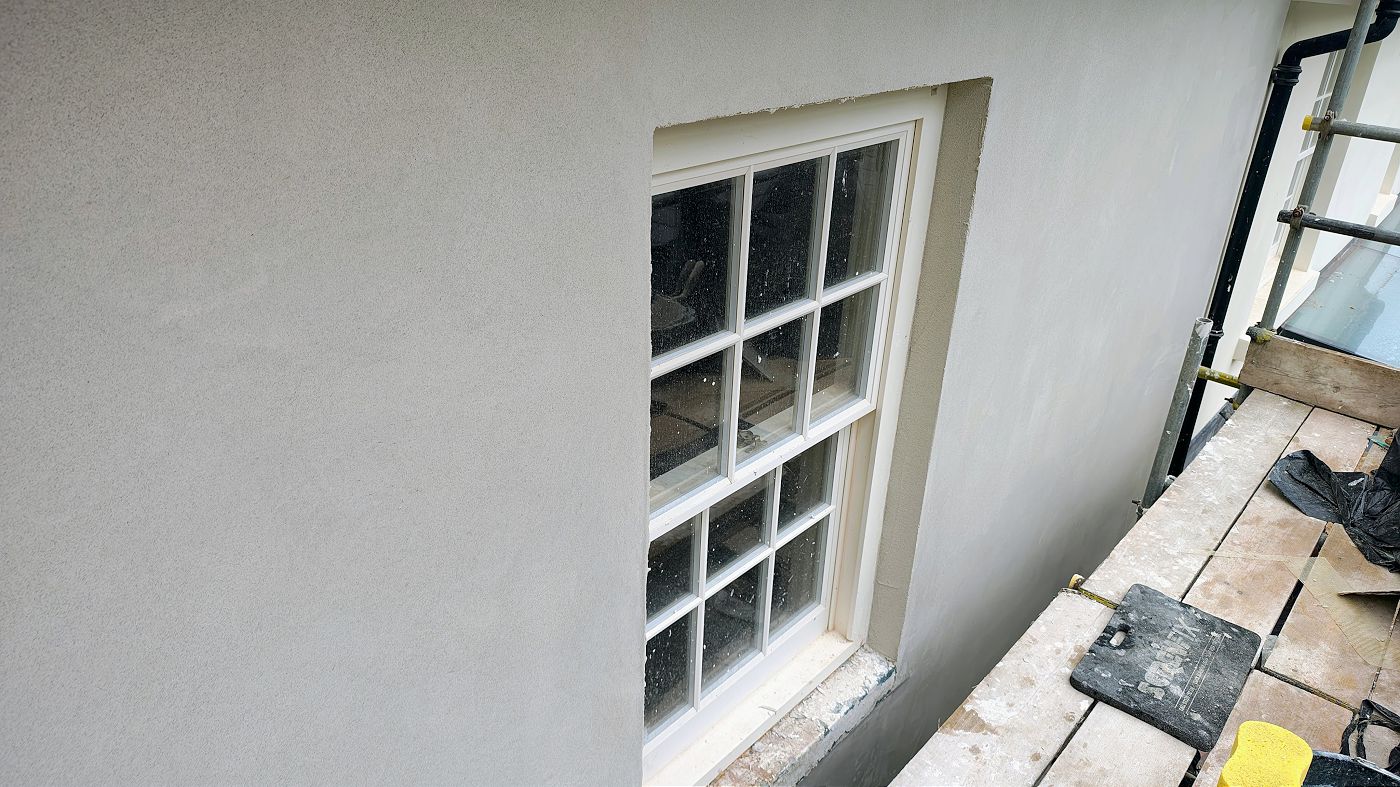
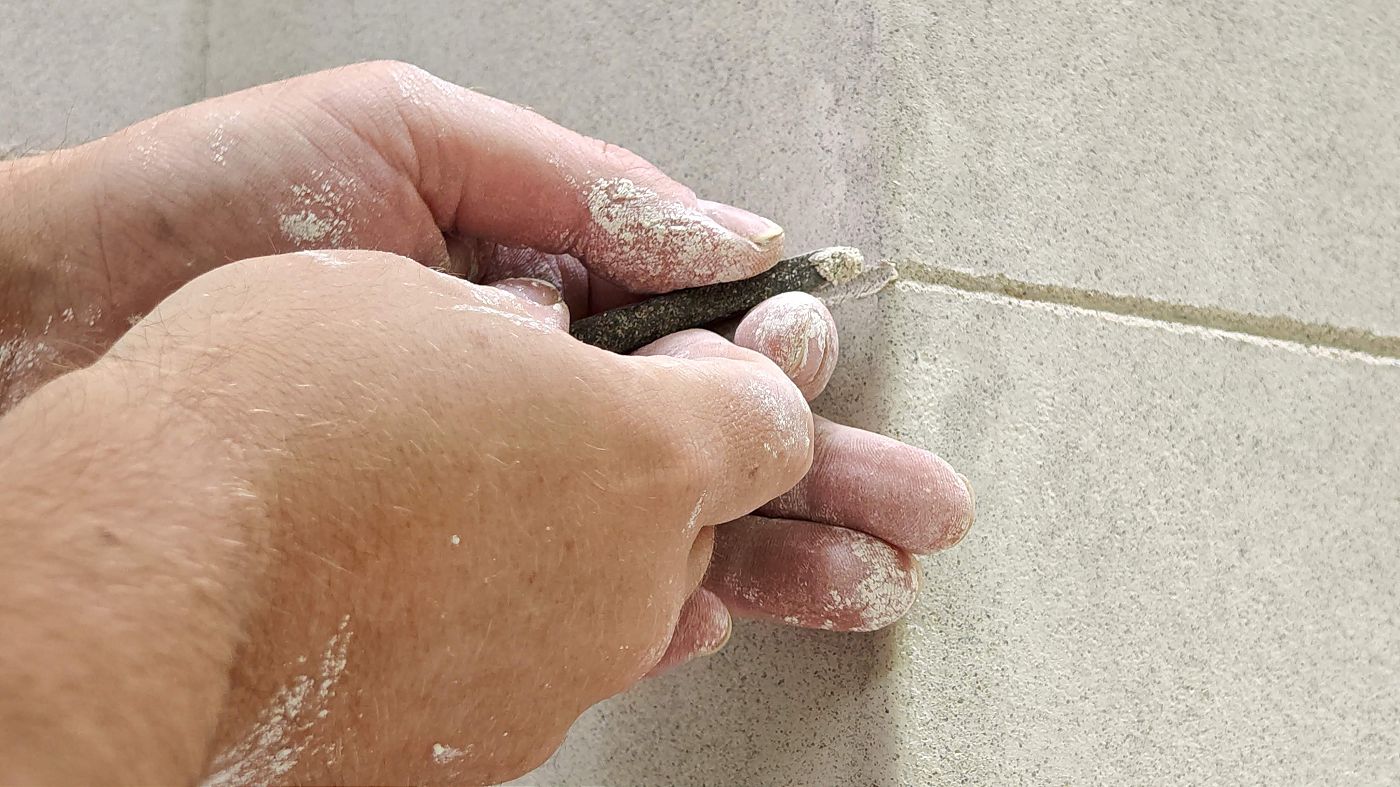
A full refurbishment of a 200-year-old building, upgraded with external lime-aerogel insulating render to enhance thermal performance while maintaining a breathable, heritage-compatible finish using MGN lime materials.