Nowadays the structural consolidation of older walls and buildings is often done with cement-based mortars or concrete, for a number of reasons:
Low cost: being produced in large quantities, cement mortars are economical, making them a favorite in budget-oriented projects.
Mechanical strength: cement provides the necessary mechanical strength to withstand significant loads, which can be advantageous in various construction scenarios, particularly where robust structural support is required.
Wide-spread use in the building industry: the prevalent application of cement in the building industry, especially in modern constructions and new-build applications, underscores its continued popularity.
Lack of awareness of the damages cement can cause to old structures: despite the popularity of cement, many are unaware of its potential to cause harm to older structures. Its usage without acknowledging these risks can lead to irreversible damages.
Unawareness of building-friendly alternatives: the dominance of cement as the go-to construction material overshadows other, more compatible options for historical buildings.
However, there is more to structural consolidation than just cement. Cement's advantages, such as cost-effectiveness and mechanical resilience, often come at the expense of the long-term health of heritage buildings, adding to their deterioration over time. This is where the importance of alternative materials comes into play, particularly those that are sympathetic to the original construction methodologies.
The Romans have developed lime-based alternatives, building some impressive structures that have lasted for centuries using lime mortars. The Colosseum or the Pantheon in Rome are just some examples of Roman architecture fully built with lime about 2,000 years ago that still stand today. These ancient edifices signify the remarkable durability and compatibility of lime with historical building techniques, highlighting its advantages in maintaining and restoring older buildings. lifespan of these treasured buildings, ensuring that their historical and architectural significance is preserved for future generations.
Colosseum — A Lime Structural Consolidation Masterpiece
One prime example of lime being used as a structural material is the Roman Colosseum, which was built between 70 AD and 80 AD on the site of an artificial lake Nero had constructed. The building was oval-shaped measuring 189 meters by 156 meters, which is almost twice as long and 1.5 times as wide as a modern football field. It has been built from an estimated 100,000 cubic meters of travertine stone (a local limestone) plus bricks and tuff blocks held together by lime-based Roman cement.
Due to the poor condition of the soil beneath the amphitheatre, a deep and strong foundation was required. The foundation, with more than 12m thickness, was constructed by two layers. The ground has been dug out until it reached the clayey bottom of the lake, creating a 31m wide elliptical crown. The bottom of this colossal trench has been filled with 6m of lime-based roman cement - a mix of lime mortar, volcanic pozzolans and pieces of basaltic rock - forming the first layer of the Colosseum's foundation. The second layer consisted of multiple layers of well beaten, compacted stones, gravel and Roman mortar. Drainage has also been put in place to take away the streams that flow from the surrounding valleys and hills.
The Colloseum in Rome, built around 80 AD. It has been standing for 2,000 years on a 6 metre thick lime foundation
The reliance on lime-based structural materials doesn't just end with the Colosseum. The historical utilization of lime in construction exemplifies why it's an ideal choice for preserving the integrity of older structures. Lime mortar not only provides excellent breathability but also accommodates the natural movement of historic buildings, avoiding the harmful effects like cracking and moisture accumulation that cement may cause over time. This adaptability makes lime an invaluable component in conservation efforts, illustrating a timeless approach that aligns with the original architectural intent.
MGN Certified Lime Structural Consolidation System
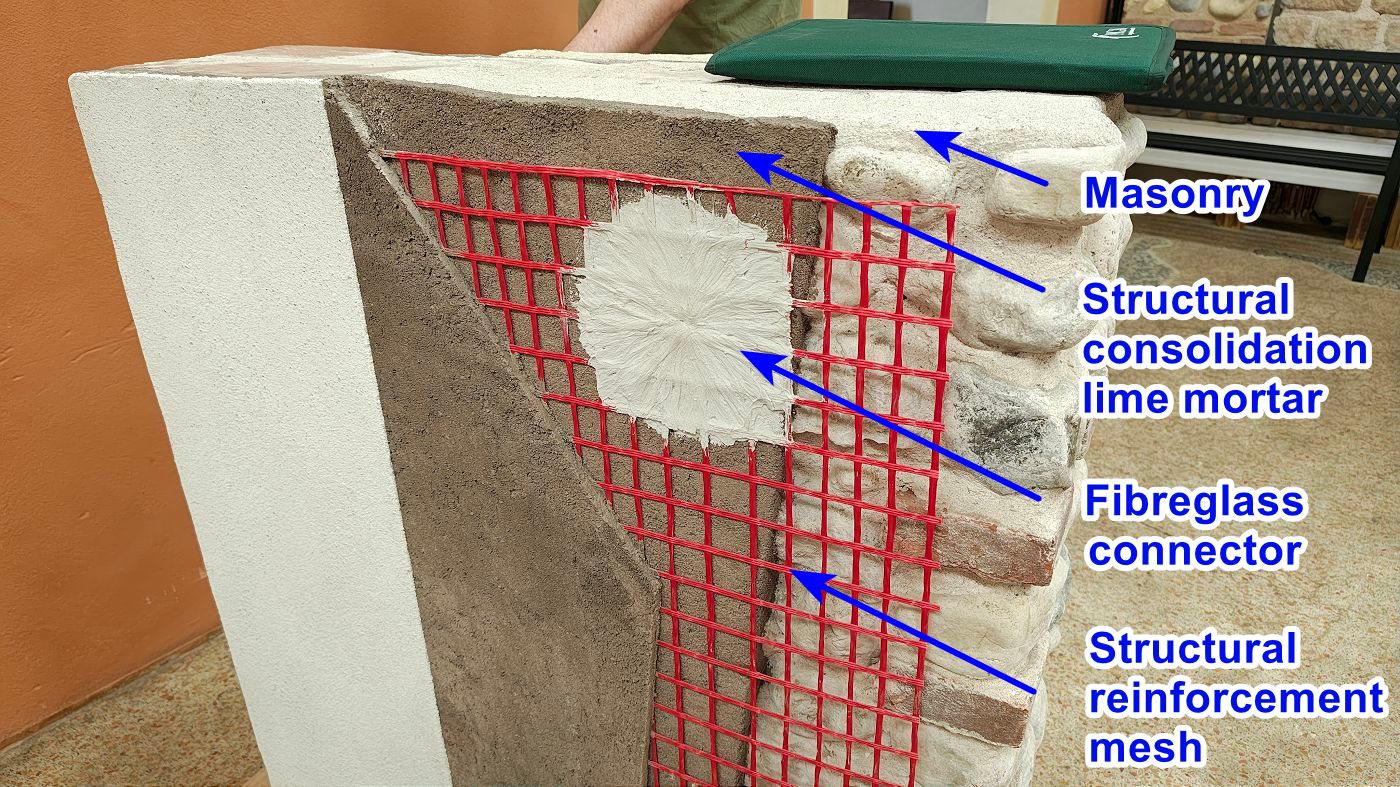
The MGN Lime Structural Consolidation System is built around a clear and flexible approach to strengthening historic masonry, combining compatible lime-based materials with a range of reinforcement elements that can be used individually or as part of a fully integrated system.
At its core, the system operates across three complementary levels of intervention:
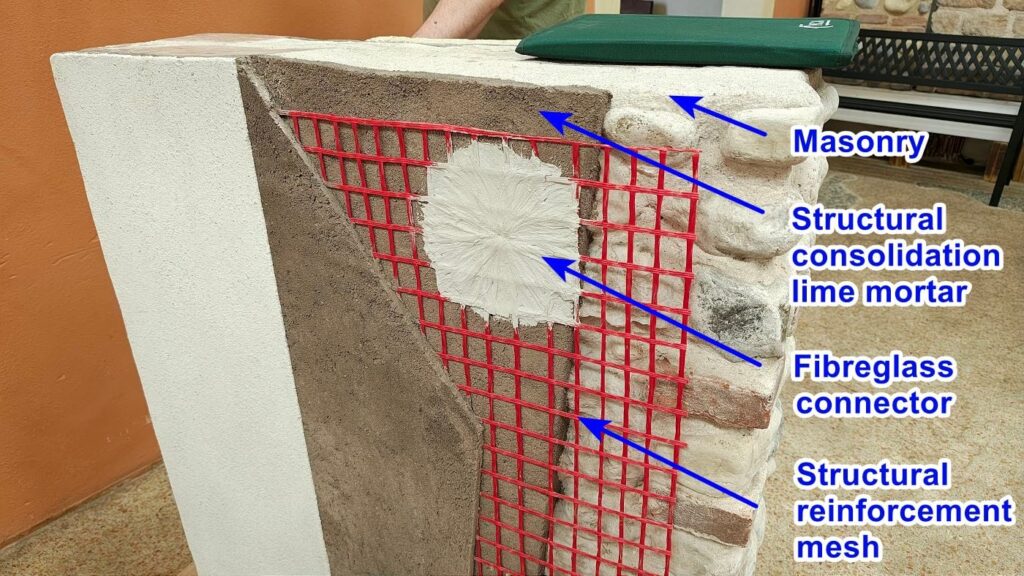
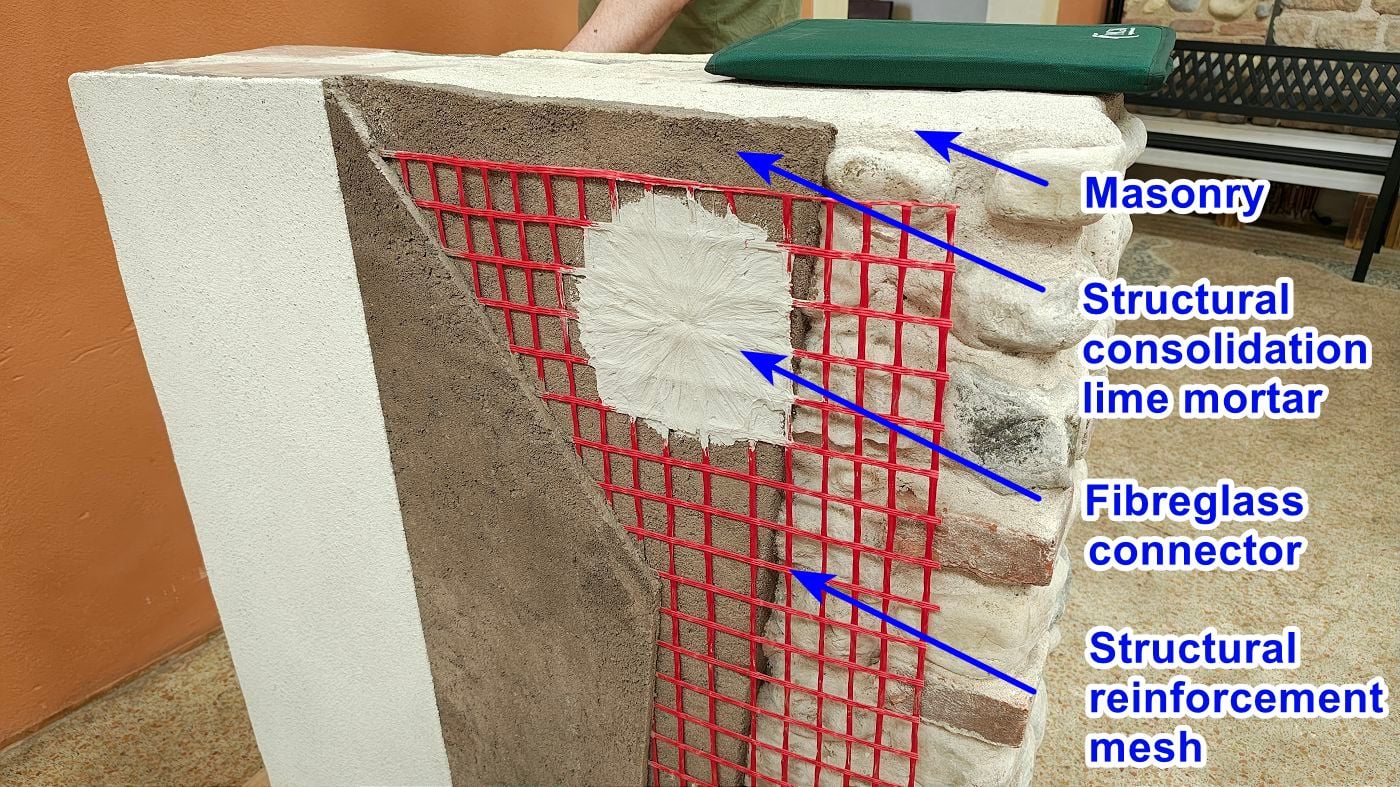
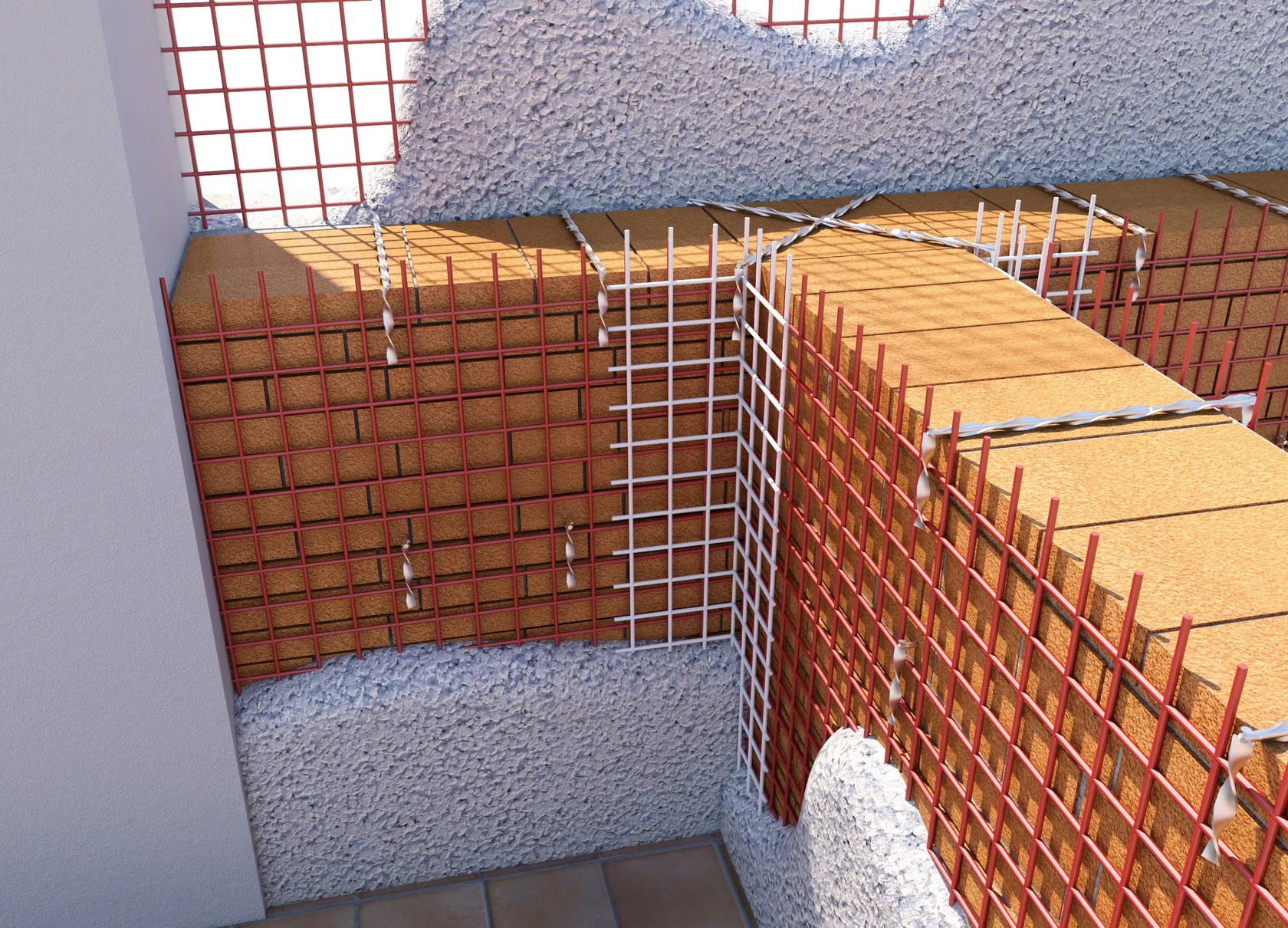
External consolidation: using a structural lime mortar (Betoncino Consolidante MGN) combined with reinforcement mesh (Retia 590), forming a continuous reinforced layer across the surface.
Internal consolidation: using a fluid lime injection grout (Calce F3 MGN) to restore cohesion within the wall core, filling voids, cracks and washed-out areas.
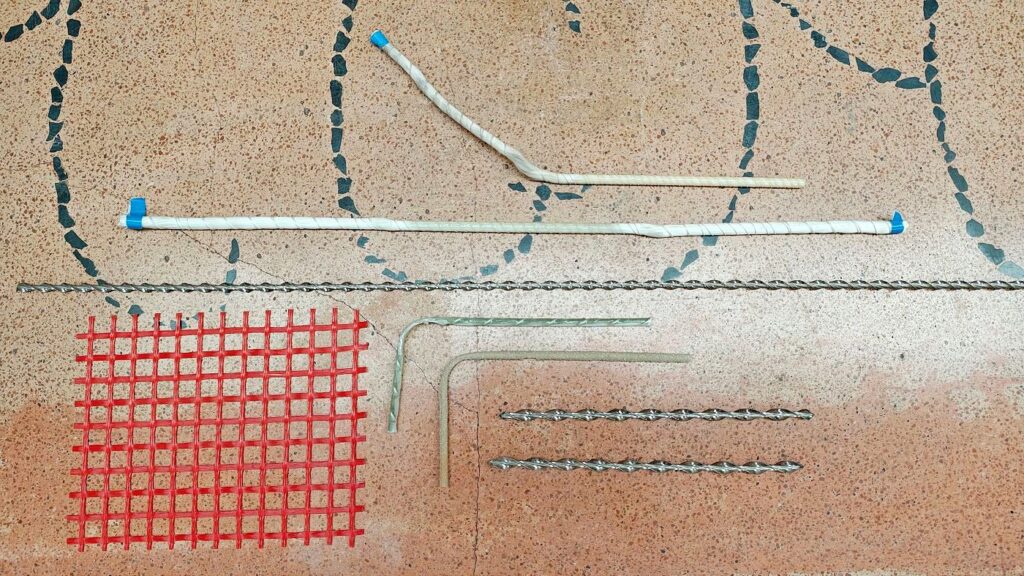
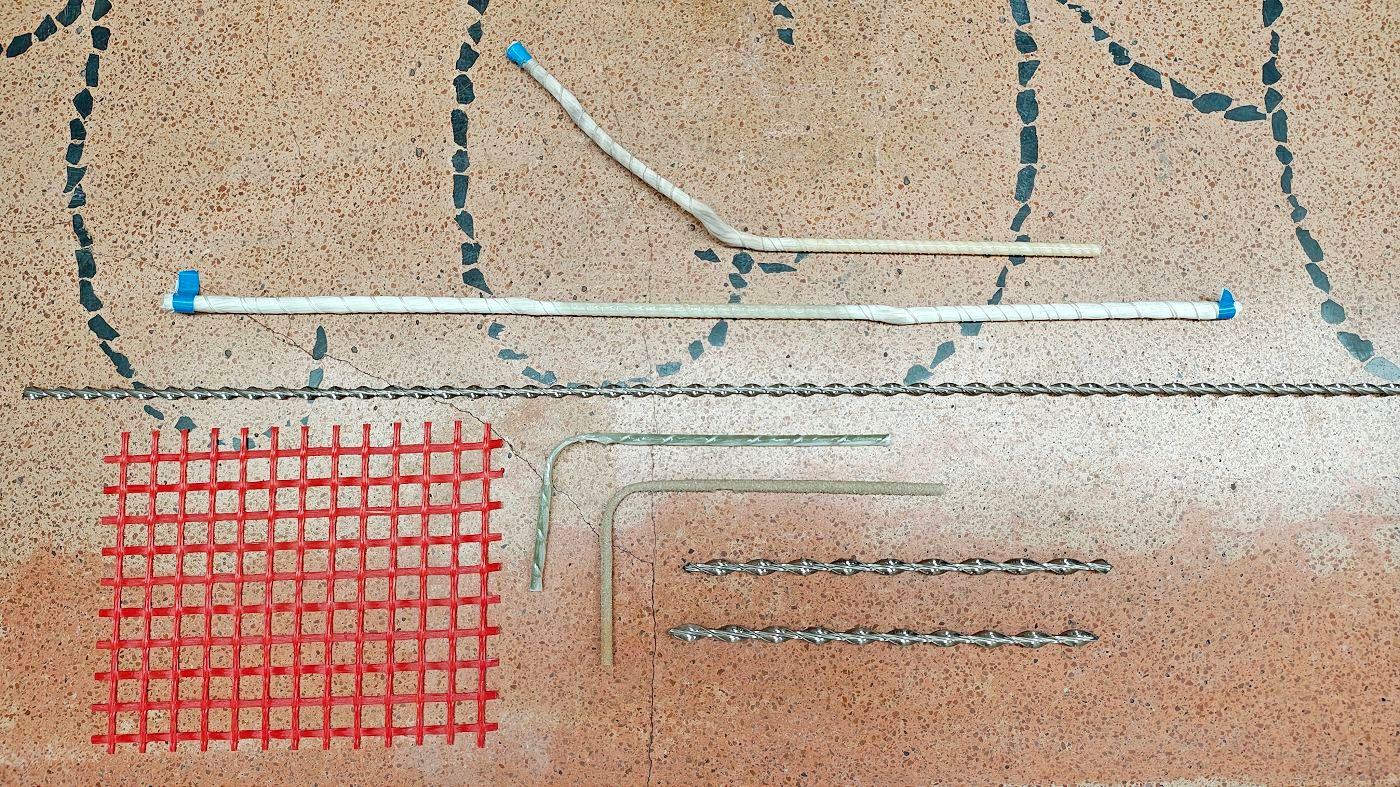
Structural connections and reinforcement elements: using a range of connectors (fibreglass, glass, stainless steel and carbon) to stitch, anchor or locally strengthen the masonry as required.
The MGN Lime Structural Consolidation System
These elements can be used independently or in combination, depending on the condition of the building. The system can reinforce the wall both at the surface and in depth. The external lime layer distributes loads across the face, the internal grout restores cohesion within the core, and the connectors tie everything together through the thickness, allowing the structure to act as a single, continuous whole. Because all elements follow the same material logic, the level of intervention can be increased or reduced as required, without introducing conflicting materials or internal stress.
Unlike cement-based approaches, which introduce high stiffness and rigidity, this system is specifically designed for old and historic buildings. All components are based on lime and mineral materials, sharing the same fundamental behaviour: they are vapour-open, flexible and compatible with traditional masonry. As a result, the structure is able to absorb and redistribute stresses rather than concentrate them, reducing the risk of cracking, detachment or long-term damage.
This approach allows the wall to move, breathe and respond naturally while still achieving meaningful structural improvement. The reinforcement is not imposed onto the building as a rigid layer, but integrated into it, working with the existing fabric rather than against it. This makes this lime system equally suited to:
Targeted repairs: local stabilisation of defects such as loose masonry, minor cracking or small areas of deterioration.
Crack stitching (tying fractured masonry back together): reconnecting masonry across cracks caused by movement, including subsidence or settlement.
Full structural consolidation: restoring strength and continuity to weakened or hollow walls, including washout of mortar joints, voided cores or loss of internal cohesion.
Engineered strengthening: increasing structural capacity in a controlled way, including seismic reinforcement, underpinning works using structural lime mortars, and stabilisation of movement-affected structures, where load distribution and compatibility with the historic fabric are critical.
Structural Consolidation System Components
Here are the components of the MGN lime structural consolidation system.
Unlike modern Portland cement, which is very stiff (low flexibility) and concentrates high loads into smaller areas — often leading to cracking, debonding and local failure — this lime mortar works with the wall fabric, reinforces the substrate, bonds the reinforcement mesh to the wall, accommodates movement and spreads loads evenly across the masonry, protecting the integrity of the historic fabric.
Formulated from air lime, natural hydraulic lime (NHL5) and reactive volcanic pozzolans, the mortar is fundamentally a traditional lime-based Roman cement. It develops strength in the presence of water through a combination of hydraulic set and pozzolanic reaction, forming a dense and durable mineral matrix that remains softer than the surrounding masonry, providing a strong yet flexible bond that is fully compatible with historic masonry.
Because it is lime-based, the mortar remains vapour-permeable, allowing moisture to pass through and evaporate. This makes it particularly suitable for exposed, damp and salt-affected masonry, where impermeable materials would trap moisture and lead to accelerated decay.
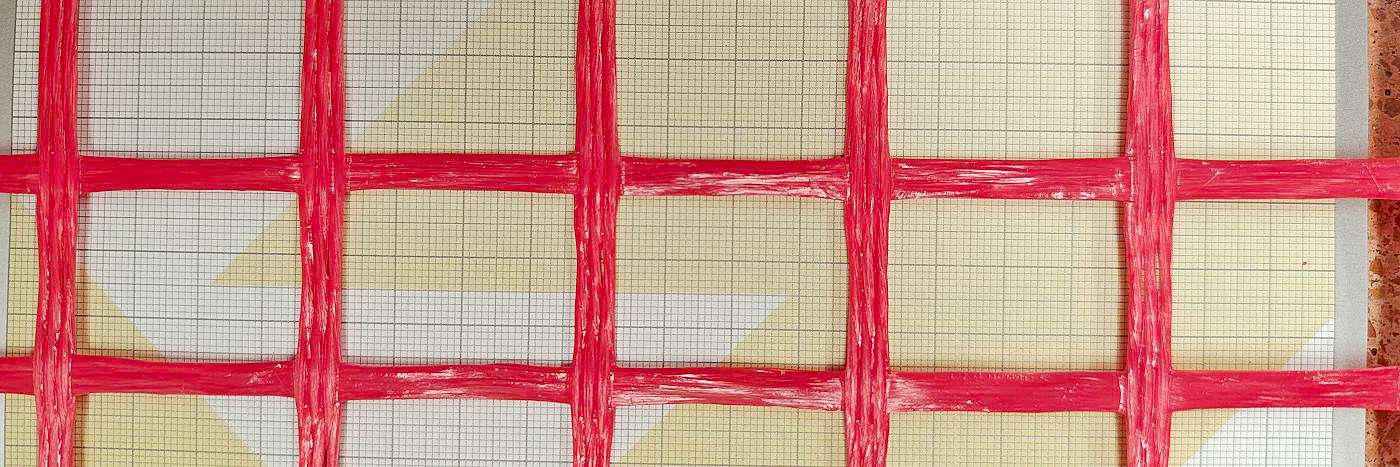
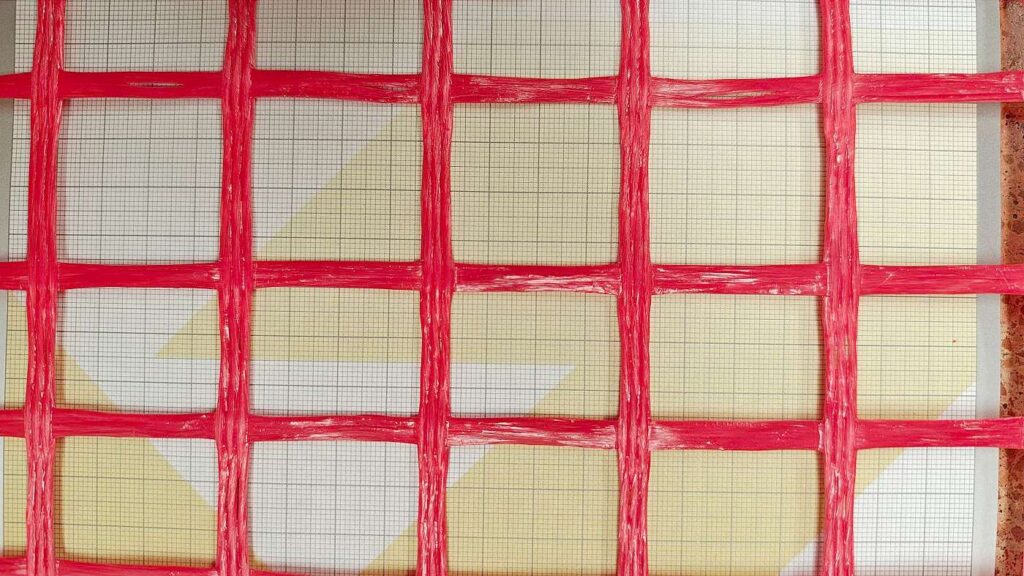
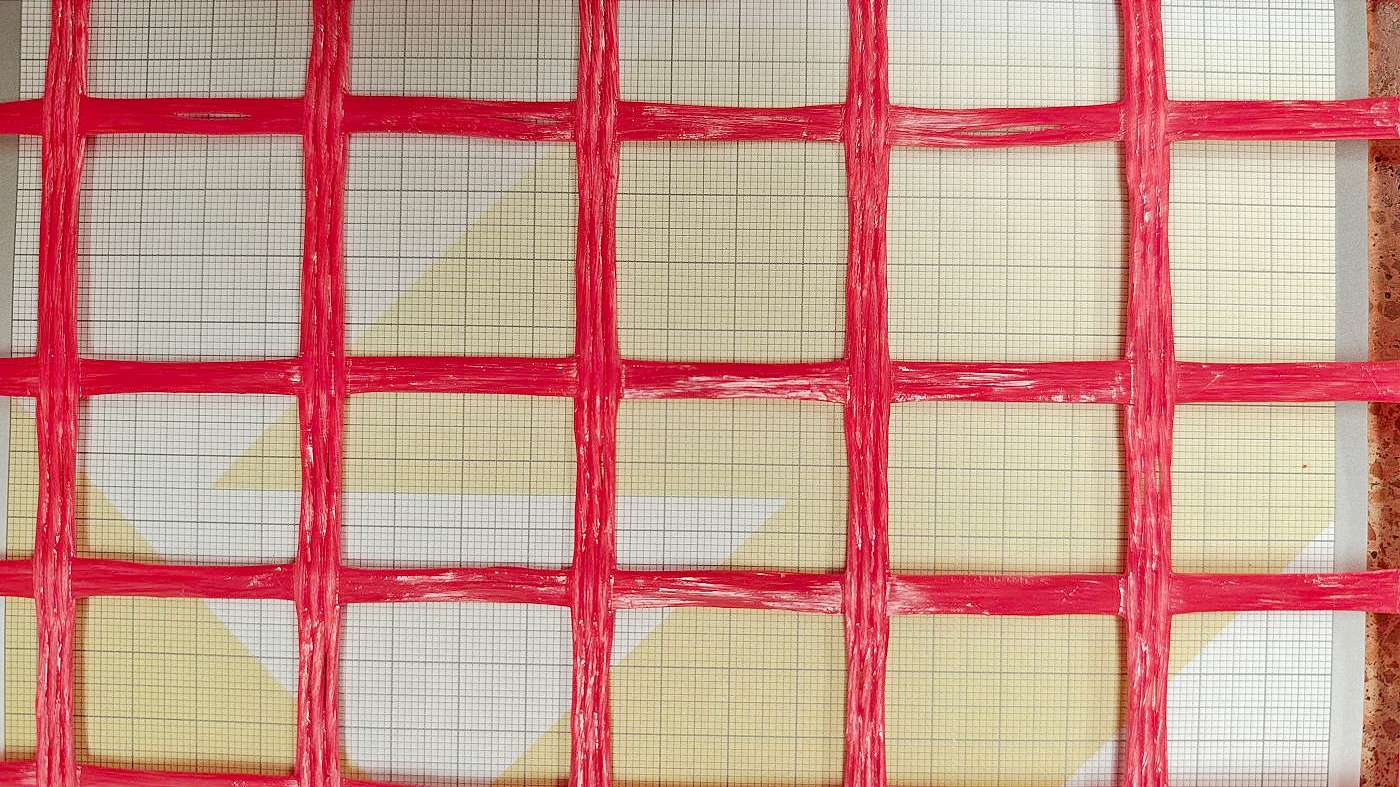
2. Structural Reinforcement Fibreglass Mesh (Retia 590 ETA MGN)
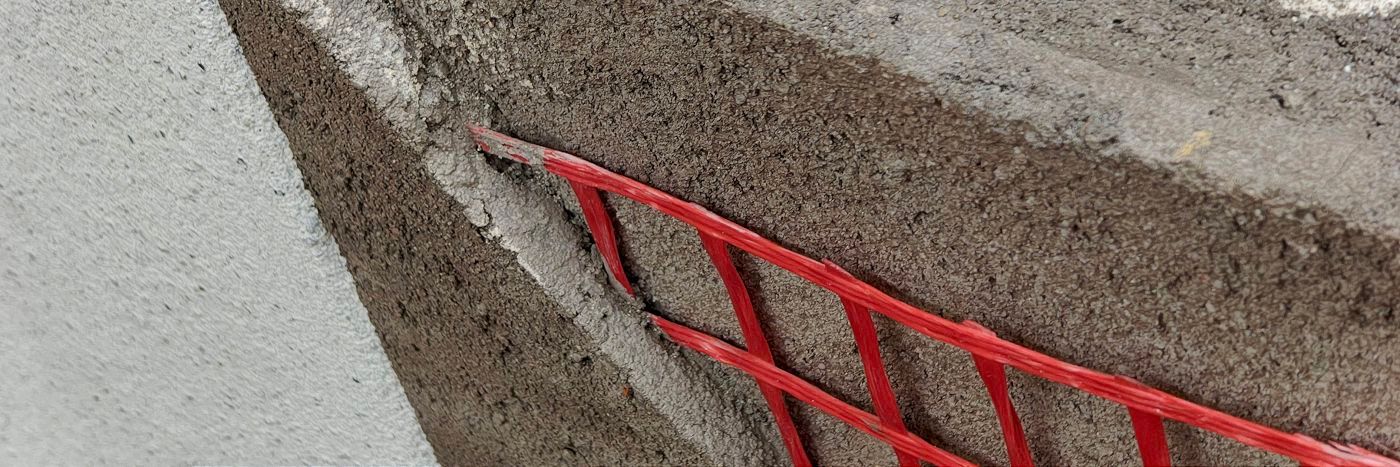
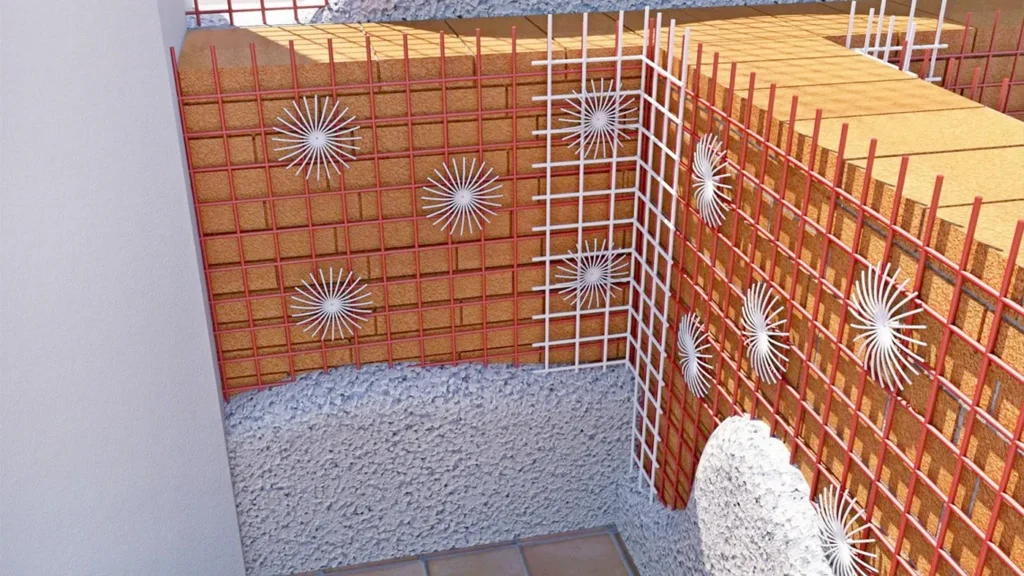
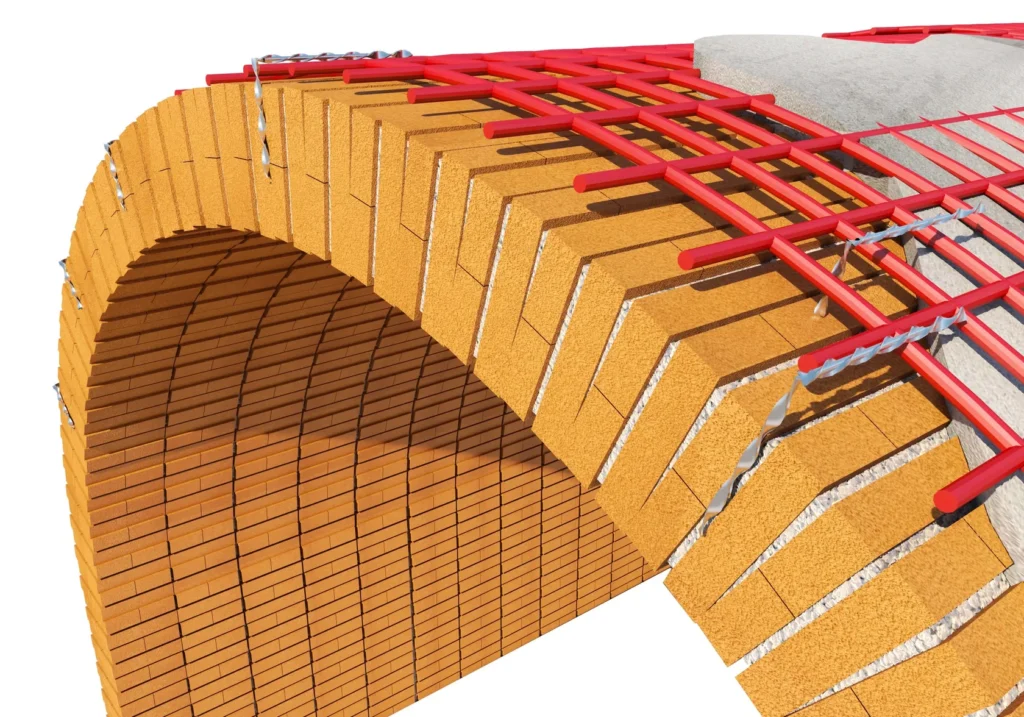
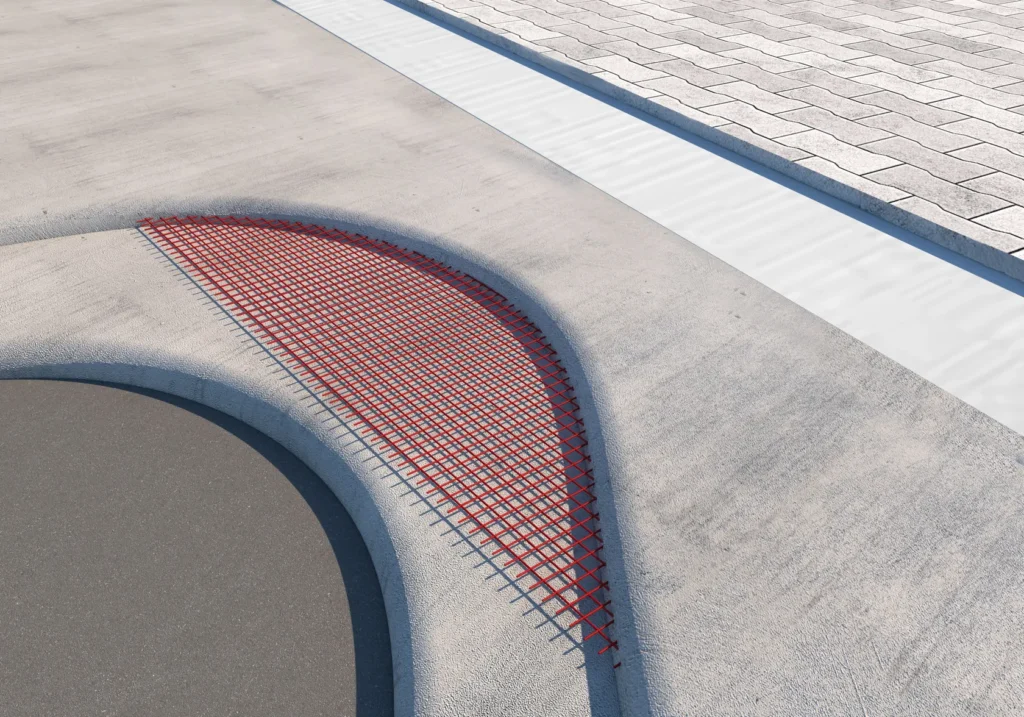
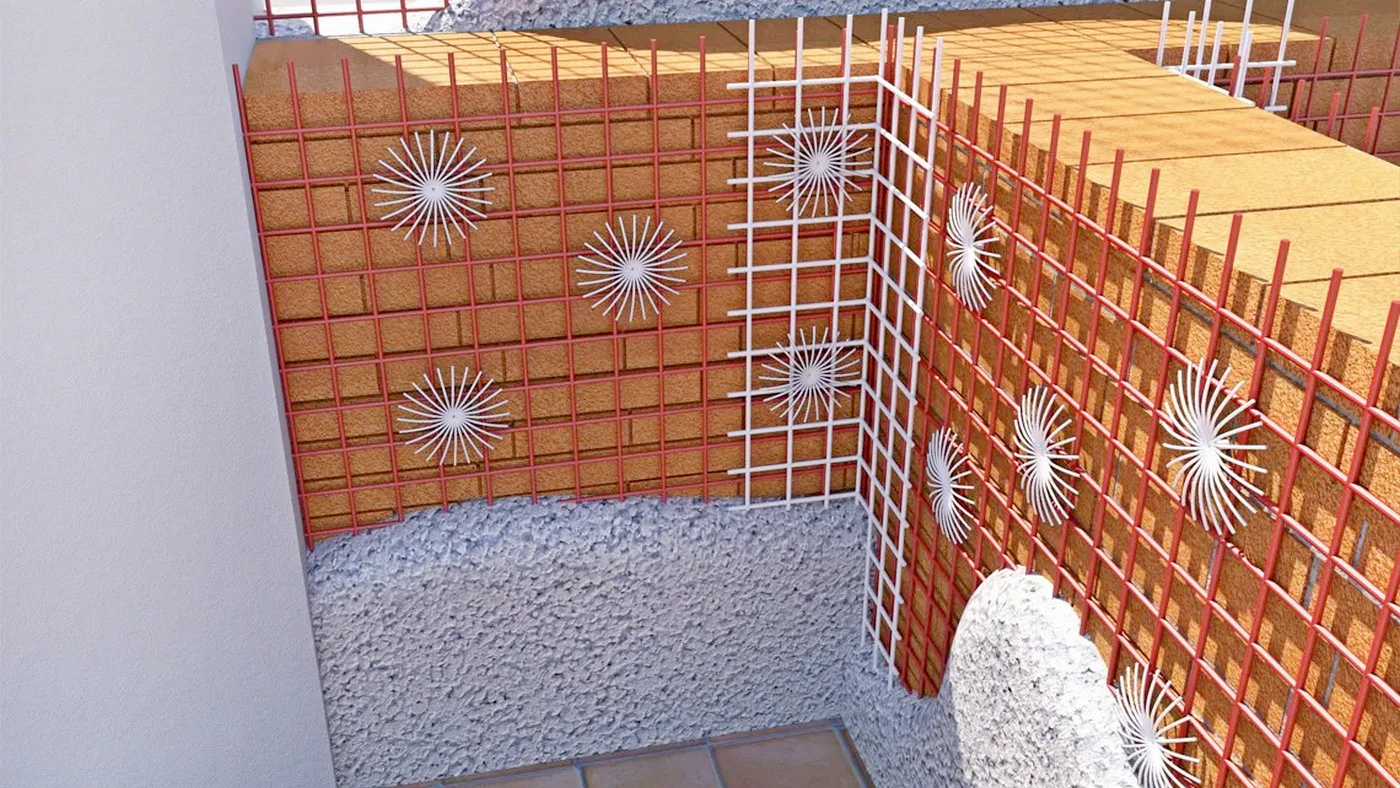
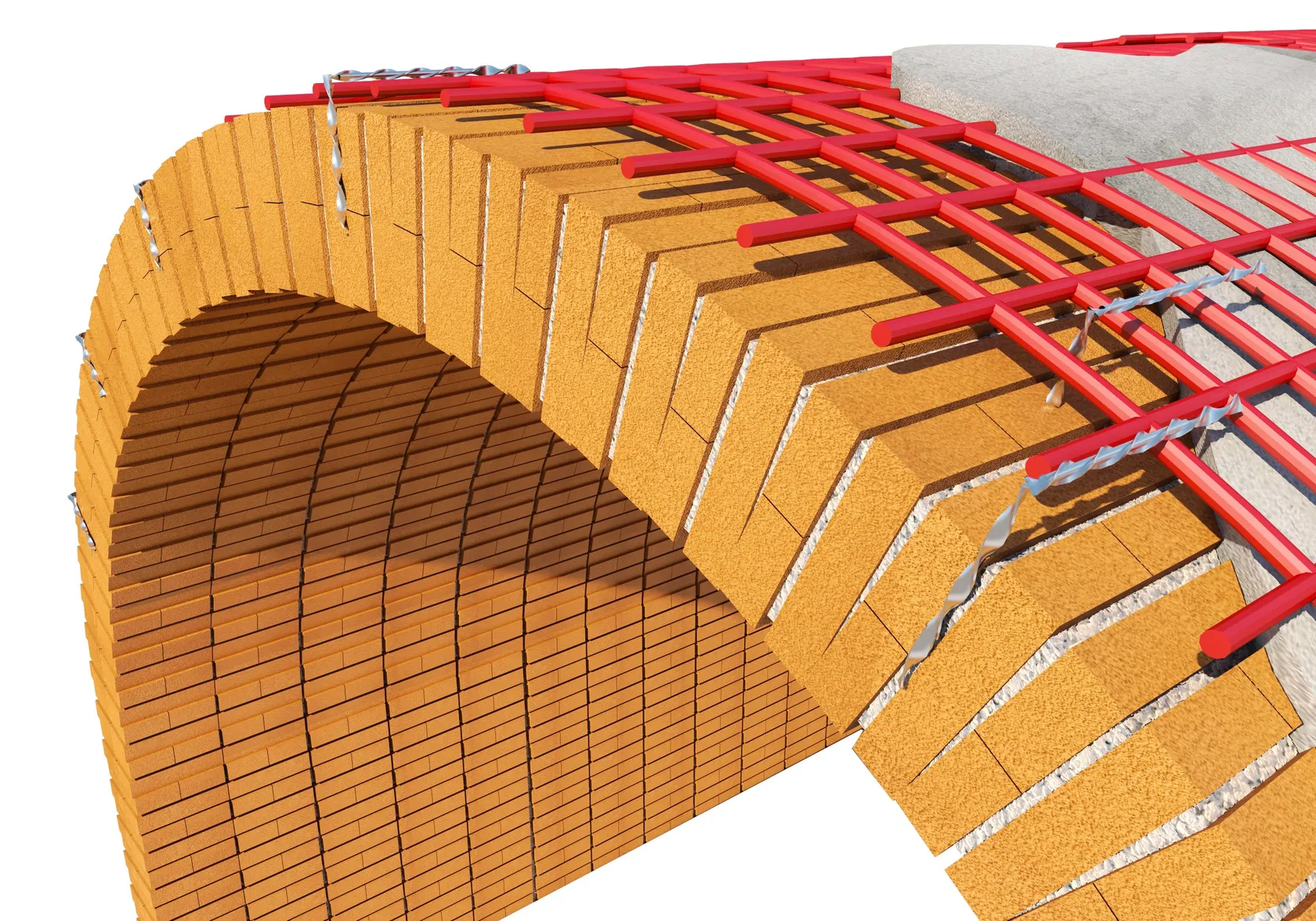
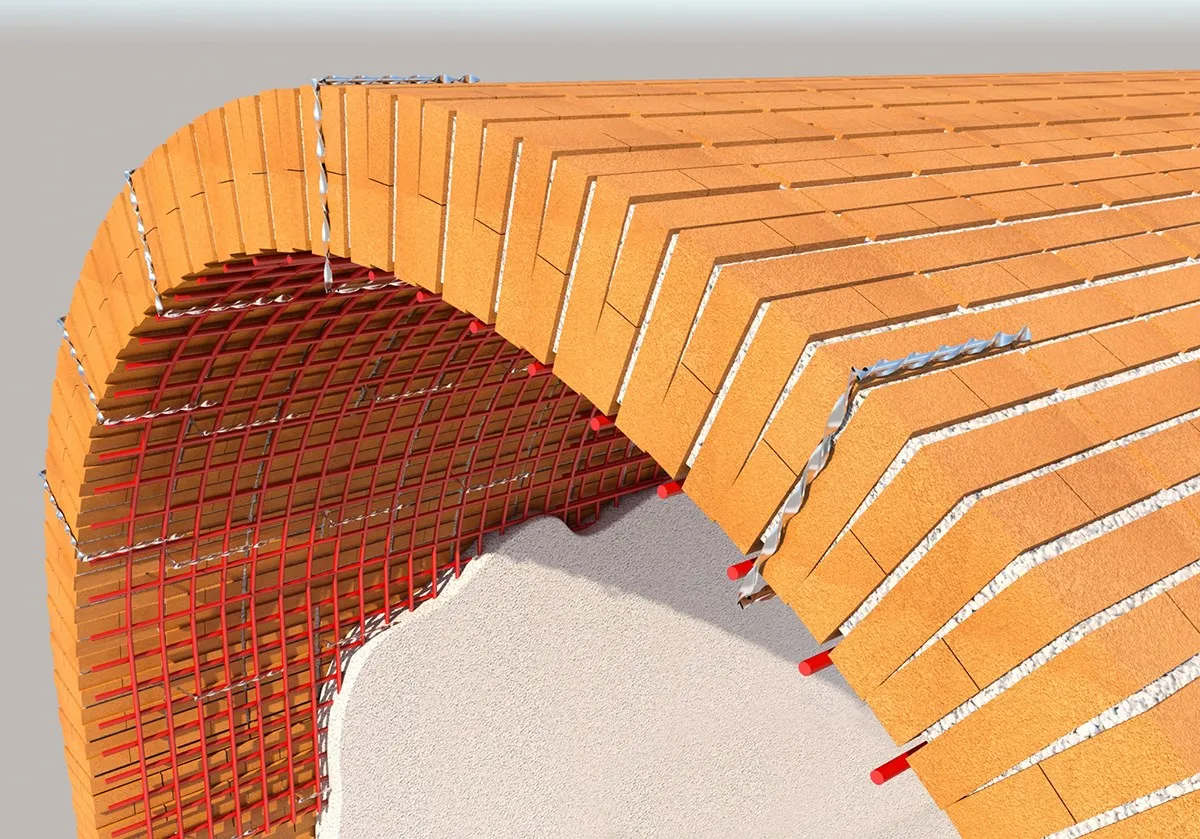
The high-strength alkali-resistant (AR) fibreglass reinforcement mesh, together with the Betoncino mortar, forms the external structural reinforcement layer. Working in conjunction with the lime mortar, the mesh bridges cracks, distributes stresses and maintains continuity across the surface, reducing the risk of localised failure.
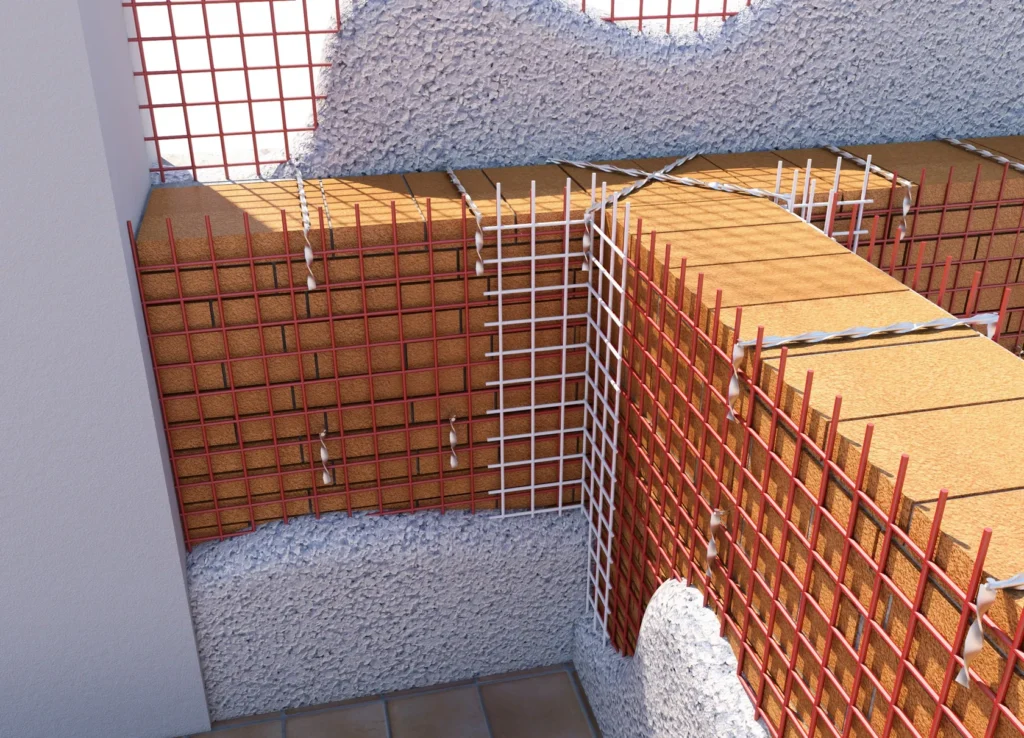
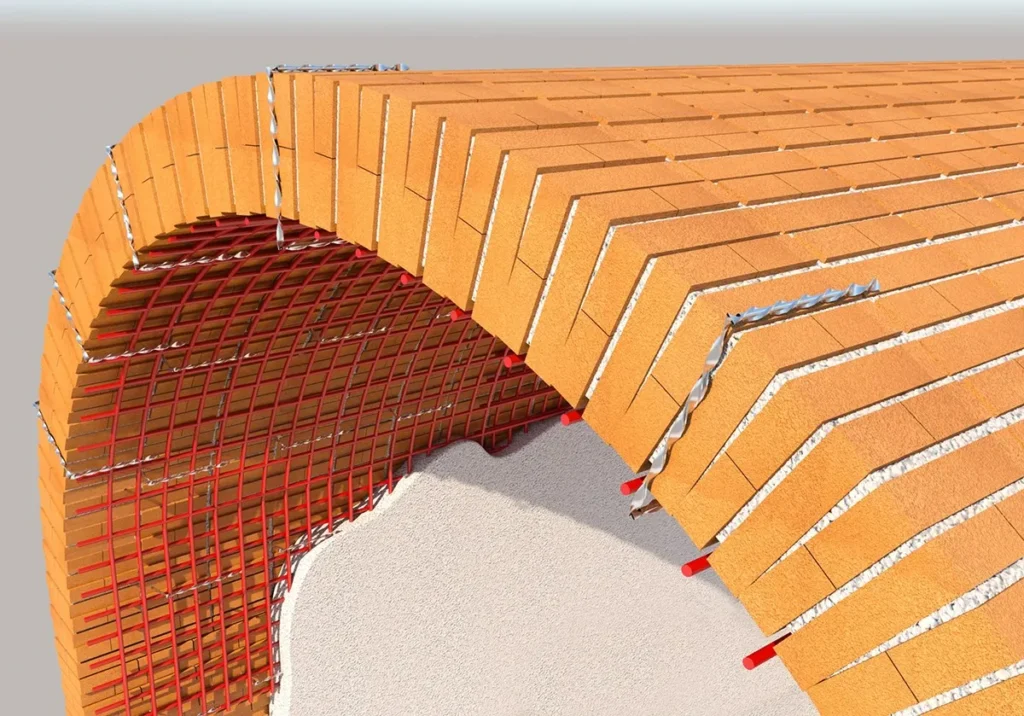
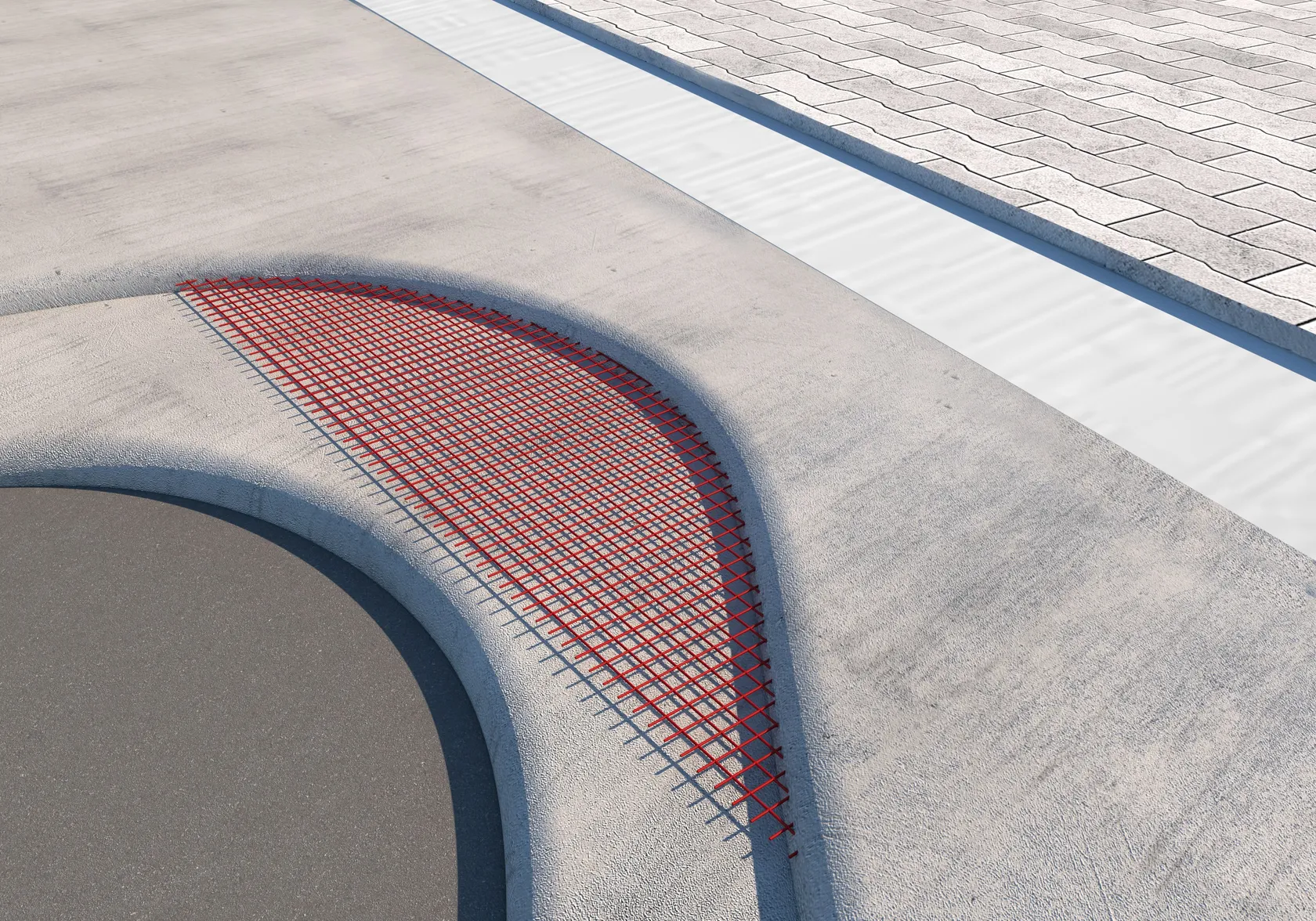
Once embedded, the mesh does not sit on the surface — it becomes fully integrated within the mortar, forming a continuous reinforced layer across the wall, floor or vault. Rather than strengthening the structure at isolated points, it spreads loads evenly over wider areas, helping to reduce cracking, increase load bearing capacity and stabilise the weakened or fractured masonry. This is particularly important in historic construction, where walls are often irregular and internally discontinuous.
The glass fibres contain more than 16% zirconium dioxide, making them resistant to the lime alkaline (chemically harsh) environment, ensuring long-term durability. The polymer coating enhances adhesion, improving the bond between the mesh and the mortar, allowing them to act together as a single, unified structural layer.
3. Lime Injection Grout (Calce F3 MGN)
Calce F3 MGN is a fluid lime injection grout for INTERNAL structural consolidation.
It is injected into voids, cracks and cavities within the masonry, where it restores internal cohesion by binding loose material and strengthening the wall core. This is particularly important in historic walls, where washout, voided cores or loss of bonding between elements can leave the structure weak and internally discontinuous.
Once injected, the grout fills and reconnects the internal fabric of the wall, rebuilding continuity from within and allowing loads to be transferred more effectively through the masonry.
Unlike rigid cement-based grouts, which can introduce hard, brittle inclusions, this lime grout remains flexible and compatible with the existing structure, allowing it to adapt to movement without causing internal stress. Its low soluble salt content also makes it suitable for salt-affected masonry, where inappropriate materials would accelerate decay.
The grout also plays a critical role in the system by securing and anchoring the fibreglass connectors within the wall, ensuring a reliable bond between the internal core and the external reinforcement layer.
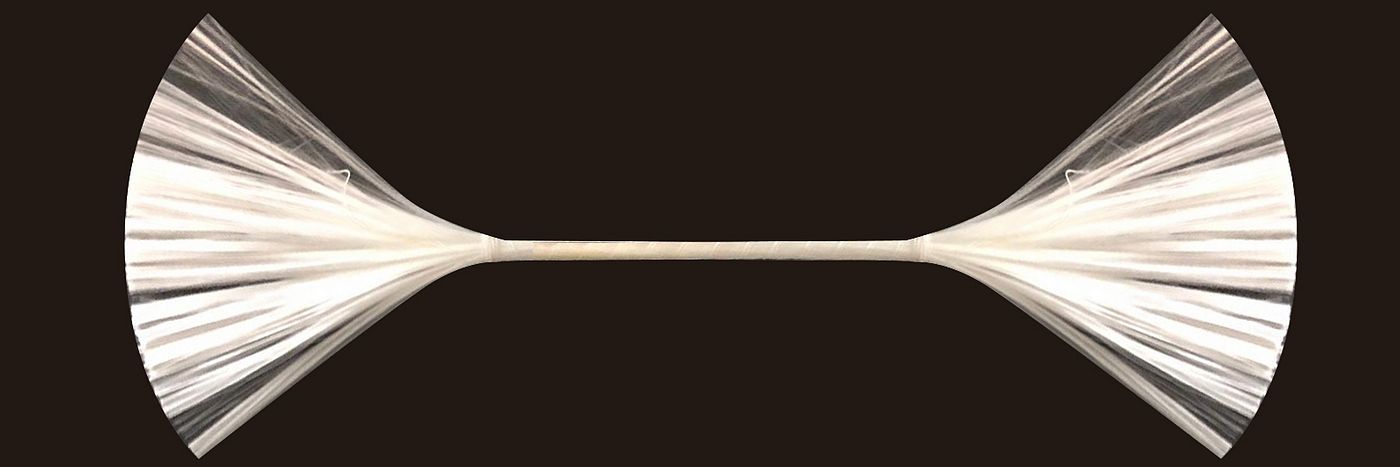
4. Fibreglass Connectors - Single / Double Ended
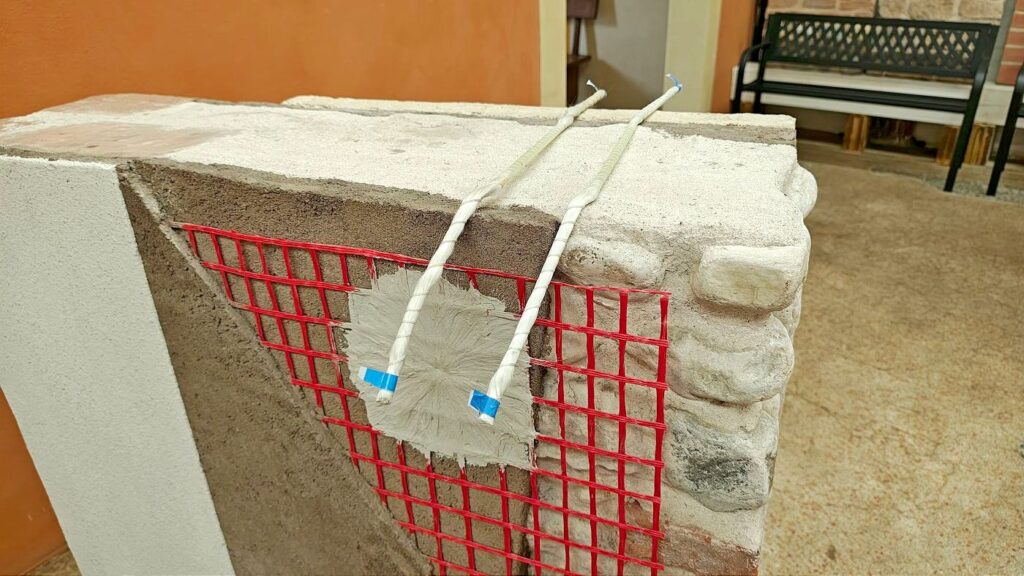
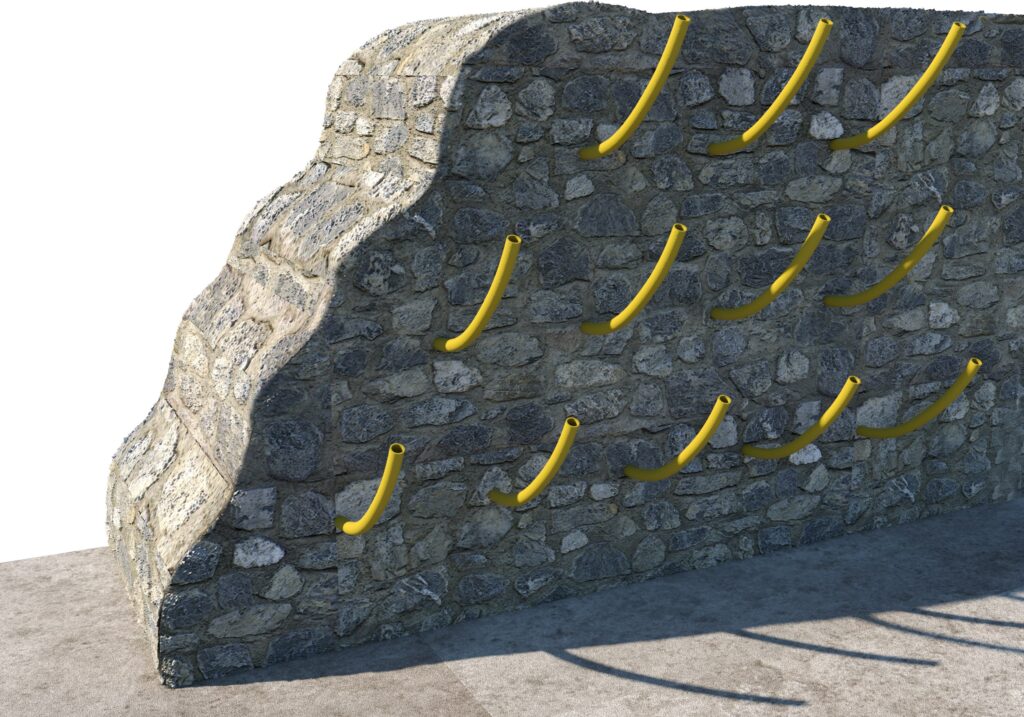
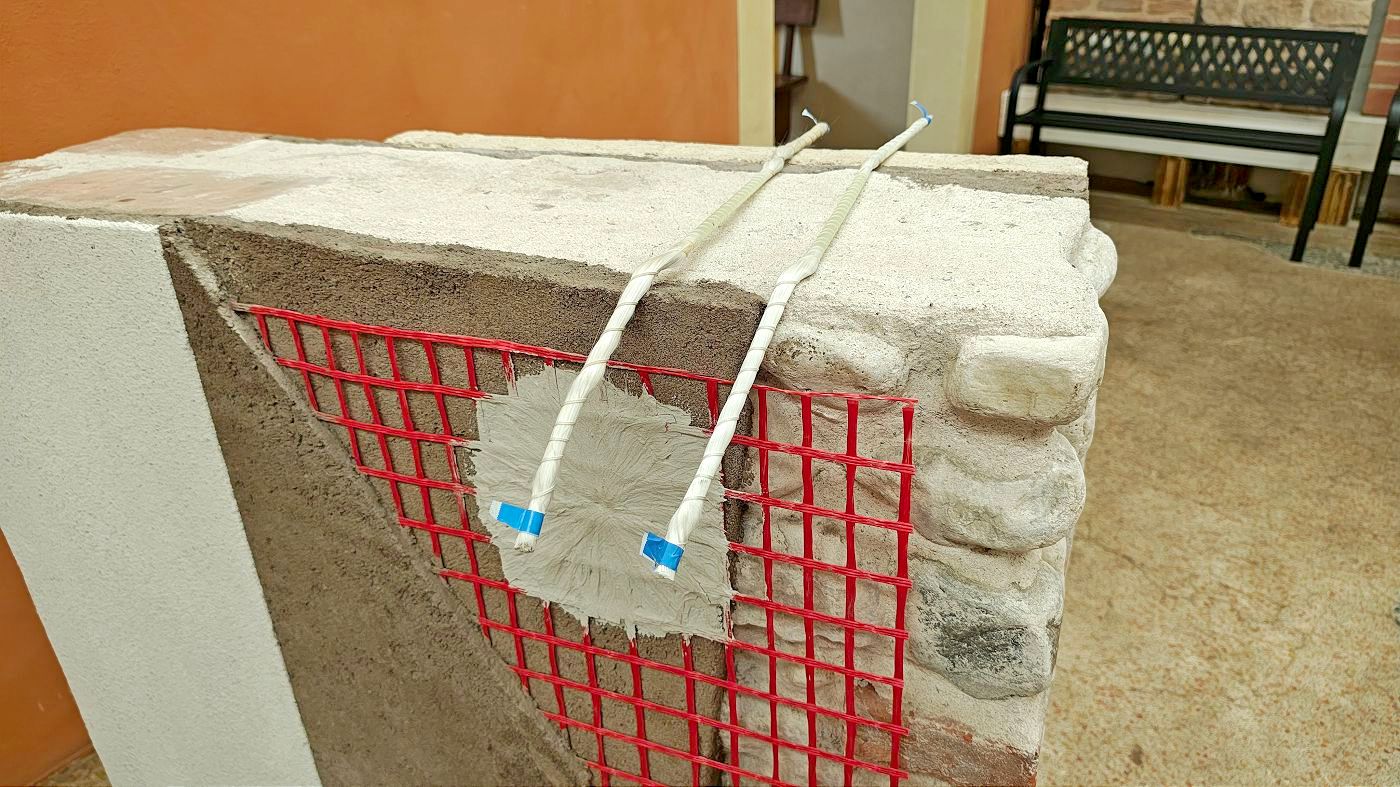
The connectors provide the through-thickness reinforcement that transforms a surface-applied reinforcement layer into a fully integrated structural system.
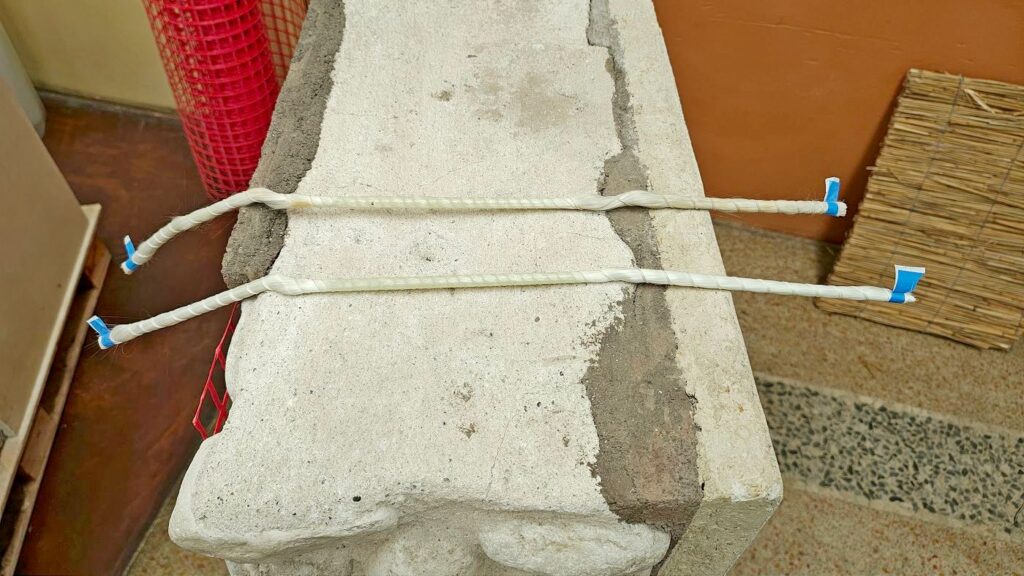
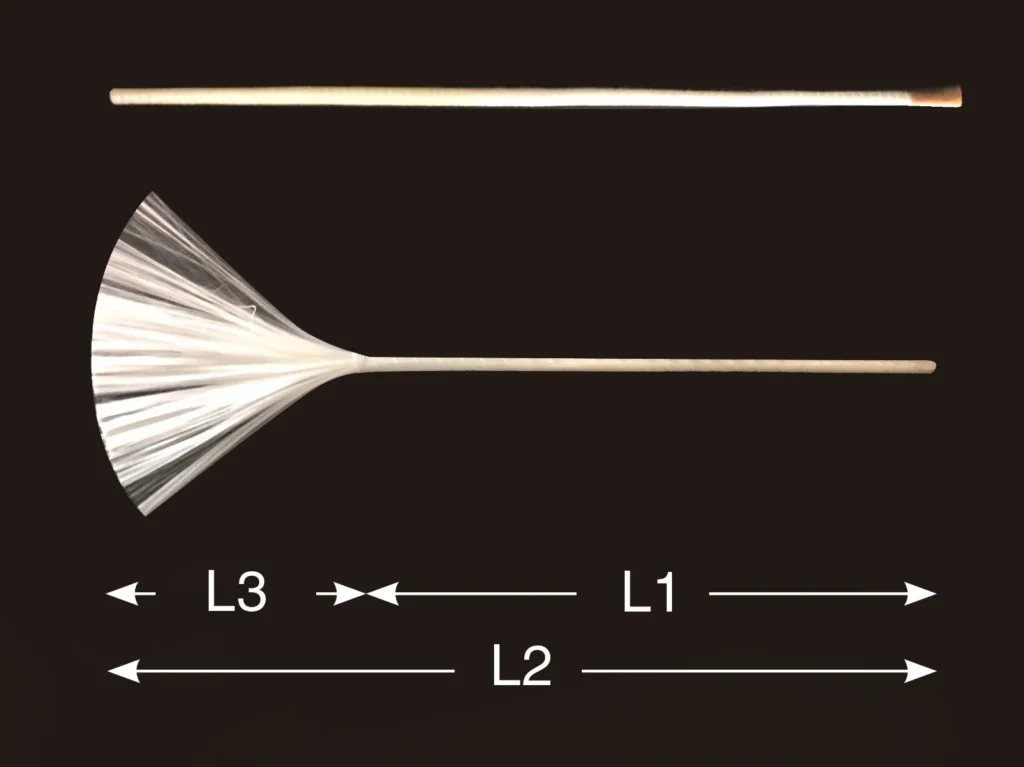
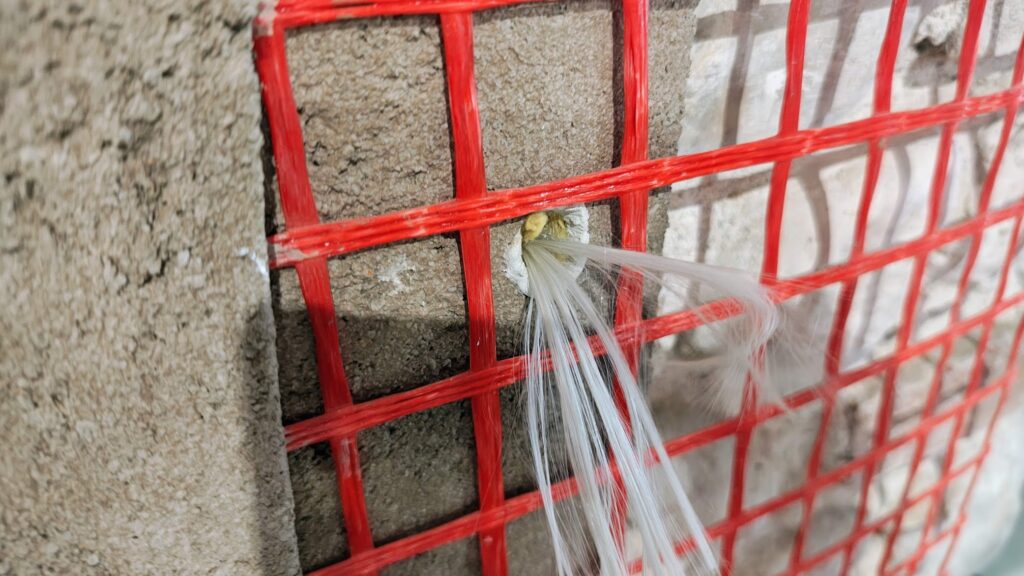
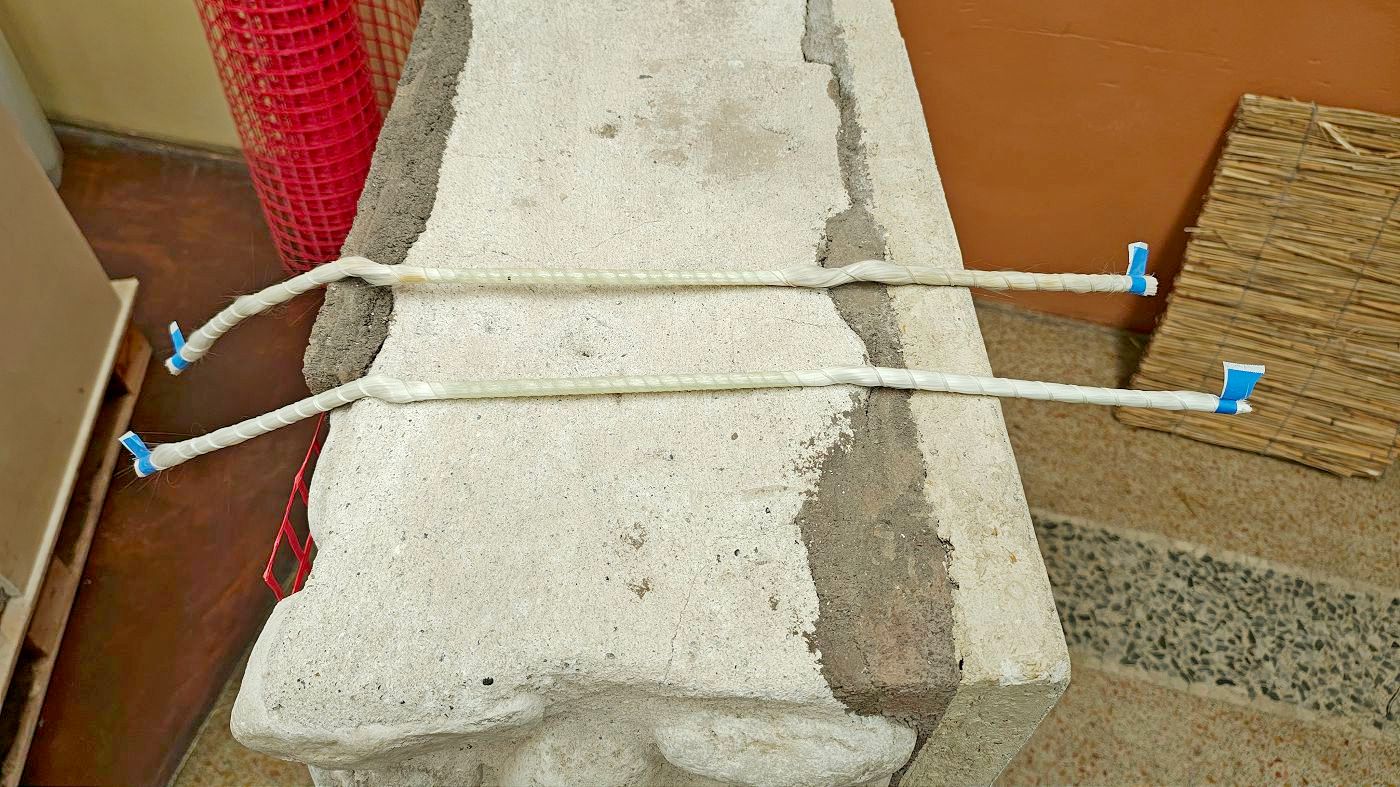
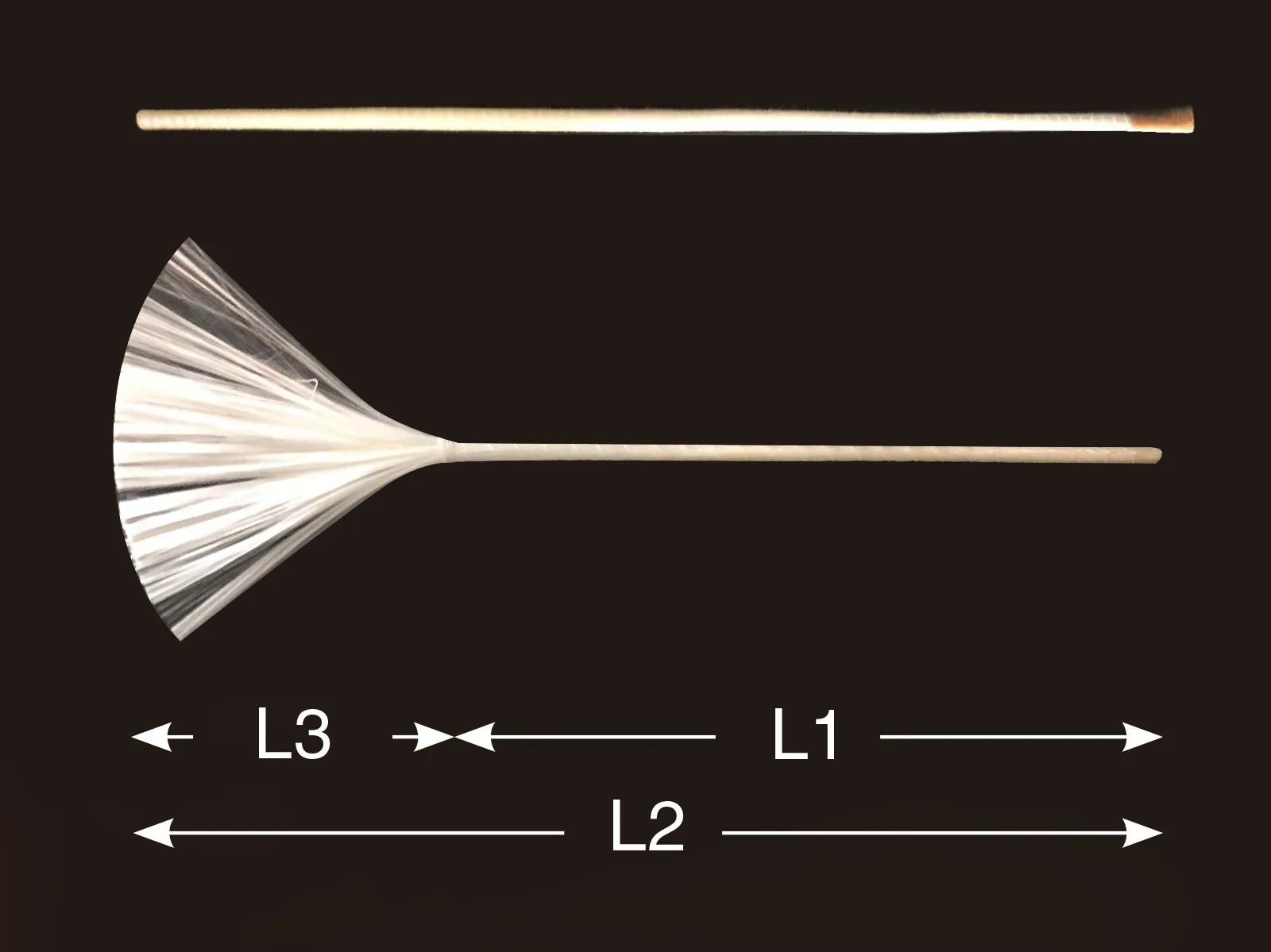
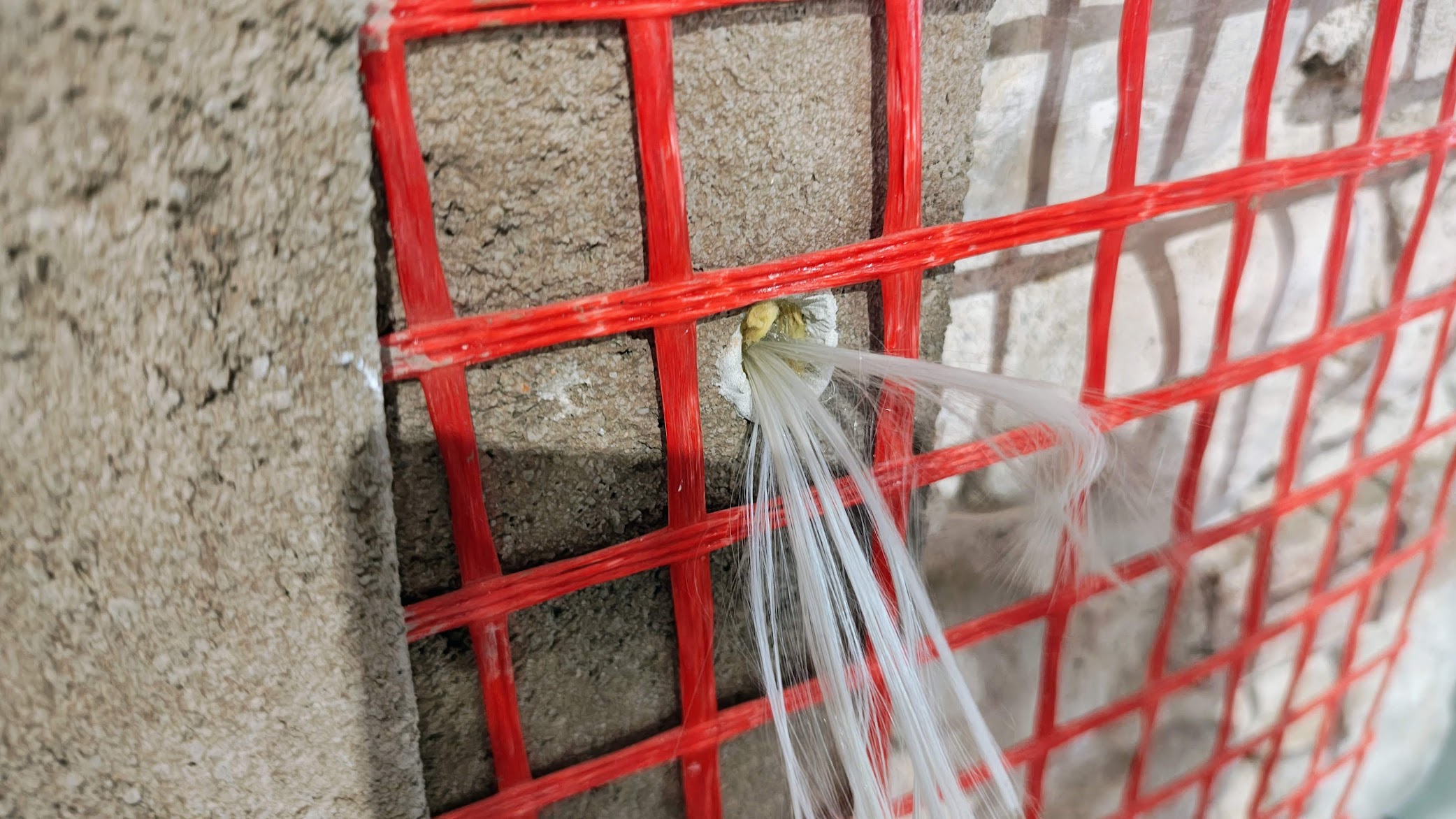
Each connector consists of a rigid central rod with fibre ends that are opened out (splayed) into the mortar layers. Once embedded, these fibres interlock with the lime mortar, creating a strong mechanical bond that effectively anchors the reinforced layer into the masonry. Where required, they also tie opposite faces of the wall together, ensuring the system works through the full thickness rather than as a surface skin.
In practice, the connectors act as structural stitching, linking the reinforcement to the substrate and preventing separation between layers. This is particularly important in historic masonry, where internal cohesion is often weak or irregular.
Two connector configurations are used:
- Single-ended connectors: for reinforcing and anchoring one side of the wall - Double-ended connectors: for full through-wall tying, connecting both faces of the wall
The connectors' role is to:
Ensure effective load transfer between the reinforcement and substrate
Prevent debonding or detachment of the reinforced layer
Stabilise cracked, delaminated or loosely bonded masonry
Improve overall behaviour under lateral and seismic loading
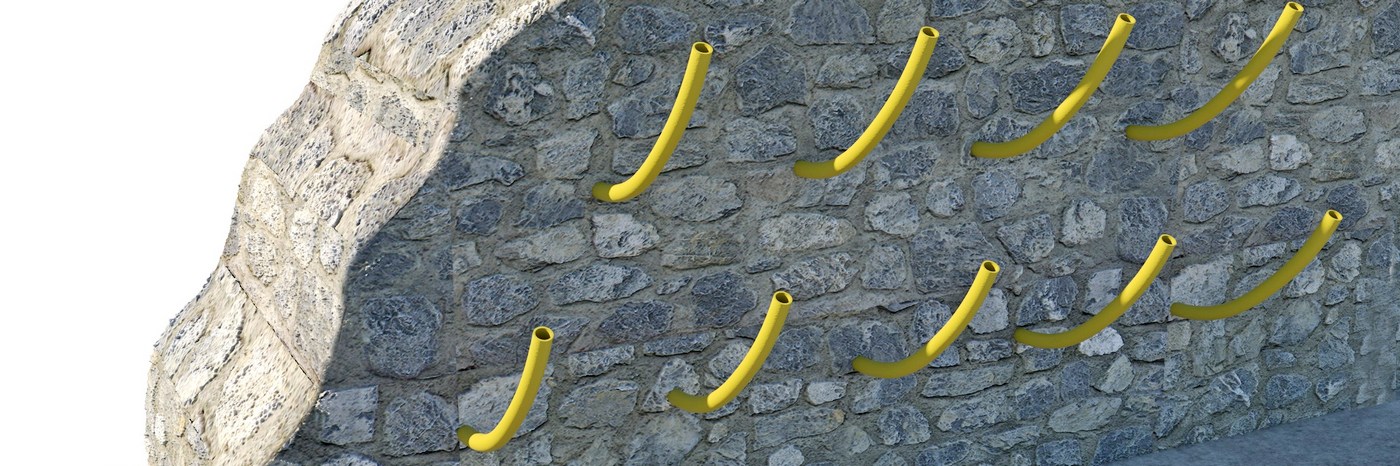
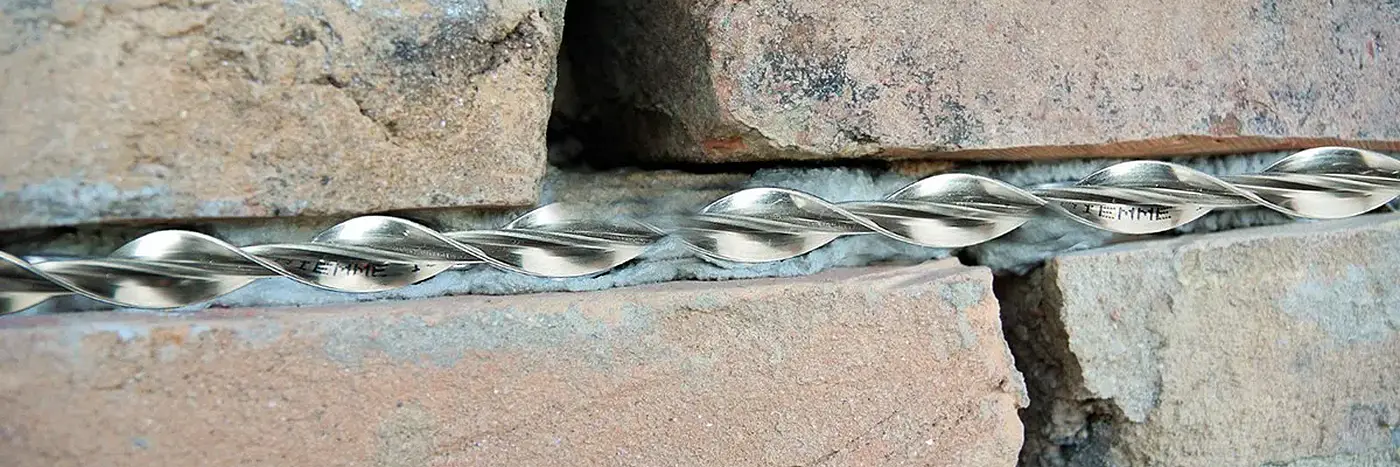
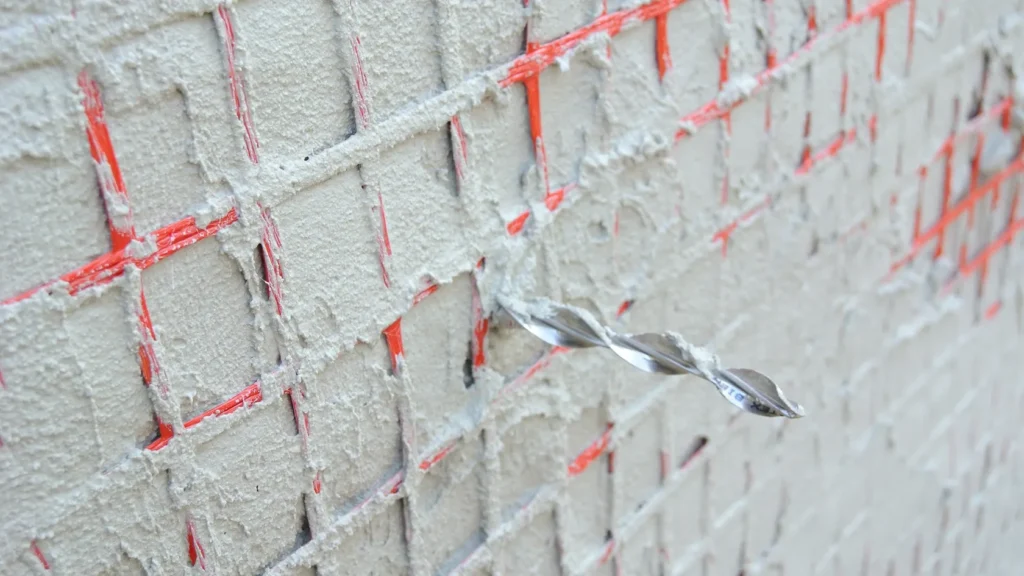
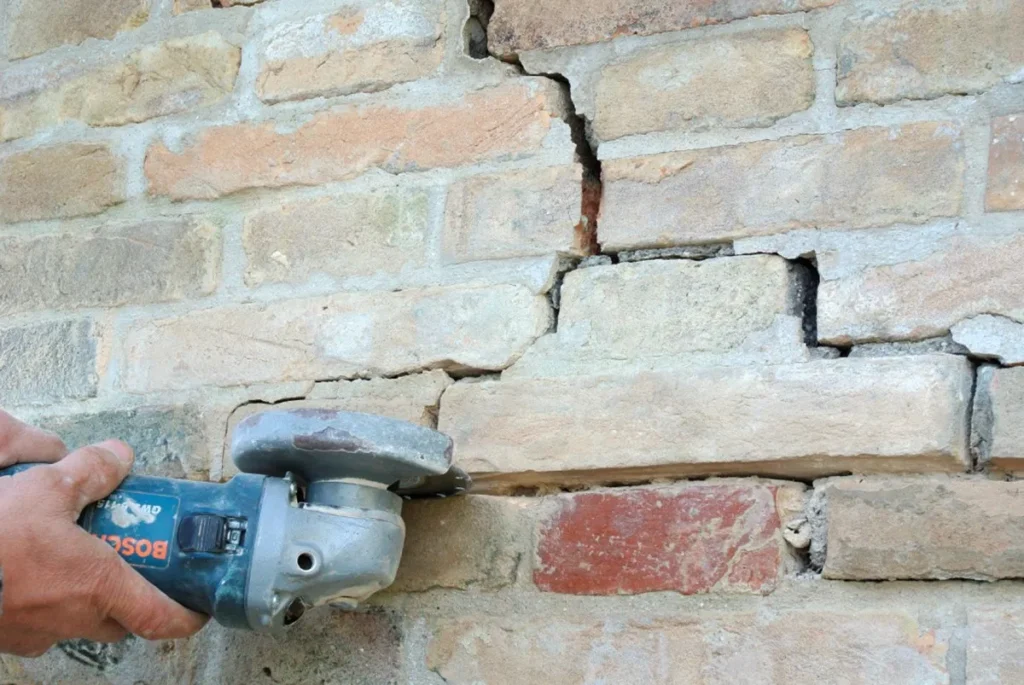
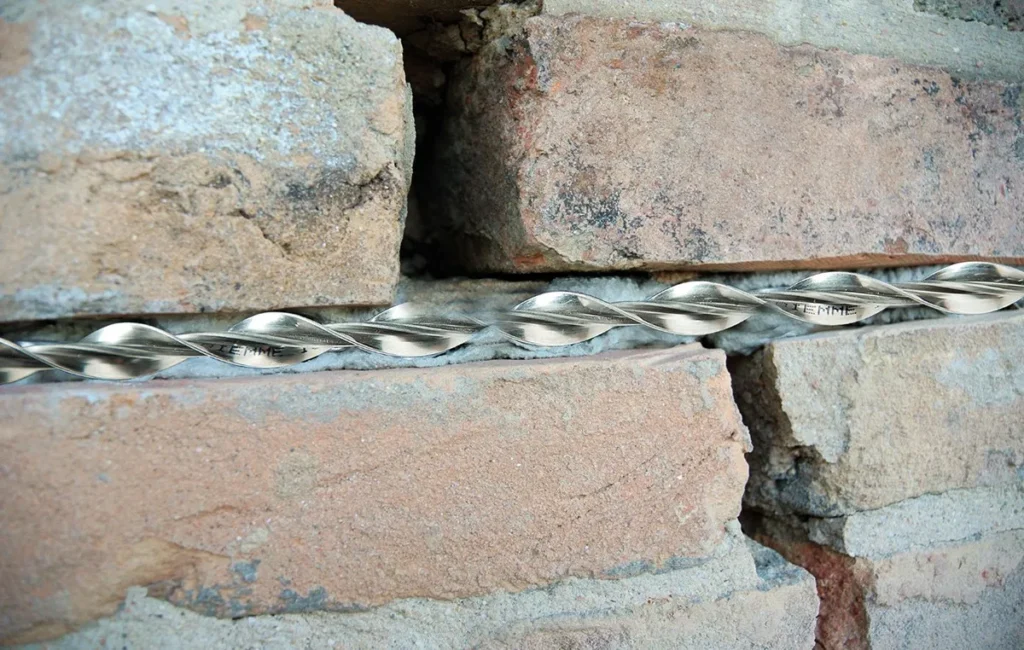
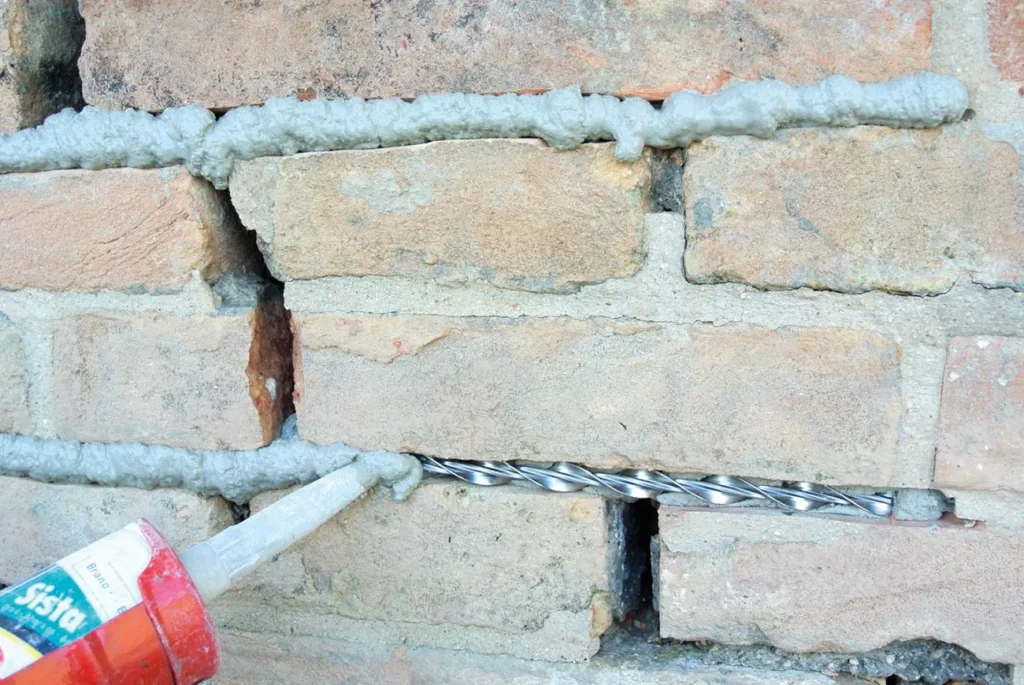
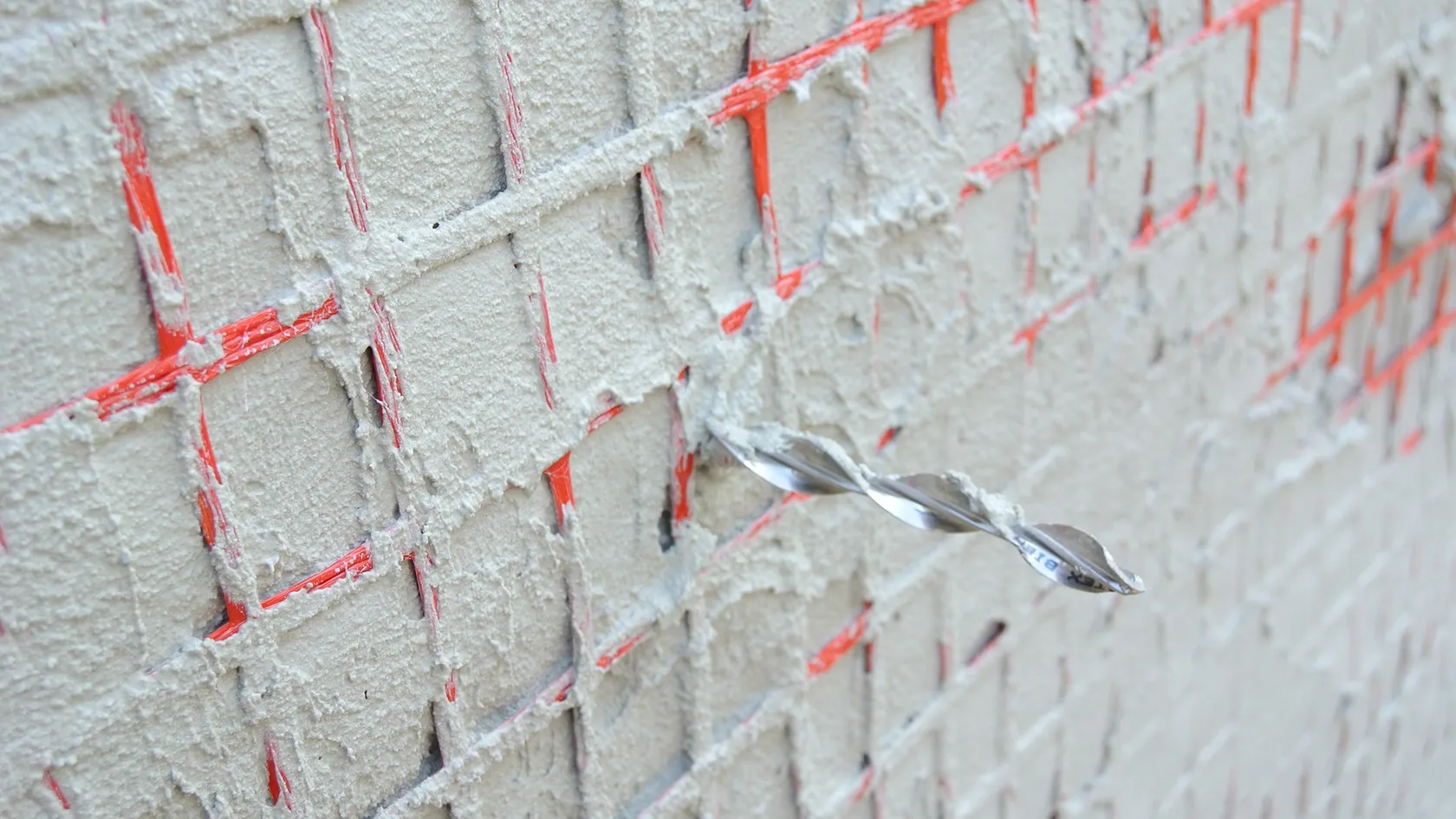
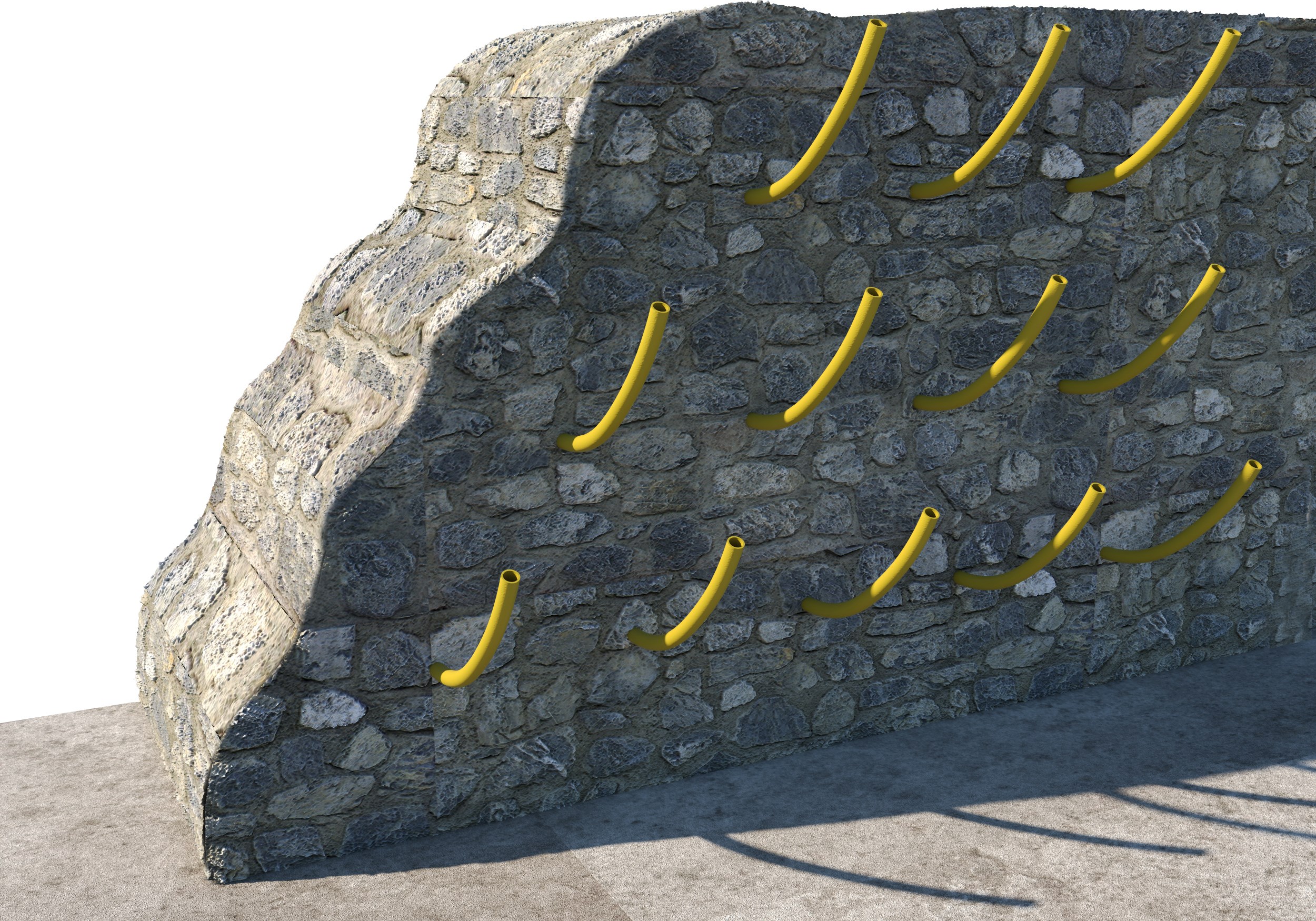
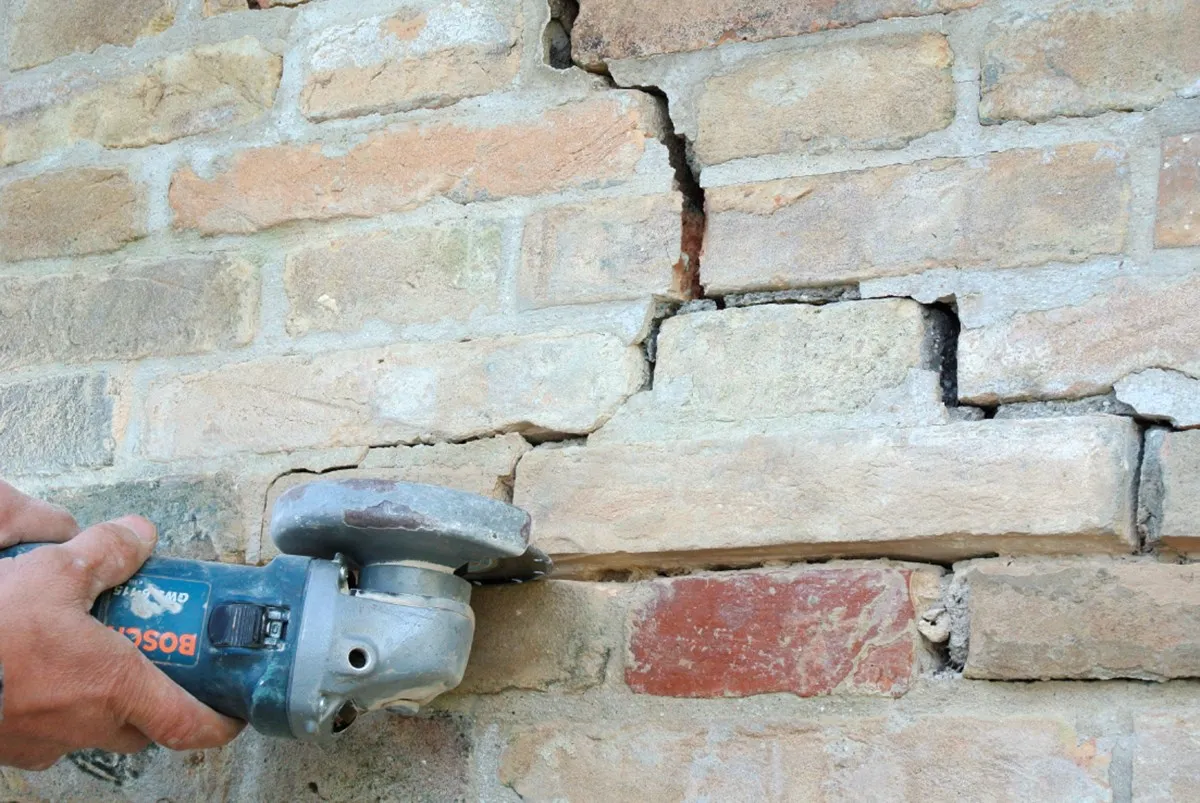
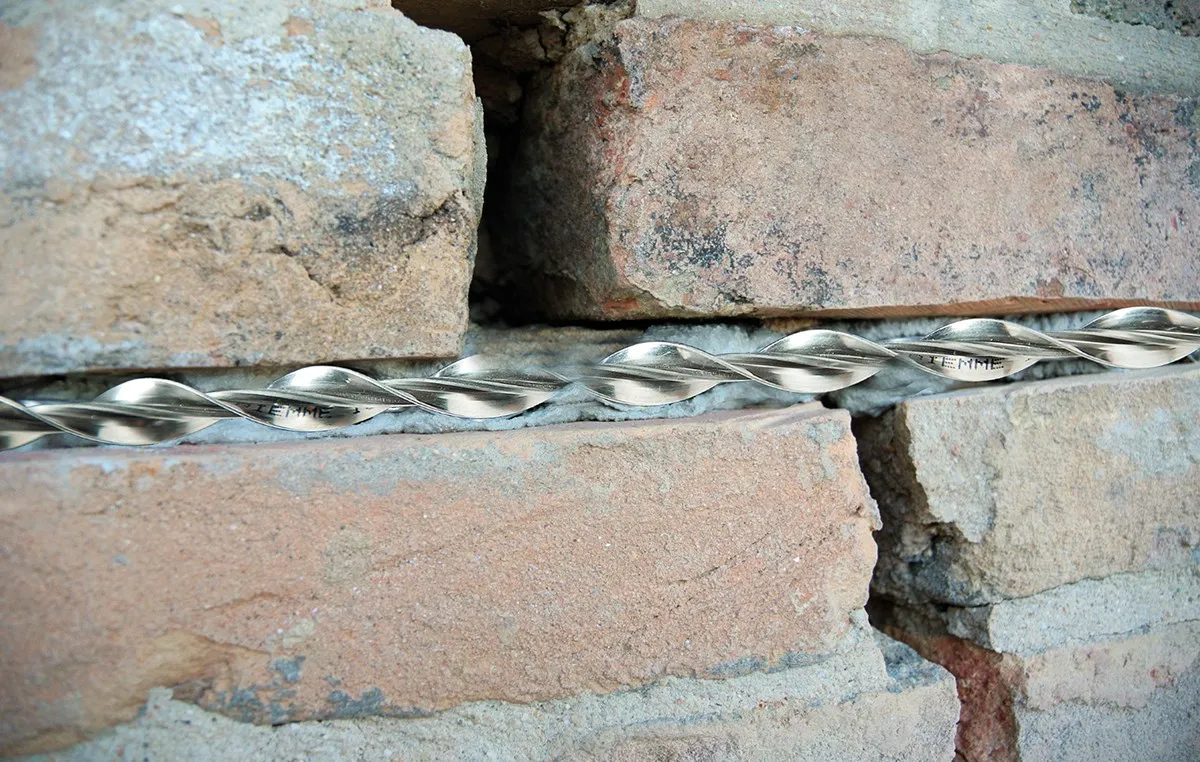
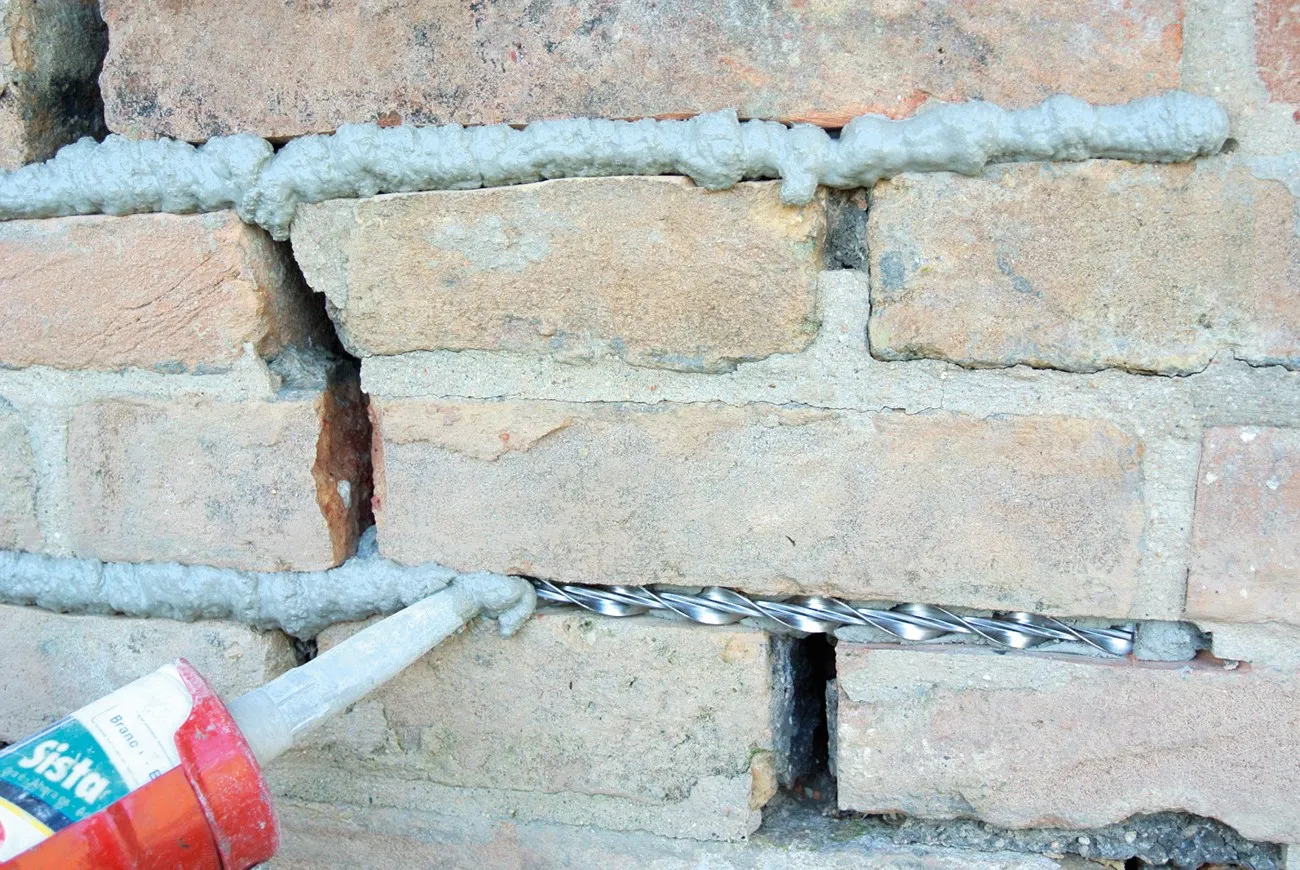
In addition to the fibreglass connectors, the system can incorporate helical (spiral) stainless steel reinforcement bars, used where higher local strength, anchorage or mechanical restraint is required.
These bars are made from stainless steel (AISI 304 or AISI 316) and formed into a helicoidal (spiral) profile. This geometry is not incidental — it allows the bar to grip into the surrounding mortar or masonry, creating a strong mechanical bond without relying solely on adhesion. When installed into drilled holes or bed joints, they act as reinforcing ties, helping to stabilise cracked or separated masonry and improve load transfer across weak areas.
Because they are stainless steel rather than carbon steel, they offer excellent resistance to corrosion, making them suitable for use in damp or salt-exposed masonry, where traditional steel would be at risk of deterioration.
Within the system, these connectors are typically used to:
Stitch cracks and fractured masonry together
Provide localised reinforcement in areas of weakness
Improve anchorage around openings, corners or structural discontinuities
Complement the fibre connectors where additional mechanical strength is required
They can be used alongside the lime-based mortars and mesh system, integrating into the overall reinforcement strategy while remaining compatible with the substrate.
Here are a few images, showing potential applications.
A structural system is only as reliable as its proven performance. In the case of the MGN Structural Consolidation System, the combination of lime mortars, mesh and connectors is not just theoretical — it is supported by independent European certification and continuous production control. This provides a clear, verifiable basis for specification, ensuring that the system performs as intended in real conditions, not just in principle.
European Technical Assessment (ETA) and EOTA Framework
At European level, construction products and systems are assessed through EOTA (European Organisation for Technical Assessment), a body that tests and evaluates construction systems consistently and reliably across Europe. This ensures that results are comparable, transparent and recognised internationally.
Within this framework, systems such as the MGN Lime Structural Consolidation System are issued with an ETA (European Technical Assessment). This official document (ETA Number 23/0712, issued on 15/09/2023) confirms that the system has been independently tested and verified for its intended structural use. For engineers and specifiers, this provides reliable, standardised performance data that can be used in design and specification.
The process is thorough and goes beyond simple material testing. Instead of looking at each component in isolation, the ETA evaluates how the system works as a whole.
For the MGN system, this includes testing of the reinforcement mesh for tensile strength and durability in alkaline conditions, testing of the fibreglass connectors for tensile performance, pull-out resistance and resistance to moisture, salts and freeze–thaw cycles. Just as importantly, the interaction between mortar, mesh and connectors is also assessed, confirming that the system behaves as a coherent structural solution when applied to historic masonry.
This level of evaluation is particularly significant for a lime-based system. While cement-based reinforcement solutions are often standardised and widely tested, lime and pozzolanic systems are more commonly specified based on experience and precedent. The ETA places the MGN system within a fully engineered and quantified framework, making it suitable not only for conservation work but also for structural and seismic applications.
Independent Production Certification – TÜV
In addition to the ETA, the system is supported by independent factory production control certification issued by TÜV SÜD. This certification confirms that the materials are manufactured in accordance with the Construction Products Regulation (EU 305/2011) and relevant standards such as EN 998-2 for masonry mortars. It also verifies that production is subject to continuous monitoring and quality control.
In practical terms, this ensures that the materials delivered to site are consistent with those tested during the ETA process, maintaining the declared performance over time and across different batches. This combination of European technical assessment and independent production control allows a true lime-based system to achieve the same level of technical validation typically associated with cement-based solutions, but without the risks and compatibility problems that cement introduces to historic masonries.
Lime Structural Consolidation and Crack Repair
Today, the Betoncino Consolidante MGN Roman mortar serves as an exceptional lime-based structural consolidation and reinforcement mortar, ideal for a wide range of consolidation and repair projects. It is also suitable for use as a bedding or building mortar in diverse construction projects.
The example below demonstrates the reinforcement of an old door frame, highlighting its value in conservation projects.
Here are the typical recommended materials/ products for this solution. Other product variations are possible as we have different types of plasters and paints, depending on your needs or application. Please get in touch to discuss additional options.
[20-40 mm] Structural Consolidation lime plaster, in 20 – 40 mm or more thickness, applied as:
█ [10 – 15 mm] Consolidation plaster, coat 1
▒ [Mesh] Structural reinforcement mesh (20 x 20 mm, 40 x 40 mm): embedded between coats for additional reinforcement and flexibility.
█ [10 – 15 mm] Consolidation plaster, coat 2. Etc.
Pointing, Consolidation, Building
Modena M5 MGN
[20-40 mm] Structural Consolidation lime plaster, in 20 – 40 mm or more thickness, applied as:
█ [10 – 15 mm] Consolidation plaster, coat 1
▒ [Mesh] Structural reinforcement mesh (20 x 20 mm, 40 x 40 mm): embedded between coats for additional reinforcement and flexibility.
█ [10 – 15 mm] Consolidation plaster, coat 2. Etc.
Consolidation
Calce Fluid F3 MGN
█ [As needed] Injectable lime grout: after mixing with clean tap water, inject or pour the liquid grout into the wall fabric to fill in any voids or cracks to consolidate the inner structure of the wall.
Plaster Application
Here are some key application points about the application of each plaster, as well as links to the full application guides. Please have your plasterer read / watch the application instructions below before applying the products. If any questions, please contact us, happy to help.
Clean the masonry: the plaster must be applied on a cleaned and uniformly wet substrate. All crumbling and loose parts must be removed by brushing so the masonry is free of dust, salts and oils. If possible, also wash the walls with a pressure washer; this will clean and wet the walls in one go. Close larger holes with lime mortar and pieces of bricks.
Salt-inhibitors or PVA bonding agents are NOT needed and should not be used before the application of this plaster. This natural lime plaster bonds very well on its own.
Mixing: mix the material with clean tap water only without adding anything else (no other material or additive), until a homogenous, creamy-consistency mix is obtained.
IMPORTANT: Dry to wet mixing: plasters with hydraulic ingredients should always be mixed from dry to wet (workable) state. Add your powder to a bit of water, start mixing and gradually add more water till the right consistency is reached. This is the right way. Mixing the other way – wet to dry mixing – by starting with lots of water then gradually adding powder to the right consistency, is incorrect. Reason: excessive wetting weakens the plaster, alters its hydraulic set resulting in less performant, more friable and shorter lasting plasters.
Application: apply the plaster in 10 mm coats.
Light key: give the plaster a light key using a wet brush. Do not cut into the material with the edge of a trowel.
Additional coats can be applied in further 10 mm increments. Use an embedded fibreglass mesh for extra reinforcement over the recommended thickness.
Drying time: the plaster dries quite quickly, typically in 1-2 days, depending on ambient conditions. Once it has hardened, the next coat can be applied.
Application conditions: ambient and wall temperatures must be between +5 to +30°C during application. Surfaces should be protected from rain and humidity until they have completely dried (approx. 3 – 10 days depending on weather conditions).
Clean the masonry: the plaster must be applied on a cleaned and uniformly wet substrate. All crumbling and loose parts must be removed by brushing so the masonry is free of dust, salts and oils. If possible, also wash the walls with a pressure washer; this will clean and wet the walls in one go. Close larger holes with lime mortar and pieces of bricks.
Mixing: mix the material with clean tap water only without adding anything else (no other material or additive), until a homogenous, creamy-consistency mix is obtained.
IMPORTANT: Dry to wet mixing: plasters with hydraulic ingredients should always be mixed from dry to wet (workable) state. Add your powder to a bit of water, start mixing and gradually add more water till the right consistency is reached. This is the right way. Mixing the other way – wet to dry mixing – by starting with lots of water then gradually adding powder to the right consistency, is incorrect. Reason: excessive wetting weakens the plaster, alters its hydraulic set resulting in less performant, more friable and shorter lasting plasters.
Application: apply the plaster in 10 mm coats.
Additional coats can be applied in further 10 mm increments. Use an embedded fibreglass mesh for extra reinforcement over the recommended thickness.
Drying time: the plaster dries quite quickly, typically in 1-2 days, depending on ambient conditions. Once it has hardened, the next coat can be applied.
Mixing: mix the material with clean tap water only without adding anything else (no other material or additive), until a homogenous, creamy-consistency mix is obtained.
IMPORTANT: Dry to wet mixing: plasters with hydraulic ingredients should always be mixed from dry to wet (workable) state. Add your powder to a bit of water, start mixing and gradually add more water till the right consistency is reached. This is the right way. Mixing the other way – wet to dry mixing – by starting with lots of water then gradually adding powder to the right consistency, is incorrect. Reason: excessive wetting weakens the plaster, alters its hydraulic set resulting in less performant, more friable and shorter lasting plasters.
Application: diluted to the right consistency, inject or pour it into the wall fabric to fill in any voids or cracks.
Application conditions: ambient and wall temperatures must be between +5 to +30°C during application. Surfaces should be protected from rain and humidity until they have completely dried (approx. 3 – 10 days depending on weather conditions).
Clean the masonry: the plaster must be applied on a cleaned and uniformly wet substrate. All crumbling and loose parts must be removed by brushing so the masonry is free of dust, salts and oils. If possible, also wash the walls with a pressure washer; this will clean and wet the walls in one go. Close larger holes with lime mortar and pieces of bricks.
Salt-inhibitors or PVA bonding agents are NOT needed and should not be used before the application of this plaster. This natural lime plaster bonds very well on its own.
Mixing: mix the material with clean tap water only without adding anything else (no other material or additive), until a homogenous, creamy-consistency mix is obtained.
IMPORTANT: Dry to wet mixing: plasters with hydraulic ingredients should always be mixed from dry to wet (workable) state. Add your powder to a bit of water, start mixing and gradually add more water till the right consistency is reached. This is the right way. Mixing the other way – wet to dry mixing – by starting with lots of water then gradually adding powder to the right consistency, is incorrect. Reason: excessive wetting weakens the plaster, alters its hydraulic set resulting in less performant, more friable and shorter lasting plasters.
Application: apply the plaster in 10 mm coats.
Light key: give the plaster a light key using a wet brush. Do not cut into the material with the edge of a trowel.
Additional coats can be applied in further 10 mm increments. Use an embedded fibreglass mesh for extra reinforcement over the recommended thickness.
Drying time: the plaster dries quite quickly, typically in 1-2 days, depending on ambient conditions. Once it has hardened, the next coat can be applied.
Application conditions: ambient and wall temperatures must be between +5 to +30°C during application. Surfaces should be protected from rain and humidity until they have completely dried (approx. 3 – 10 days depending on weather conditions).
Clean the masonry: the plaster must be applied on a cleaned and uniformly wet substrate. All crumbling and loose parts must be removed by brushing so the masonry is free of dust, salts and oils. If possible, also wash the walls with a pressure washer; this will clean and wet the walls in one go. Close larger holes with lime mortar and pieces of bricks.
Mixing: mix the material with clean tap water only without adding anything else (no other material or additive), until a homogenous, creamy-consistency mix is obtained.
IMPORTANT: Dry to wet mixing: plasters with hydraulic ingredients should always be mixed from dry to wet (workable) state. Add your powder to a bit of water, start mixing and gradually add more water till the right consistency is reached. This is the right way. Mixing the other way – wet to dry mixing – by starting with lots of water then gradually adding powder to the right consistency, is incorrect. Reason: excessive wetting weakens the plaster, alters its hydraulic set resulting in less performant, more friable and shorter lasting plasters.
Application: apply the plaster in 10 mm coats.
Additional coats can be applied in further 10 mm increments. Use an embedded fibreglass mesh for extra reinforcement over the recommended thickness.
Drying time: the plaster dries quite quickly, typically in 1-2 days, depending on ambient conditions. Once it has hardened, the next coat can be applied.
Mixing: mix the material with clean tap water only without adding anything else (no other material or additive), until a homogenous, creamy-consistency mix is obtained.
IMPORTANT: Dry to wet mixing: plasters with hydraulic ingredients should always be mixed from dry to wet (workable) state. Add your powder to a bit of water, start mixing and gradually add more water till the right consistency is reached. This is the right way. Mixing the other way – wet to dry mixing – by starting with lots of water then gradually adding powder to the right consistency, is incorrect. Reason: excessive wetting weakens the plaster, alters its hydraulic set resulting in less performant, more friable and shorter lasting plasters.
Application: diluted to the right consistency, inject or pour it into the wall fabric to fill in any voids or cracks.
Application conditions: ambient and wall temperatures must be between +5 to +30°C during application. Surfaces should be protected from rain and humidity until they have completely dried (approx. 3 – 10 days depending on weather conditions).
Completed Projects
Here are some of our projects using this solution:
The MGN Structural Consolidation System is designed to strengthen masonry and vaulted structures using lime-based structural mortars, reinforced with glass fibre mesh and connectors. It combines traditional lime mixes with modern reinforcement to create a continuous structural layer across the surface of the wall.
Unlike concrete-based systems, which are dense, rigid and often too strong for historic masonry, this system is built around materials that are very similar to the original fabric. Lime mortars are more flexible, more accommodating of movement, and able to absorb and redistribute stresses rather than forcing them into the masonry.
Structural consolidation of an old door frame with a Roman lime plaster. The wall fabric decayed as a result of excess humidity from wind driven rain and salt crystallization.
Here is an application example of the Betoncino Consolidante MGN structural reinforcement mortar used on an old barn with damaged, weakened masonry.
Any Questions? Need Technical Advice?
If you have any questions about a project, a problem, a solution, or any of our plasters - please get in touch.
We understand that each project is unique. Using the contact form below feel free to ask us any questions. Give us as much detail as you can about your project so we can get back to you with more relevant answers.