In traditional building practice, lime formed a complete family of materials. At one end of this spectrum were air limes (also known as hydrated limes), which harden only through contact with air and remain open and flexible. At the other end were water limes (also known as hydraulic limes), which can set in damp or even submerged conditions, forming strong, durable mortars while still allowing walls to breathe. Between these two lay many natural variations — all part of a continuum that gave historic builders remarkable control over how their mortars behaved.
Over time, much of this knowledge faded. Modern construction now tends to treat lime as a single product — air lime — overlooking the wide range of historic limes that once existed. Yet this “full lime spectrum” — from air to water lime — remains key to understanding how traditional materials achieved both strength and breathability, each in its proper balance.
At the heart of this craft were the pozzolans: volcanic sands and ashes that gave lime its almost magical qualities — the ability to withstand high humidity and even to harden under water.
This article retraces that forgotten knowledge and its relevance to modern conservation.
Pozzolans (from the Italian 'pozzolana') are fine natural powders such as volcanic sands and ashes, pumice, tuff or even crushed brick and tile fragments. When mixed with lime and water, they help the mortar to set in damp conditions, improving its strength, durability and water resistance while keeping it very breathable.
The name of these powders comes from "Pozzuoli", a small village near Naples, where the Romans first quarried these volcanic sands. By combining them with lime, they created mortars that could harden under water — a discovery that transformed ancient construction. This innovation gave rise to a new kind of architecture, producing monumental works such as the Pantheon, the Baths of Caracalla, and the great Roman harbours — many of which have stood for over 2,000 years.

Around 500 BC the ancient Greeks, and later the Romans, noticed that lime mixed with certain volcanic sands behaved differently from ordinary lime. When moisture was present, these mixes became firm and waterproof, even hardening under water — a phenomenon later described by the Roman architect Vitruvius in his treatise "On Architecture".
These volcanic materials were born in fire. During eruptions, molten magma was thrown into the air and cooled so rapidly that it broke into fine, porous particles with remarkable binding qualities. Over time, some of these deposits compacted into tuff, a soft volcanic stone widely used in Roman walls. This natural porosity gave pozzolans a special character: mortars made with them could resist water while still allowing the wall to breathe — a balance that lies at the heart of durable, healthy masonry.

Lime can harden in two ways:
Both hardening methods lead to a solid mortar, but they produce very different kinds of lime. In the past, these two families were known as air limes and water limes. Today they are more often called hydrated (air) and hydraulic (water) limes — a somewhat more confusing naming.
Pure lime mortars harden slowly in contact with air by gradually absorbing carbon dioxide — a natural process called carbonation. When lime is mixed with sand and water, it begins to react almost immediately with the air, forming a thin surface crust that starts to stiffen soon after application.
Because air and carbon dioxide can only reach the mortar from the outside, carbonation is a slow, gradual process. The reaction moves inward over time, however the deeper layers can remain soft for much longer — sometimes weeks or even months — especially in thick joints or in damp, enclosed places such as vaults and basements where air movement is limited.
The sand in a lime mix has a simple mechanical role. It gives body to the mortar and reduces shrinkage, while the lime acts as a gentle glue — coating and bonding the sand grains together as the mortar slowly hardens in contact with air.
When lime is mixed with natural volcanic materials such as sands, ashes, pumice or tuff, the mortar gains the ability to harden in the presence of water.
Unlike ordinary building sands, volcanic sands play an active role in the mix. They contain minerals called silicates and aluminates, which react with lime in the presence of water to form new binding compounds throughout the mortar. The aluminates control the early hardening, while the silicates gradually build the solid, stone-like structure that gives the mortar its long-term strength, stability, and resistance to moisture. This process, known as the pozzolanic reaction, does not depend on air; it occurs naturally wherever moisture is present, even deep inside the wall.
The pozzolanic reaction is much faster than carbonation because it occurs throughout the entire body of the mortar, not just on the surface. As a result, pozzolanic mortars harden quickly and reliably even in damp or shaded areas such as vaults, basements and lower walls.
Historically, mortars made with volcanic materials were called water limes — lime mortars that could set under water or in persistently damp conditions where air limes would not harden.
Because lime can harden in two different ways, builders in the past recognised this and called these two distinct lime types air limes and water limes. Together, they form the complete traditional lime spectrum — well known for centuries before the appearance of modern cement.
Air limes are half of the story; water (or pozzolanic) limes are the other half. Air limes were used for dry, airy places, water limes for damp or enclosed humid places. Both are authentic heritage materials, each suited to its own environment.
Here are the main differences between them and their use in conservation work:
Speed of Set
Air limes harden slowly because their set depends on air reaching the mortar. Carbonation begins almost immediately on the outer skin, but deeper layers can stay soft for much longer, weeks or months, especially in thick joints or damp places where air movement is limited.
Water limes set more quickly because their hardening depends on a chemical reaction that occurs throughout the whole mass in the presence of water. The pozzolanic reaction allows the mortar to gain strength uniformly throughout its mass. The uniform set makes water limes dry reliably in thicker joints and persistently damp areas - — vaults, basements and lower walls — where air limes would struggle to set.
Strength and Hardness
Air lime mortars remain relatively soft and flexible once cured. Their low strength allows small movements in old masonry to be absorbed safely within the joint rather than in the wall itself. This softness also makes them easy to repair or replace without damaging the surrounding stone or brick.
Water lime mortars develop a denser, moderately hard structure as they cure. They still stay much more flexible than cement, but strong enough to resist dampness, salts and frost while staying compatible with historic materials. Their balanced strength makes them suitable for exposed or load-bearing work where pure air lime would weather too quickly.
Moisture Behaviour and Breathability
Air limes are extremely open to both vapour and liquid water. They allow moisture to move freely through the wall and evaporate quickly, helping to keep dry masonry dry. However, in persistently damp conditions, this openness can become a weakness — moisture may soften the mortar or slow down carbonation before it fully sets.
Water limes manage moisture differently. Their fine internal structure resists liquid water while still allowing vapour to escape. This creates a more balanced behaviour — slightly less breathable, but much more resistant to prolonged damp.
In volcanic pozzolanic mortars, the breathability is enhanced further by the volcanic sands. Unlike dense quartz sands, volcanic sands and ashes are full of fine pores and micro-channels (see below) that let vapour pass through easily. The result is a material that resists water ingress while still allowing the wall to “breathe” freely through both the lime and the volcanic sand. This makes them particularly effective in exposed or humid environments such as basements, foundations and coastal walls, allowing water limes to evaporate out from the walls lots of moisture.

Flexibility and Compatibility
Air limes remain soft and slightly elastic even after curing. They can accommodate small movements in old masonry caused by temperature changes or settlement, without cracking or separating from the wall. This flexibility also makes them easy to repair or replace without damaging the surrounding materials.
Water limes are a somewhat stiffer but still far more flexible than cement. They provide a moderate balance between strength and movement, suitable for more exposed or robust masonry. In both cases, the guiding principle is the same: the mortar should always be slightly weaker and more flexible than the material it binds, ensuring that any movement or stress is absorbed safely within the joint rather than stressing the stone or brick.
Choice and Application Environment
Air limes perform best in dry, open, and well-ventilated areas where air can circulate freely and help the mortar carbonate. They are ideal for interiors, upper walls and sheltered facades that dry quickly after rain. In persistently damp or shaded places, however, they may remain soft or weather too quickly.
Water limes are better suited to damp or exposed situations where air limes would struggle to harden. Their moisture-assisted set and denser structure allow them to resist washing out and endure repeated wetting. They are commonly used for lower walls, foundations, basements and coastal or weather-beaten masonry.
Air and water limes are not competing materials but two halves of one tradition. Air limes rely on air, giving softness and high breathability. Water limes rely on water, giving firmness and resistance.
Together, they form a balanced system — one that kept buildings healthy long before modern Portland cements even existed.
For many centuries, builders used the full spectrum of lime: air limes for dry places and water limes for damp places. Together, they covered every condition a building could face, complementing each others safely.
But by the late Middle Ages, the knowledge of volcanic materials had faded across most of Europe. Outside regions with natural pozzolans — such as Italy or parts of Greece — builders no longer had easy access to those special volcanic sands and ashes. Gradually, the “water lime” side of the spectrum was lost.
As construction moved into northern wetter climates and masonry grew more complex, the loss of water lime technology became a real limitation. Pure air limes set too slowly for bridges, canals, ports and large public works. Builders needed mortars that could harden quicker and resist water — similar to the old Roman volcanic limes, but without relying on scarce natural pozzolans.
In many ways, the Industrial Revolution in building science was an effort to recreate the lost water lime. From the 17th century onward, engineers began experimenting with limestones that contained natural impurities of clay, a material rich in silica and alumina — the same elements that had once made volcanic pozzolans so effective.
When these clay-bearing limestones were burned, the heat fused the lime with the clay minerals. This high-temperature process produced a new type of lime that could harden in the presence of water. In this system, clay replaced volcanic ash as the reactive ingredient, but it required heat to activate rather than being added cold after burning.
These binders became known as hydraulic limes, from the Greek 'hydor', meaning water, because they could set in damp or submerged conditions. When the limestone already contained the right amount of clay from nature, the product was called a Natural Hydraulic Lime (NHL) — “natural” meaning that the lime and clay were naturally mixed together in the raw stone, not artificially blended later.
The more clay a limestone contained, the stronger and faster the set after burning. Over time this led to the grading system — NHL 2, NHL 3.5 and NHL 5 — indicating increasing hardness and water-resistance, NHL5 being the hardest on this scale.
As the 19th century advanced, engineers sought even greater speed and strength. They discovered that by adding extra clay to the limestone and firing at much higher temperatures, they could form dense mineral phases that reacted very rapidly with water. This step produced Portland cement, patented in 1824 by Joseph Aspdin in England.
Portland cement represented the next stage of the same quest: to make lime ever more hydraulic, ever faster and ever stronger. It was, in essence, the final industrial version of the ancient “water lime” idea — but pushed to an extreme.
Although Roman volcanic limes, hydraulic limes and Portland cement all share the same basic ingredient — lime (calcium oxide) — the way they harden is very different. The differences come from three main factors:
Roman or pozzolanic limes were made by mixing pure lime with finely ground volcanic materials at room temperature. These volcanic ingredients supplied reactive silica and alumina, which combine slowly with lime in the presence of water.
Because everything happens at low temperature, the chemistry remains mild. The lime and the volcanic minerals react gradually to form small, stable crystals that knit the mortar together without making it dense or brittle. The reaction continues for months or years, giving steady strength and excellent resistance to damp and salts.
The structure that forms is fine and open — it holds together strongly but still allows vapour to move through. This is why Roman pozzolanic mortars stay breathable and flexible while remaining exceptionally durable.
Hydraulic limes start with clay-bearing limestones, not pure lime. When the stone is burned, the clay minerals fuse with the lime, creating pre-formed compounds of calcium silicate and calcium aluminate.
These compounds are partly hydraulic already — meaning they react directly with water when the lime is mixed into mortar. Because this reactivity is built in during burning, there is no need to add anything later. The term Natural Hydraulic Lime (NHL) refers to this natural geological blend: the clay and lime were already mixed together in the stone before firing.
The chemical reactions in NHLs are stronger than in Roman pozzolanic limes but still moderate. They give a quicker set and a denser microstructure, while keeping enough flexibility and breathability for most traditional masonry. The higher the clay content and the hotter the burning, the more hydraulic the lime becomes — hence the increasing grades from NHL 2 (soft and slow) to NHL 5 (hard and fast).
Portland cement takes the same idea one stage further. Instead of relying on natural clay in the limestone, extra clay is added deliberately, and the mix is fired at extremely high temperatures — around 1,450 °C.
At this heat, the lime and clay melt together to form hard, glassy nodules called clinker. Inside that clinker are minerals such as tricalcium silicate and tricalcium aluminate — compounds that react violently with water.
When Portland cement is mixed with water, these minerals hydrate almost immediately, generating heat and forming a dense, rigid matrix. The reaction is so fast that full strength can be reached in a matter of days. The resulting material is strong and waterproof — but also stiff, brittle and almost impermeable to vapour.
Chemically, it is a more extreme version of the hydraulic lime process: the same ingredients, but taken to higher temperature and higher reactivity, at the cost of flexibility and breathability.
Here is a table summarising the key differences between the various mixes:
In simple terms, the hotter the burn and the faster the reaction, the harder and less flexible the material becomes.
Roman volcanic limes represent the gentle end of the scale — slow, soft and highly compatible with historic fabric. Natural hydraulic limes sit in the middle, offering useful firmness while keeping much of lime’s natural breathability. Portland cement lies at the extreme, fast and strong but too rigid for traditional walls.
A mortar’s job is not only to hold masonry together, but to manage moisture, salts and movement in harmony with the building. The chemistry of a mortar determines how it behaves in a wall. The three main families — Roman pozzolanic lime, Natural hydraulic lime (NHL) and Portland cement — behave very differently.
Moisture Movement: a wall in an old building is never perfectly dry. It absorbs and releases moisture continuously.
A Roman or pozzolanic lime allows that exchange to happen naturally. Its fine, open structure resists liquid water just enough to slow it down, while still letting vapour escape. The wall stays dry without being sealed.
Natural hydraulic limes are denser, so water moves through them more slowly. They still breathe, but less freely. Low- to medium-strength grades (NHL 2 or 3.5) are generally good in conservation; higher grades risk holding moisture inside the wall.
Portland cement, by contrast, is almost impermeable. It keeps rain out but traps any moisture already in the wall. Over time, that trapped moisture creates damp patches, frost damage or internal salt build-up.
Salt Behaviour: historic walls often contain soluble salts from rising damp, sea air or building materials. When water evaporates, these salts crystallise — a process that can very destructive depending on the type of mortar.
Roman or pozzolanic limes have good to excellent salt resistance. Their fine, open pore structure allows the wall to breathe while limiting the pressure of salt crystallisation. Moisture can evaporate freely, but salts do not easily grow or expand within the mortar. This balance lets them withstand saline conditions remarkably well — one reason Roman marine mortars have survived for centuries.
Natural hydraulic limes are denser and their smaller pores are more easily blocked by crystallising salts. Once the pores become clogged by salts, moisture can no longer evaporate effectively, trapping damp inside the wall. Low- to medium-strength grades (NHL 2 or 3.5) usually perform best, as they retain enough openness to allow safe drying.
Portland cements, being almost impermeable, push evaporation into the masonry itself. Salts then crystallise within the stone or brick, exerting pressure from inside and causing flaking or spalling. Modern cements also contain their own salts — additives such as gypsum and chemical accelerators — which introduce additional contamination into the wall. As a result, while the surface may appear dry and sound, the masonry behind it quietly degrades as trapped moisture and salts accumulate beneath the hard, sealed layer.
Flexibility and Cracking: all masonry moves — with temperature, settlement, and vibration. A good mortar should move with it.
Ageing and Reversibility: not all lime mortars age in the same way. Their long-term behaviour depends on how they were made and what minerals they contain.
In summary:
Although this is part of the wider pozzolan story, at this point for a short while we step outside the field of building conservation and into the world of industrial cement production.
During the 20th century, engineers searched for binders that were stronger, faster, cheaper and lately, more environmentally acceptable. From that search emerged a family of artificial pozzolans — industrial waste products and heat-treated materials — designed to imitate the chemistry of natural volcanic pozzolans while serving industrial goals: improving performance and chemical resistance, lowering production costs and reusing waste to claim a smaller environmental footprint. However, this also lead to industrial waste being recycled into people’s homes, often containing small but measurable amounts of toxic or potentially harmful elements such as chromium, arsene and heavy metals.
The term "pozzolan" in the cement industry was borrowed from the ancient Roman material — a clever marketing move to capitalise on the exceptional longevity and durability of Roman volcanic mortars. Although artificial pozzolans can perform a comparable chemical role — helping cement set and resist water — the resemblance ends with the name.
These modern pozzolans are not natural minerals but high-temperature industrial by-products. They are dense and non-breathable, so their use remains largely confined to cement and concrete production, with only limited and carefully controlled application in lime-based heritage work.
The most common artificial or eco-pozzolans used in modern cement production include fly ash, silica fume, ground-granulated blast-furnace slag (GGBS) and calcined clays such as metakaolin.
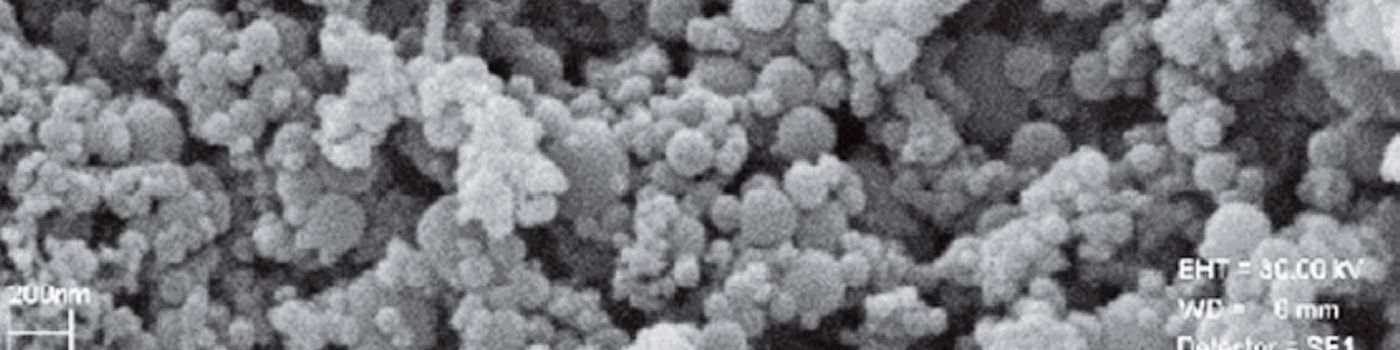
For conservation work, metakaolin is the only artificial pozzolan with a proven track record. Its clean chemistry and fine particle size make it compatible with lime, producing a gentle pozzolanic reaction suitable for repair mortars and grouts. When used in small amounts, it can strengthen lime mortars without blocking breathability.
Other industrial pozzolans, such as fly ash or slag are more problematic. They produce mortars that are too dense, too quick to set or chemically unstable in the long term. Some also carry impurities or trace elements that may lead to staining or salt formation. In short, while artificial pozzolans can help reduce waste and emissions in modern construction, they should be used with great care — or not at all — in heritage work. The chemistry that benefits concrete does not necessarily benefit old walls.
Natural volcanic pozzolans still remain the benchmark: their slow reactions, balanced microstructure, and proven durability make them uniquely suited to conservation.
After more than a century of industrial cement production, modern conservation is slowly circling back to the same principles that guided the Romans: balance, breathability and durability through chemistry that works with the wall, not against it.
As the limitations of hard, impermeable mortars became clear — trapped damp, salt decay and brittle failure — conservators began to look again at traditional materials. Research into ancient Roman mortars in the late 20th and early 21st centuries confirmed what time had already shown: volcanic pozzolans can give lime mortars long-term stability without losing flexibility or vapour permeability.
This rediscovery marks the return of true water limes, reinterpreted through modern science rather than replaced by industrial shortcuts.
Modern microscopy and chemical analysis have revealed why Roman pozzolanic mortars performed so well. Their volcanic additives — rich in reactive silica and alumina — combined with lime to form long-lived, self-healing minerals such as calcium–aluminium–silicate–hydrates (C-A-S-H). These minerals bond deeply into the structure, creating a durable, slightly elastic matrix that tolerates moisture and movement.
Laboratory tests now confirm that these reactions continue for years, giving mortars strength that grows with time rather than peaking early and decaying. This “living chemistry” is one of the main reasons Roman structures, from aqueducts to harbours, have survived millennia.
Today, genuine volcanic pozzolans are once again being quarried and supplied for conservation work — often from the same geological sources used historically, such as Italy and Greece. Other natural materials, like finely ground pumice, tuff or trass also serve as mild pozzolans suitable for lime-based mortars and plasters.
These products differ from cement additives in both scale and purpose. They are not industrial waste but carefully selected minerals ground to a specific fineness. When blended with lime, they produce a gentle water-setting reaction that complements the wall’s natural behaviour rather than altering it.
The reintroduction of the pozzolanic water limes restores the missing half of the traditional lime spectrum — the water limes that Europe largely forgot after the Middle Ages.
Air limes and pozzolanic limes together once formed a complete toolkit: one for dry, breathable conditions, the other for damp or moisture-exposed environments. Modern conservation is now re-learning to use both appropriately, rather than relying on hydraulic or cement-based substitutes.
In this approach, the binder is chosen not by its strength rating but by the environment of the wall:
The result is a repair that breathes, ages and moves in step with the original structure.
This rediscovery is more than a technical improvement — it represents a change in philosophy. The industrial era sought strength, speed, and economy. Conservation seeks compatibility, balance and longevity.
Modern research into Roman materials has shown that sustainability is not always about recycling waste or increasing strength. Sometimes it means returning to natural processes that have already stood the test of time. Volcanic pozzolans, when used intelligently, embody that principle: a material that strengthens lime without turning it into cement, resists damp without sealing and lasts centuries instead of decades.
The history of lime and pozzolans has come full circle. The Romans perfected the partnership between lime and volcanic minerals. The industrial age replaced it with faster, hotter, clay-based chemistry. Modern conservation is now rediscovering that slower, balanced, natural approach is the most sustainable way to preserve old buildings.
In the end, the lesson is simple: durability in masonry is not achieved by force, but by harmony between lime, stone, water and air.
Here are some other related pages that you might want to read to broaden your knowledge in this field.
Here are some practical solutions related to this topic:
Here are the some recommended materials / products that can help solving or dealing with some of the problems discussed on this page.
Here are some of our projects where we have dealt with some of the issues discussed on this page:
Here are some photos demonstrating these concepts. Click on any image to open the photo gallery.
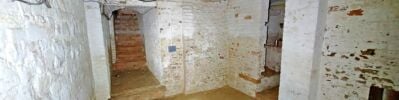
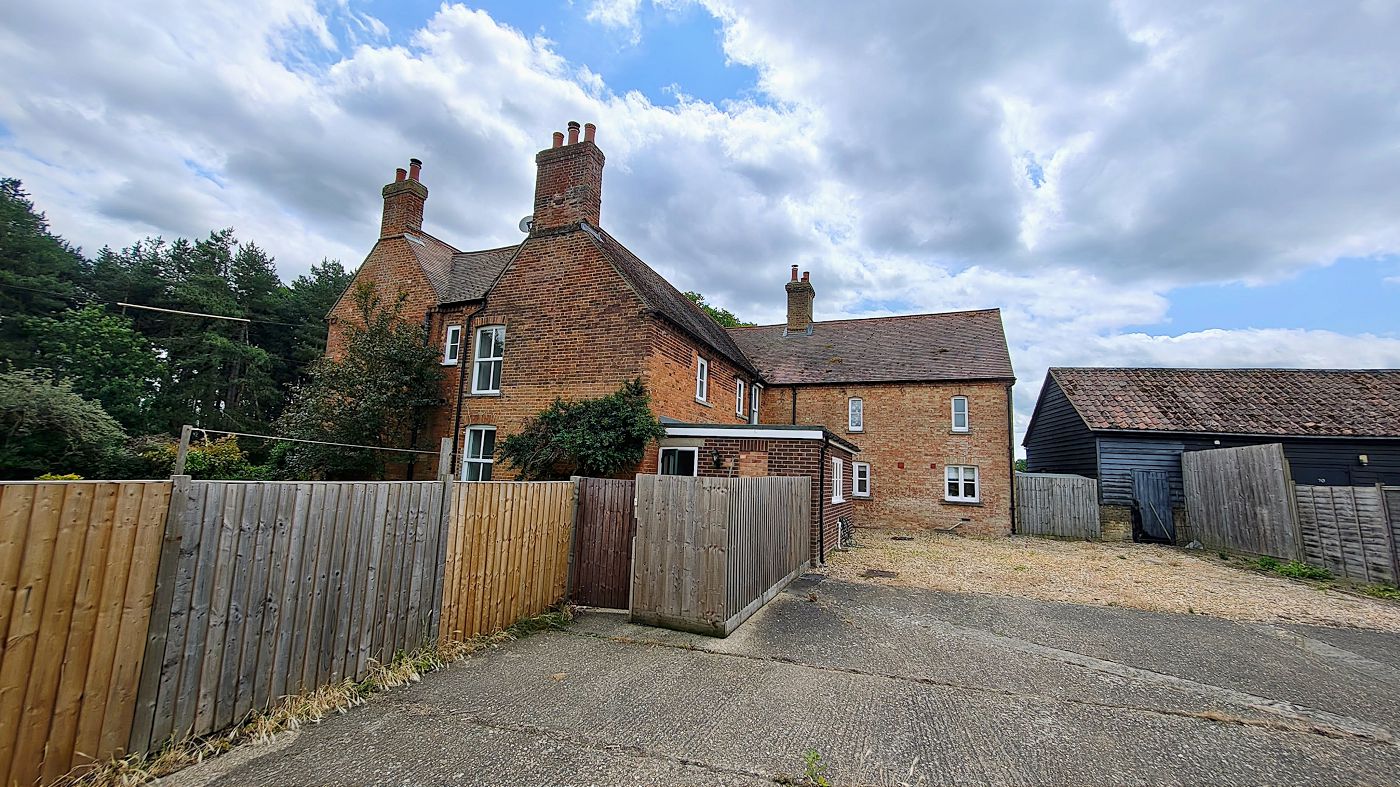
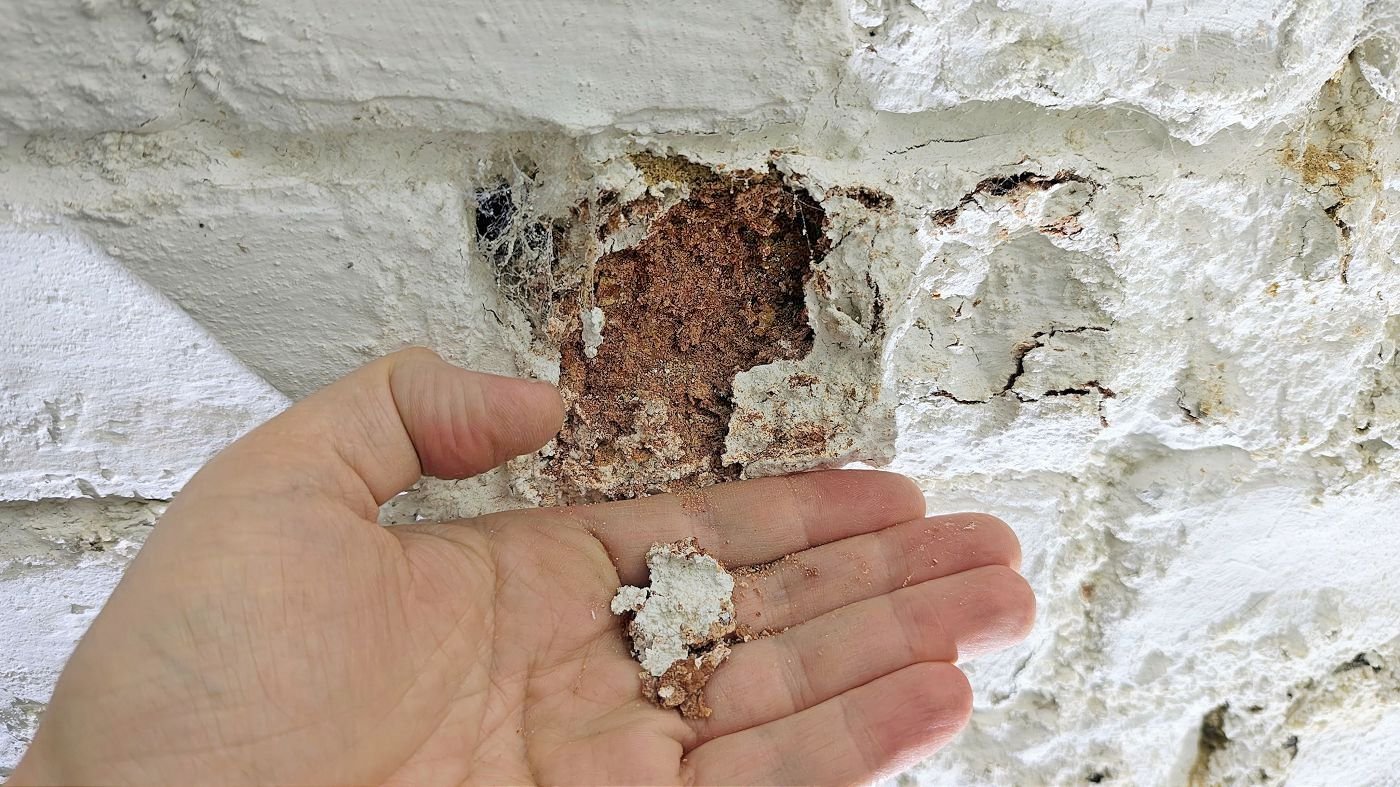
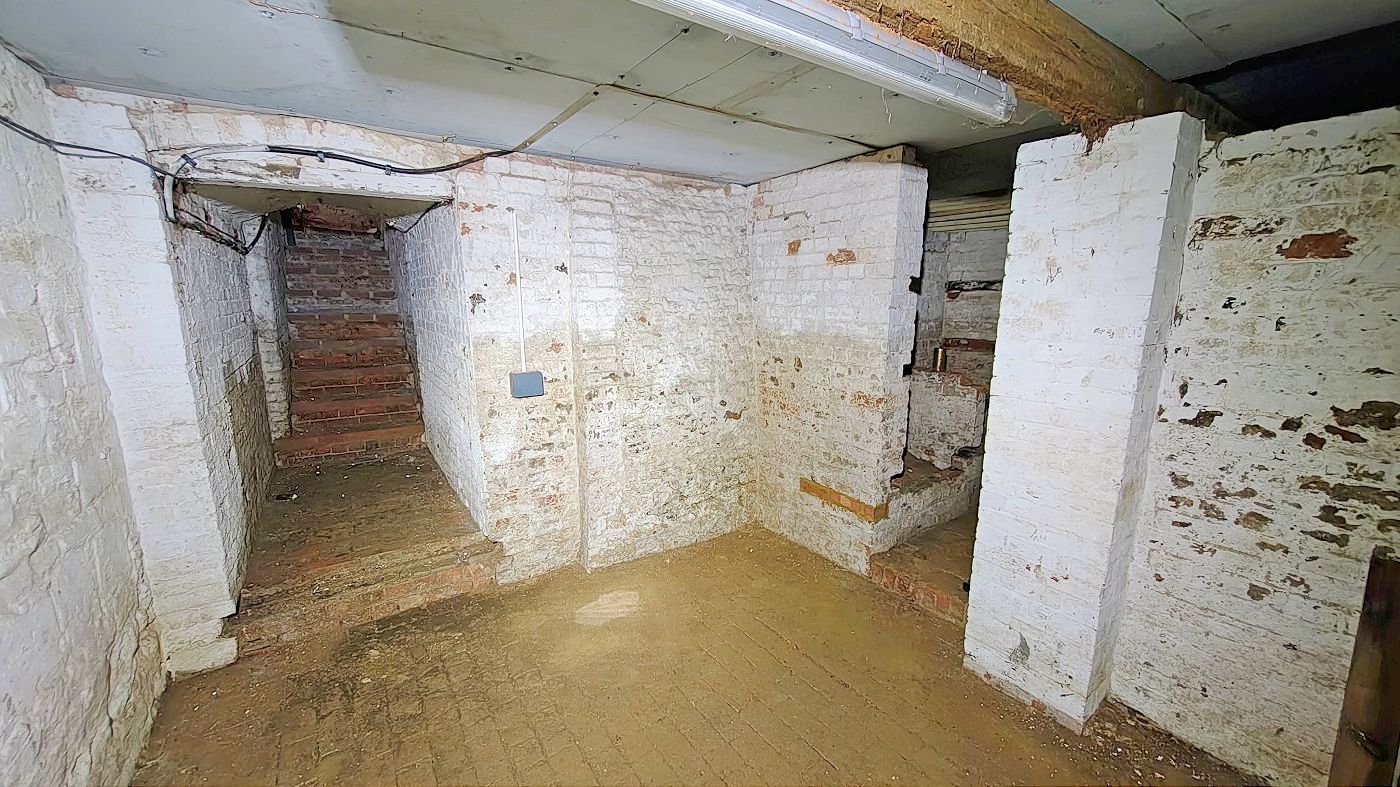
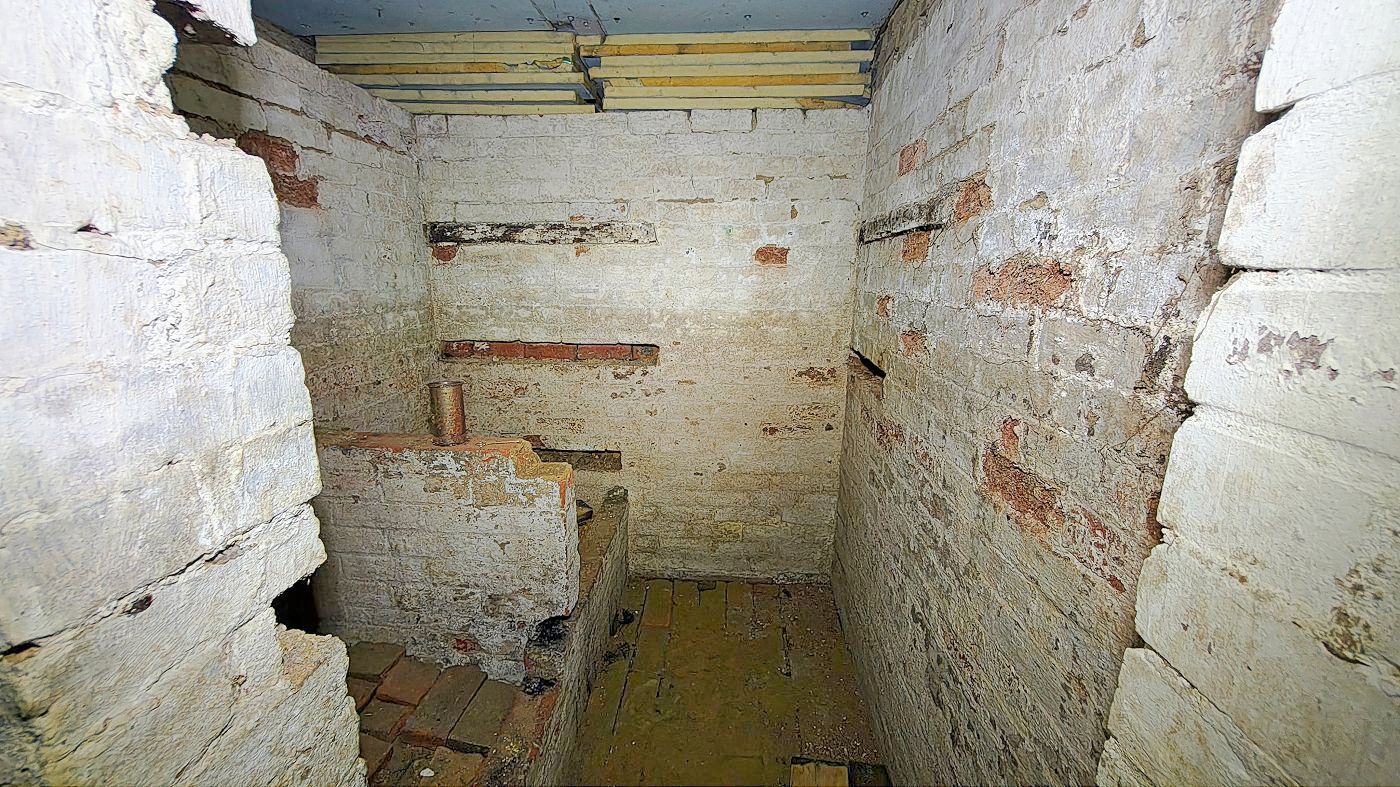
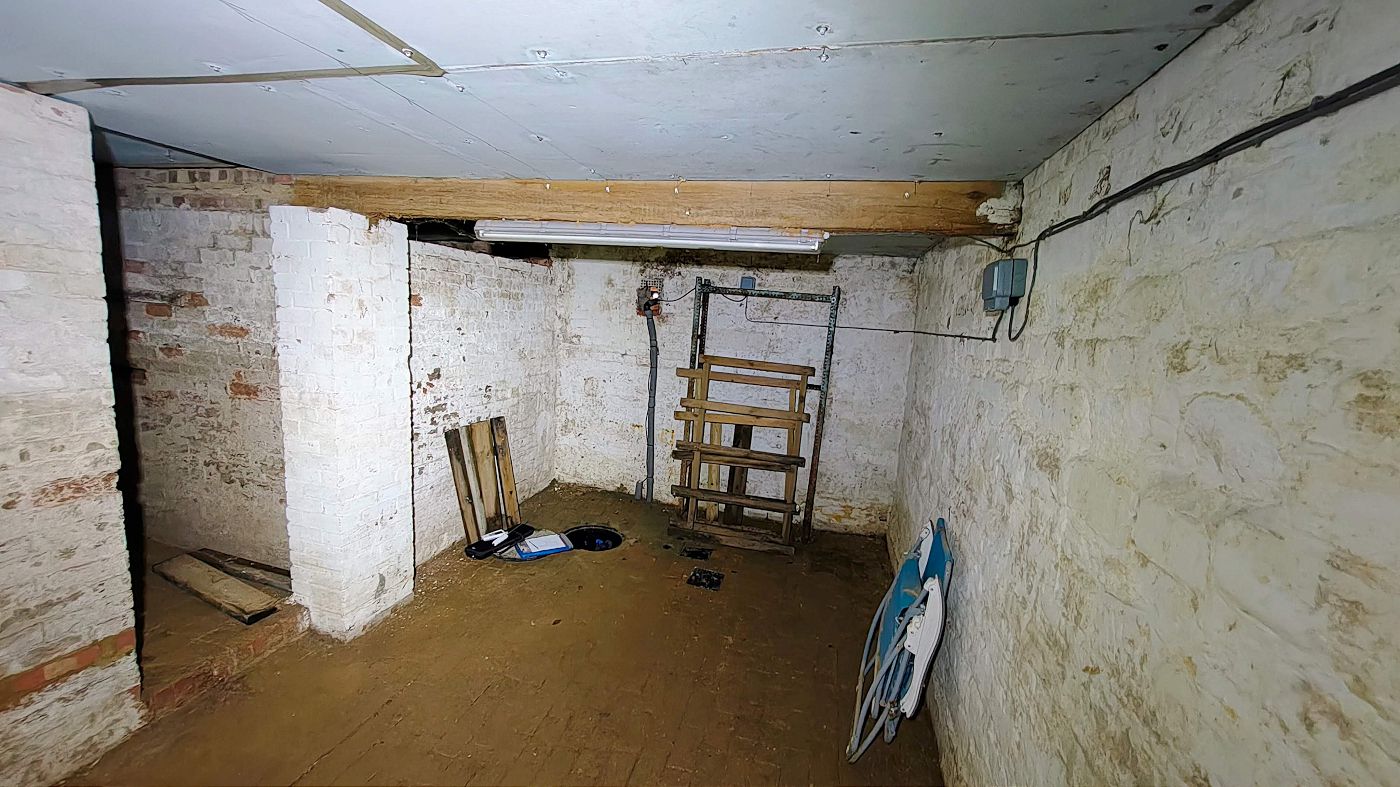
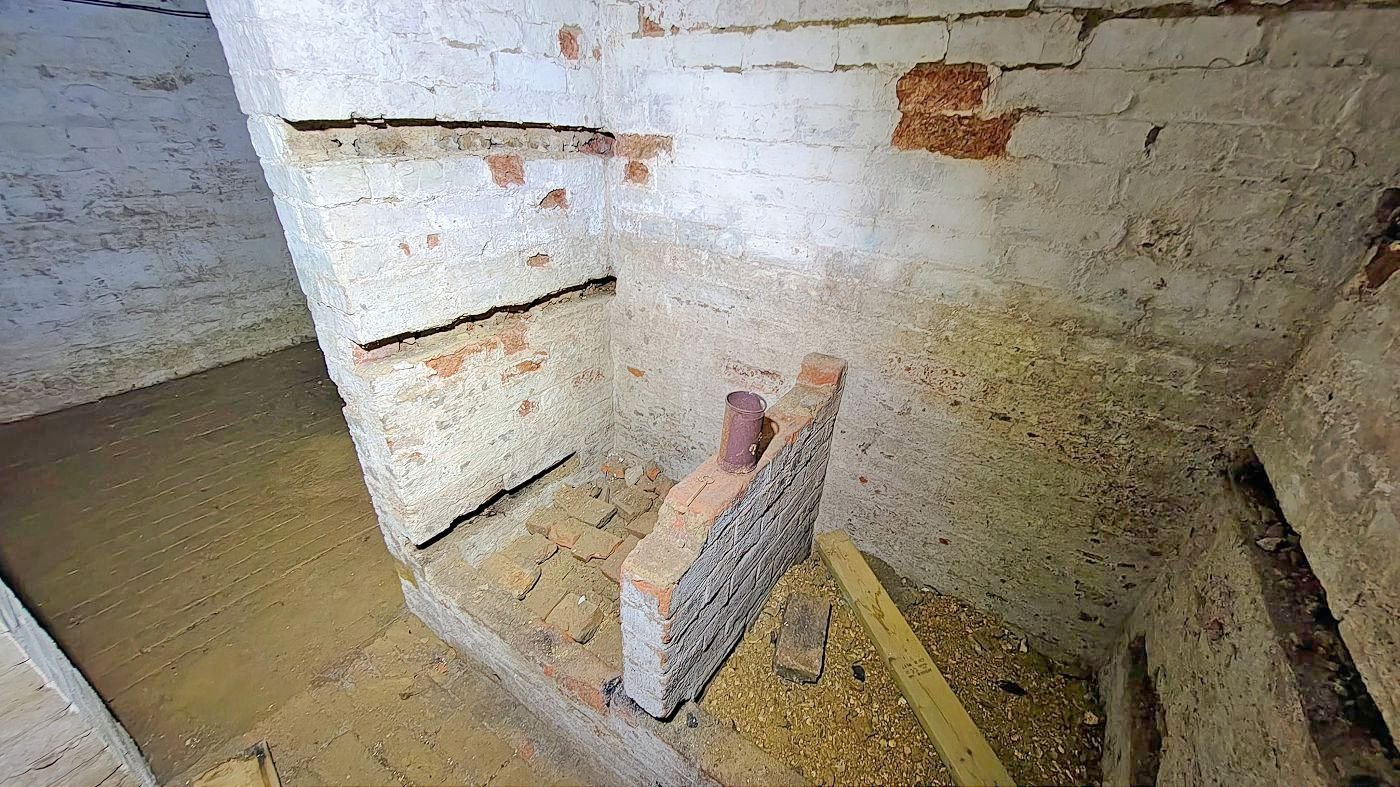
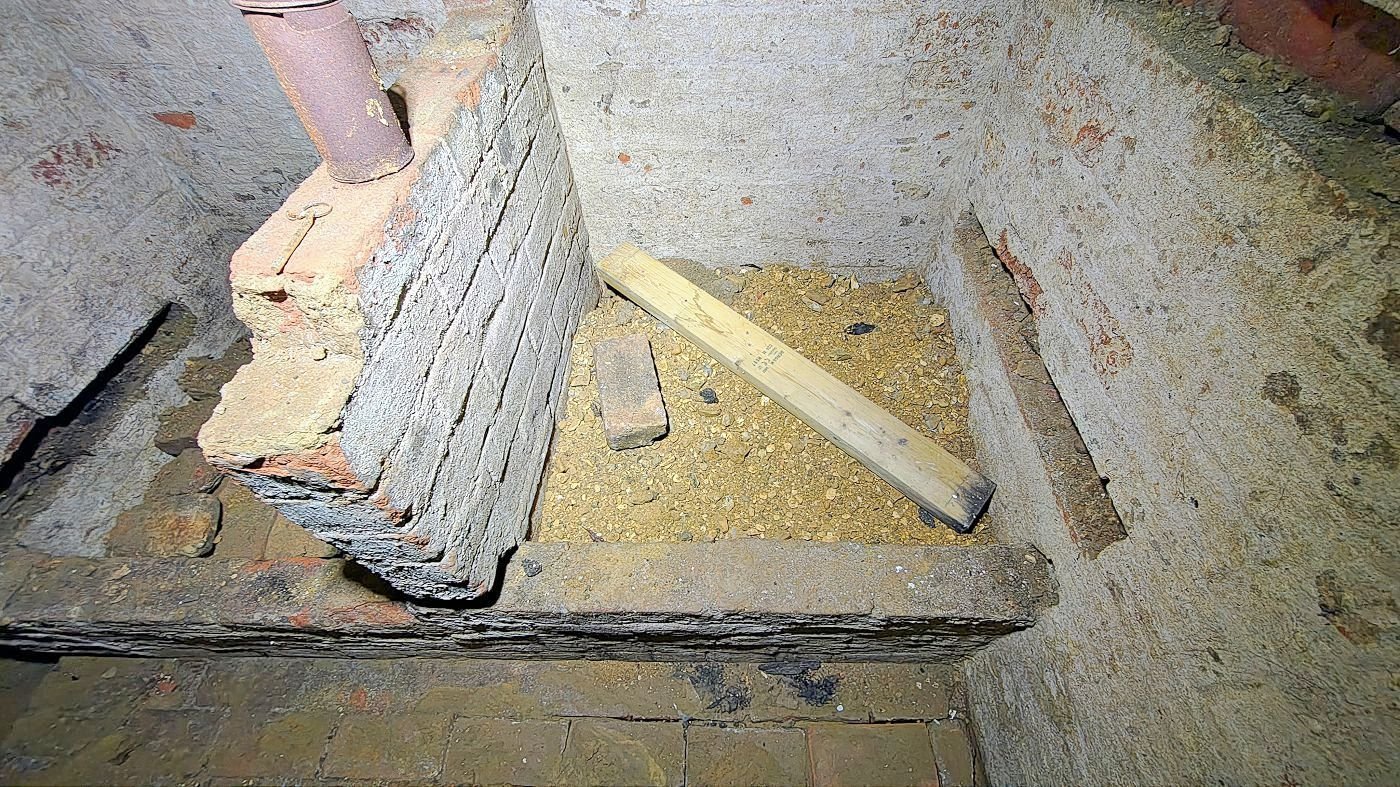
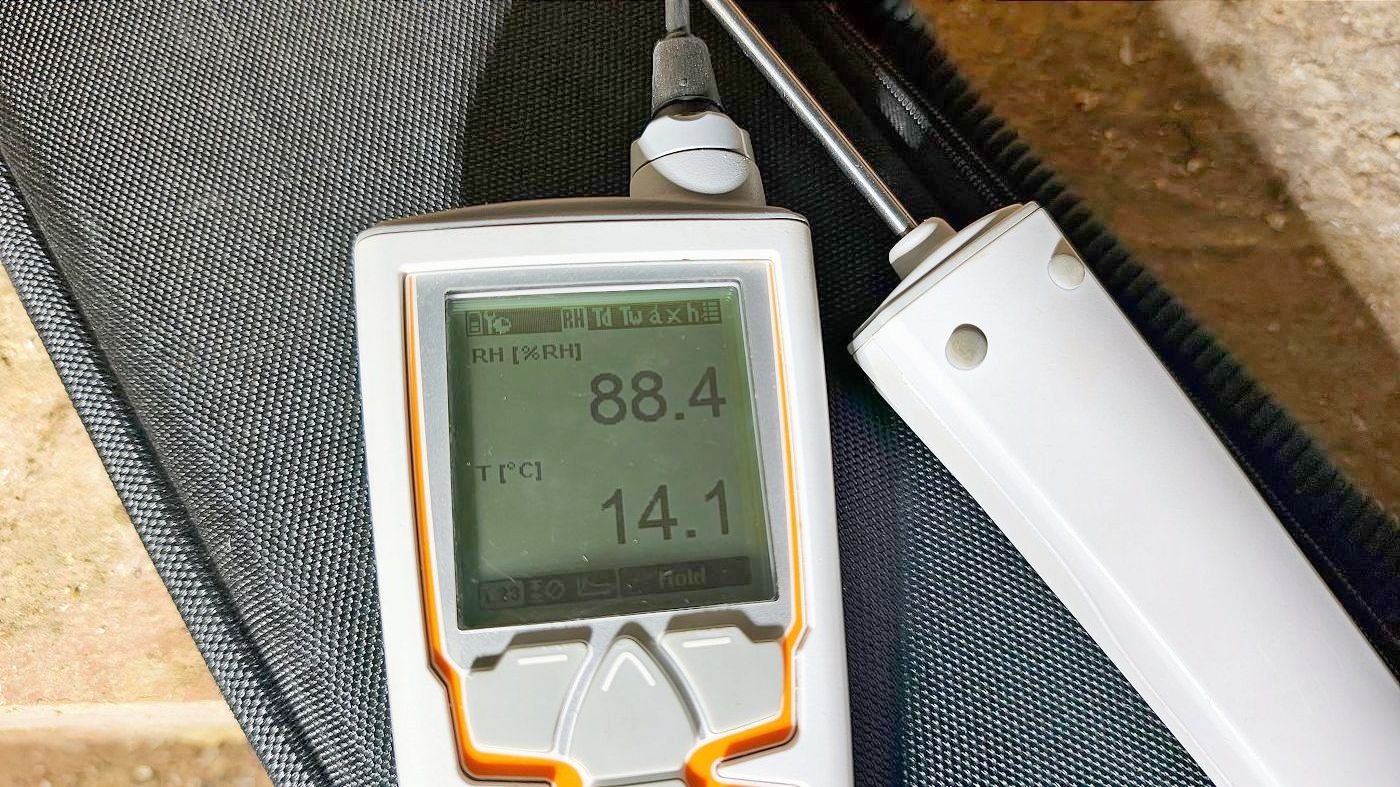
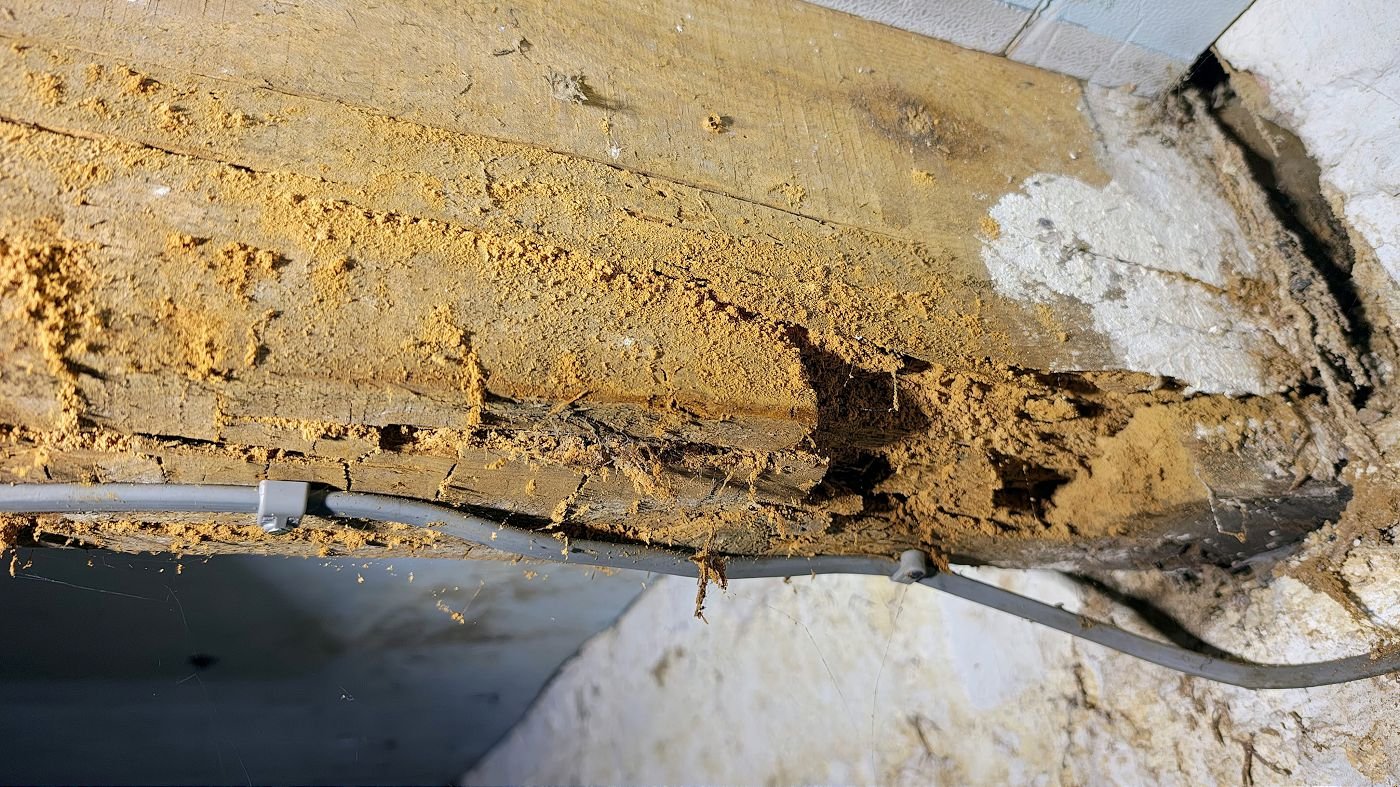
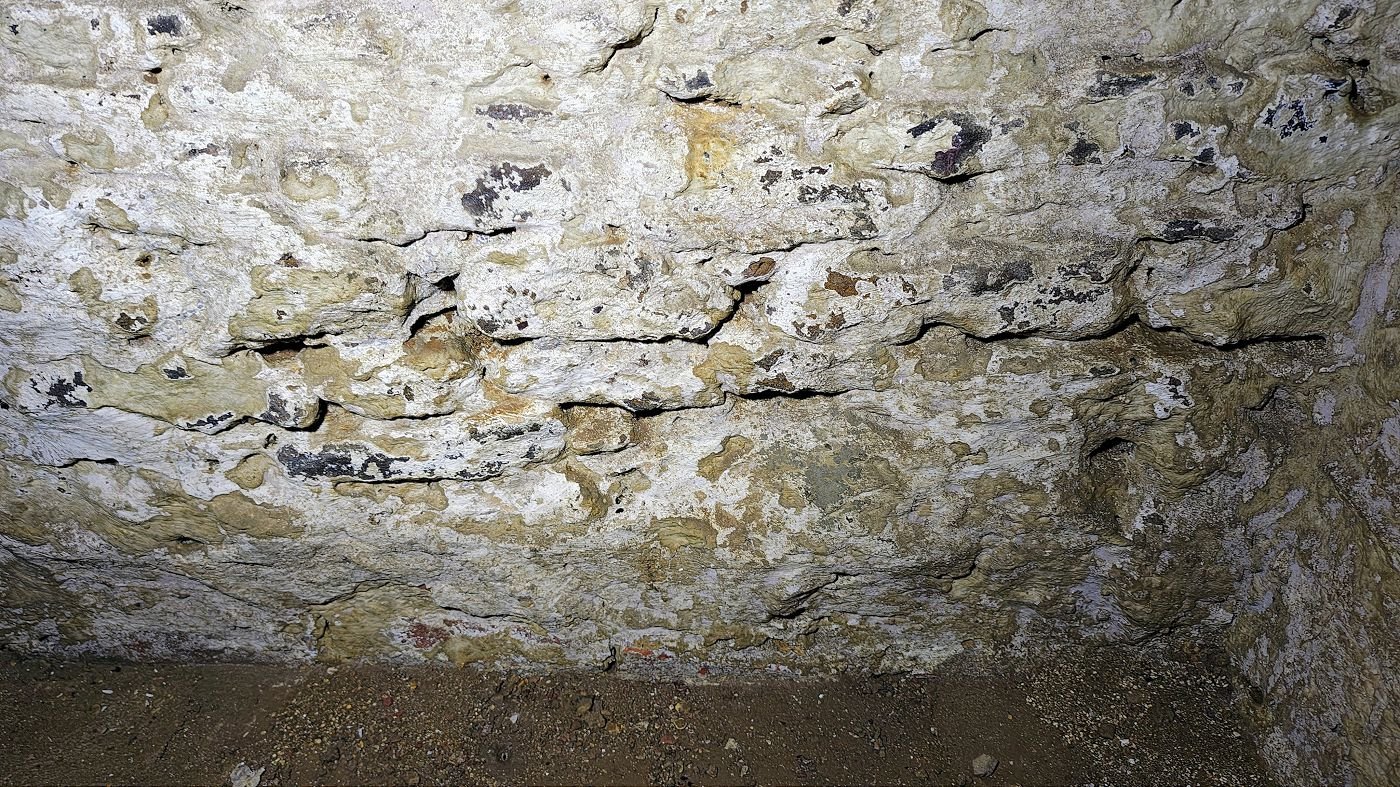
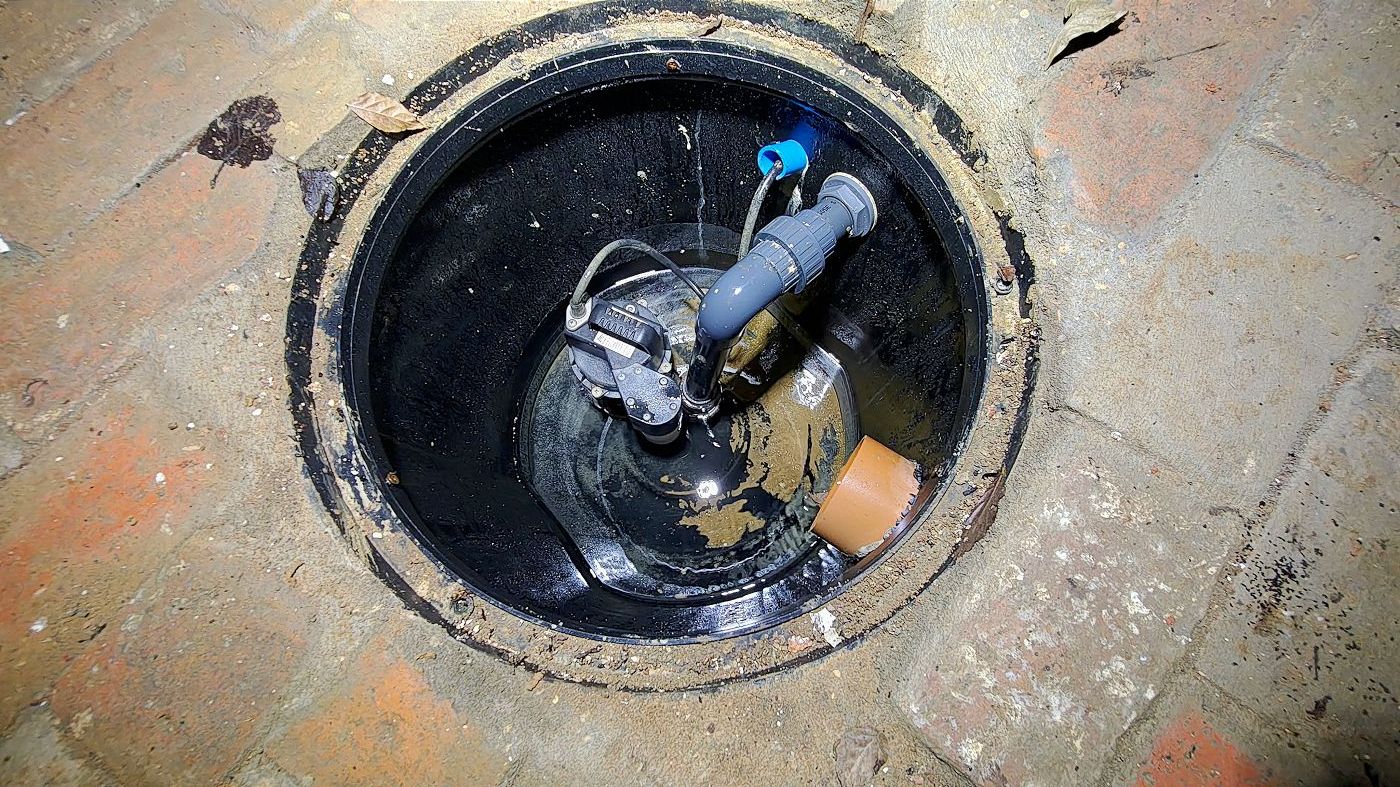
This old Victorian farm building sits in an area with an exceptionally high water table and, as a result, suffered regular winter flooding. Groundwater would rise into the cellar to a depth of approximately 1.2 metres, leaving the space submerged for much of the season. Despite the installation of a sump pump, the volume and persistence of incoming water proved too great to manage, and the cellar remained flooded throughout the winter months.
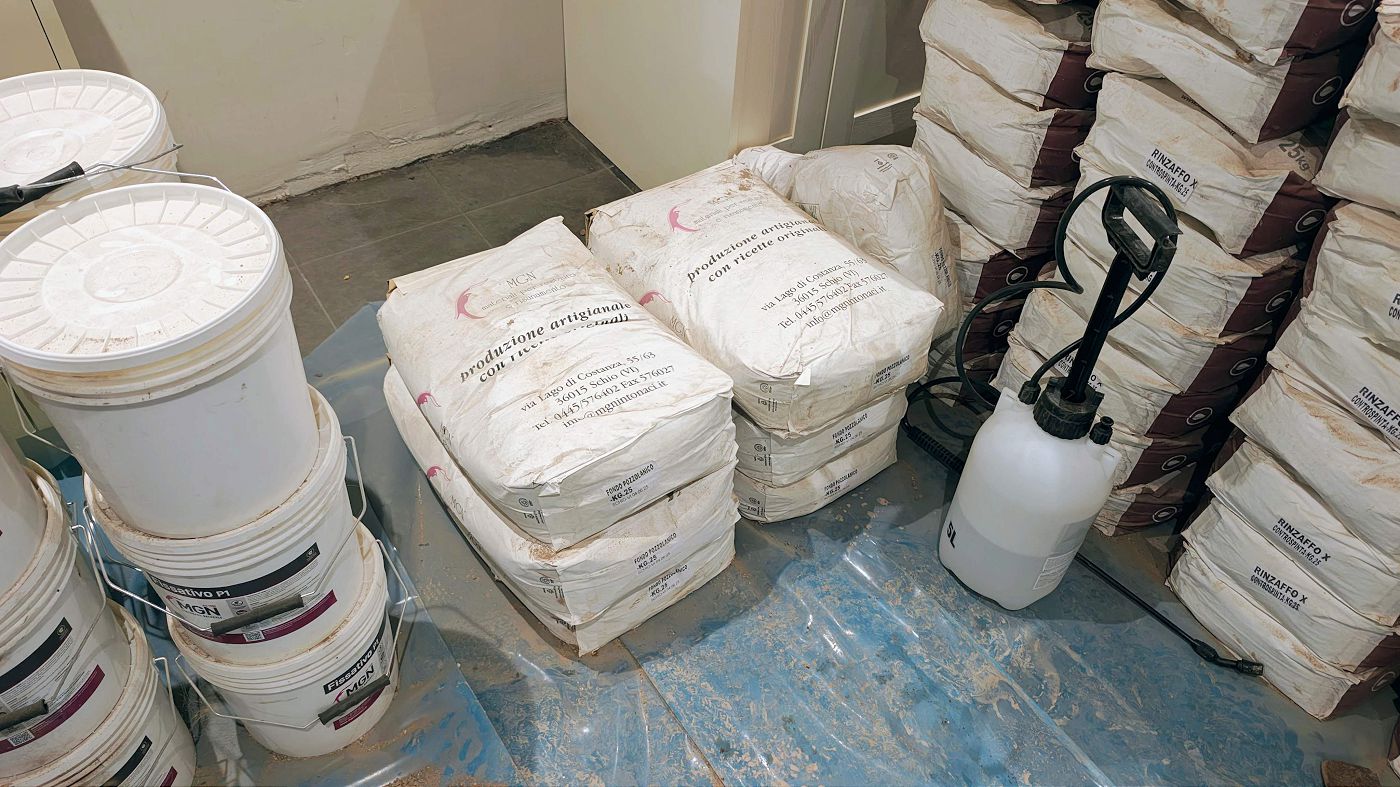
The issue was resolved using Rinzaffo MGN Roman waterproofing lime plaster, a relatively simple yet highly effective intervention. This heritage-friendly system provides a complete barrier against liquid water while still allowing the wall fabric to breathe, making it particularly well suited to historic buildings. The result is a dry, stable cellar achieved without compromising the long-term health of the original masonry.
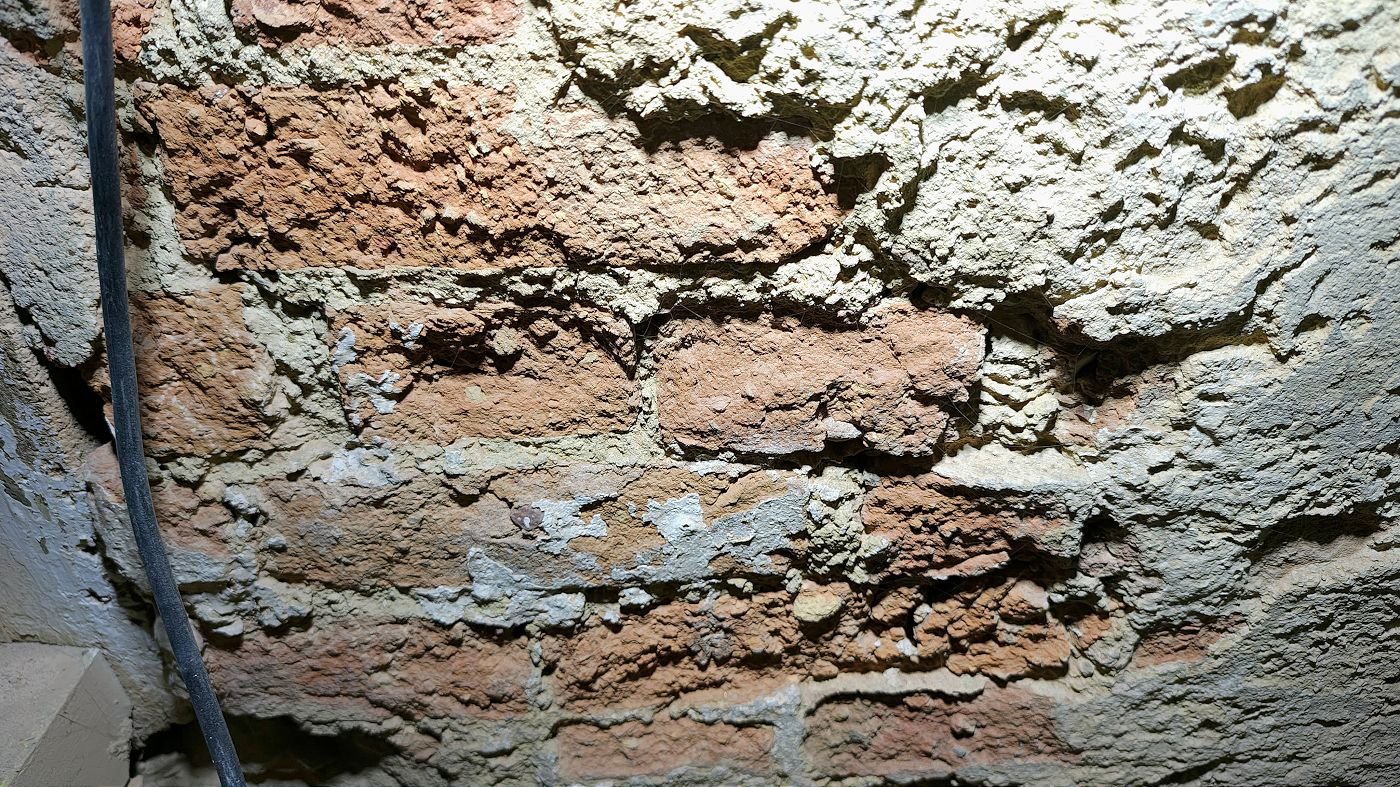
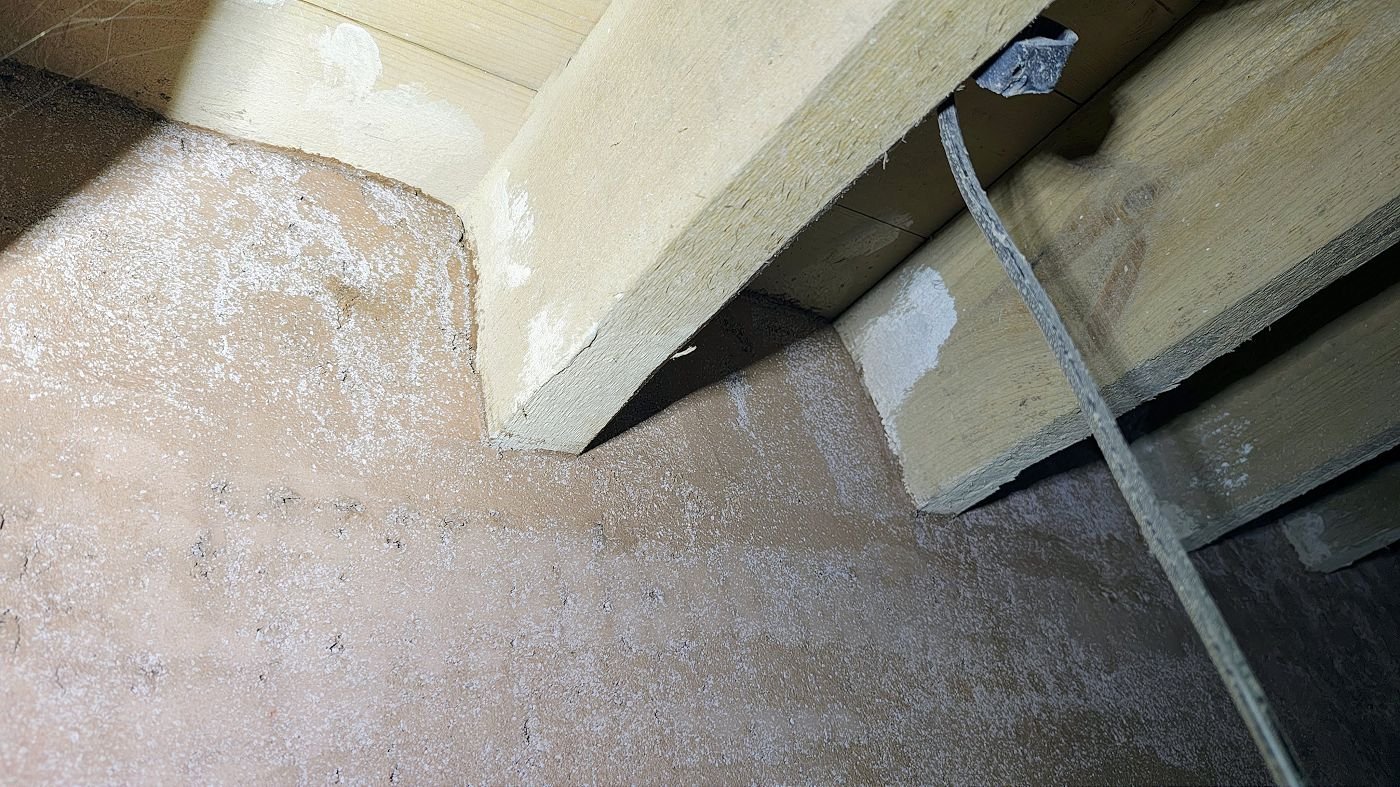
The Salt Warehouses of Venice (Magazzini del Sale) date back to the beginning of the 15th century. They were built to store a very precious trade commodity: salt. Situated across 9 large halls, the salt warehouse could hold up to 4500 tons of salts.
As a result of its location (Venice) and its use (a salt storage) it is probably the most salty building fabric in the world. The only lime plaster capable of withstanding such an extremely saline environment is the Rinzaffo MGN Roman salt-resistant base coat, which has been used during the renovation of this building.
This plaster is also gentle to the historic fabric – when it reaches its end of life, it does not damage the historic wall fabric (in this case the nearly 600-year old) wall fabric, leaving the medieval clay bricks intact.


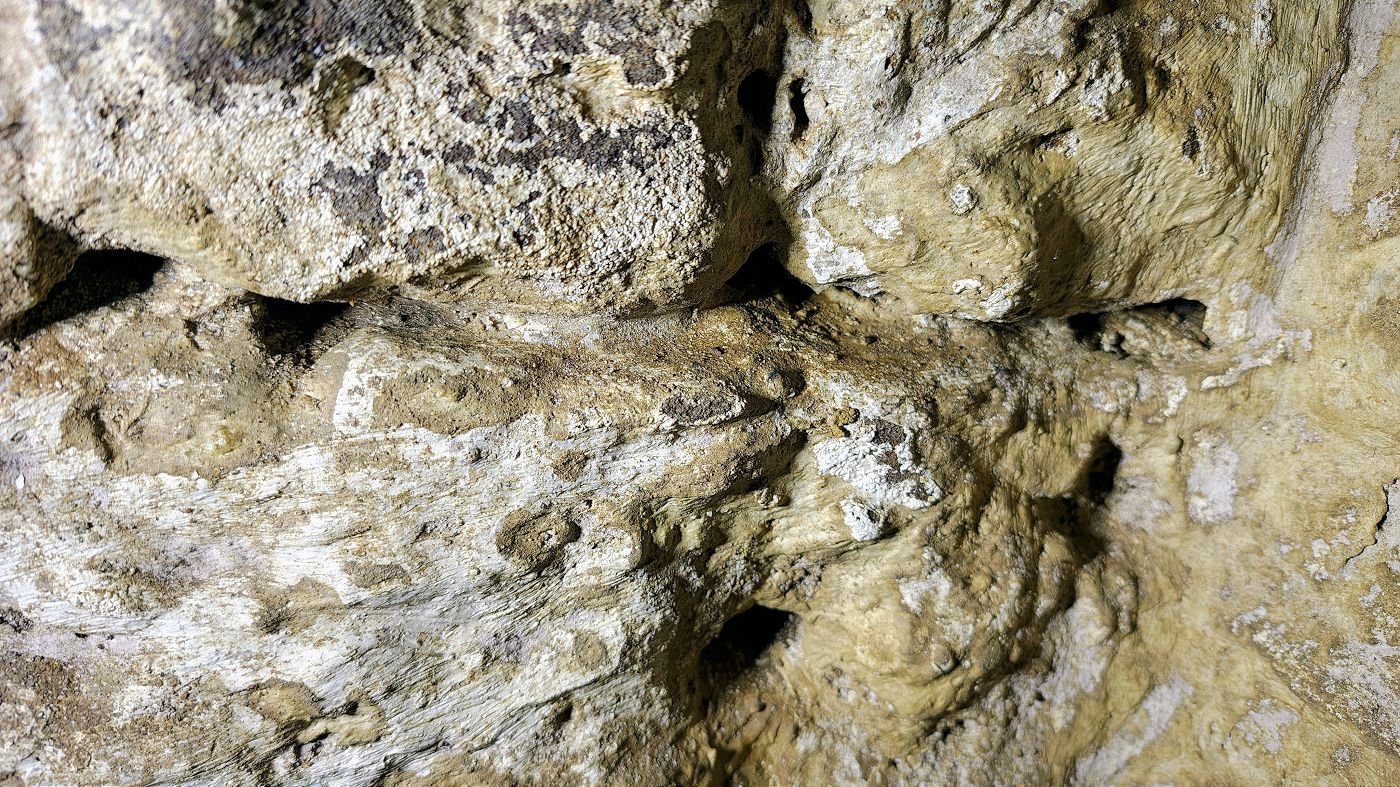
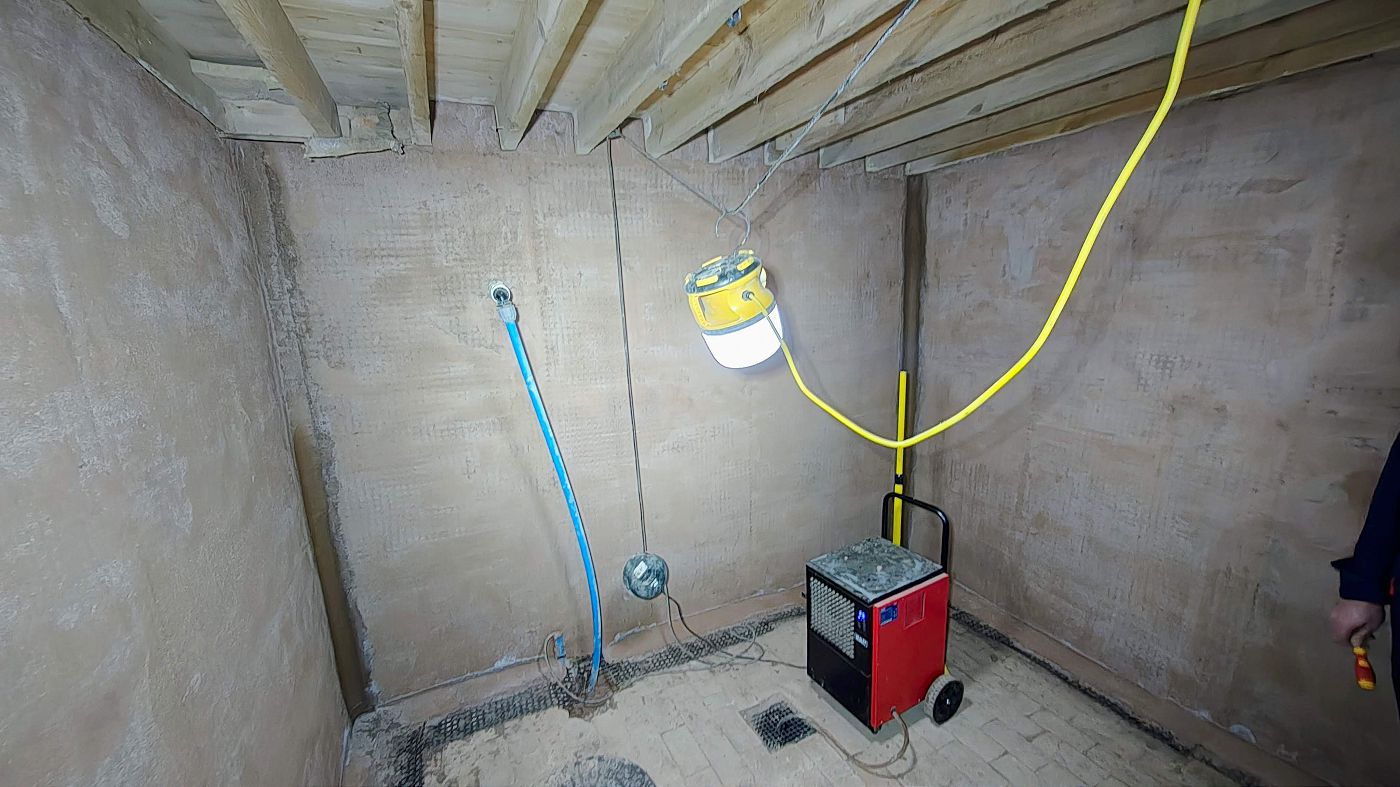
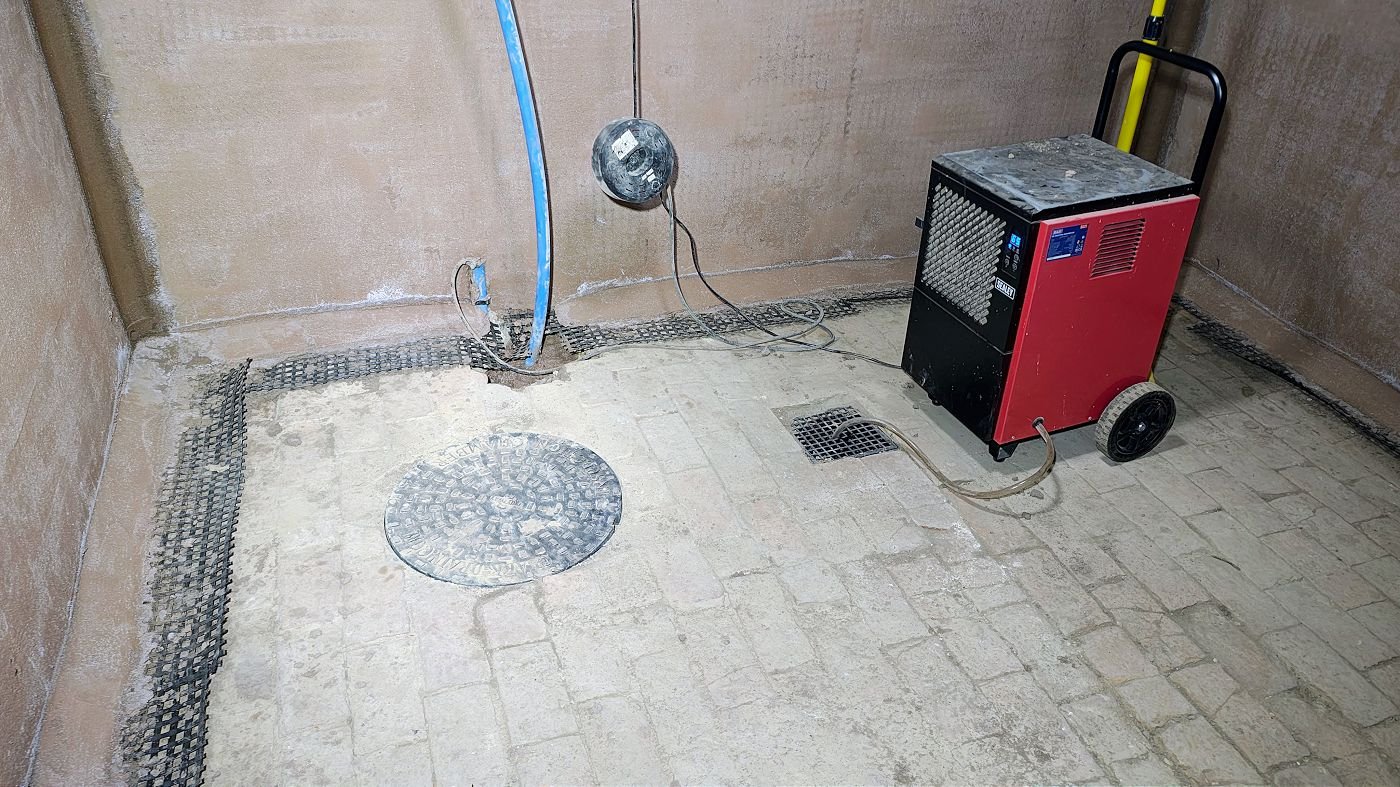
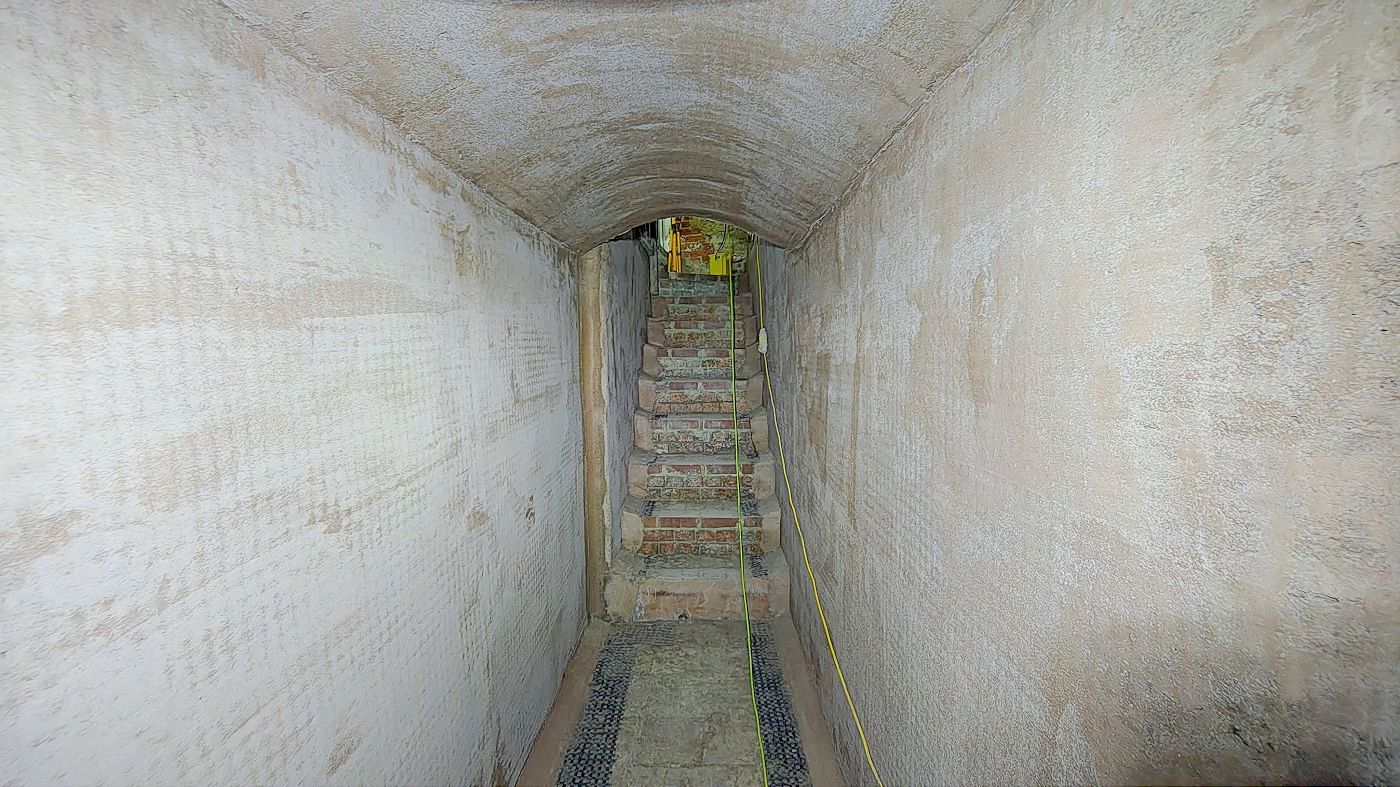
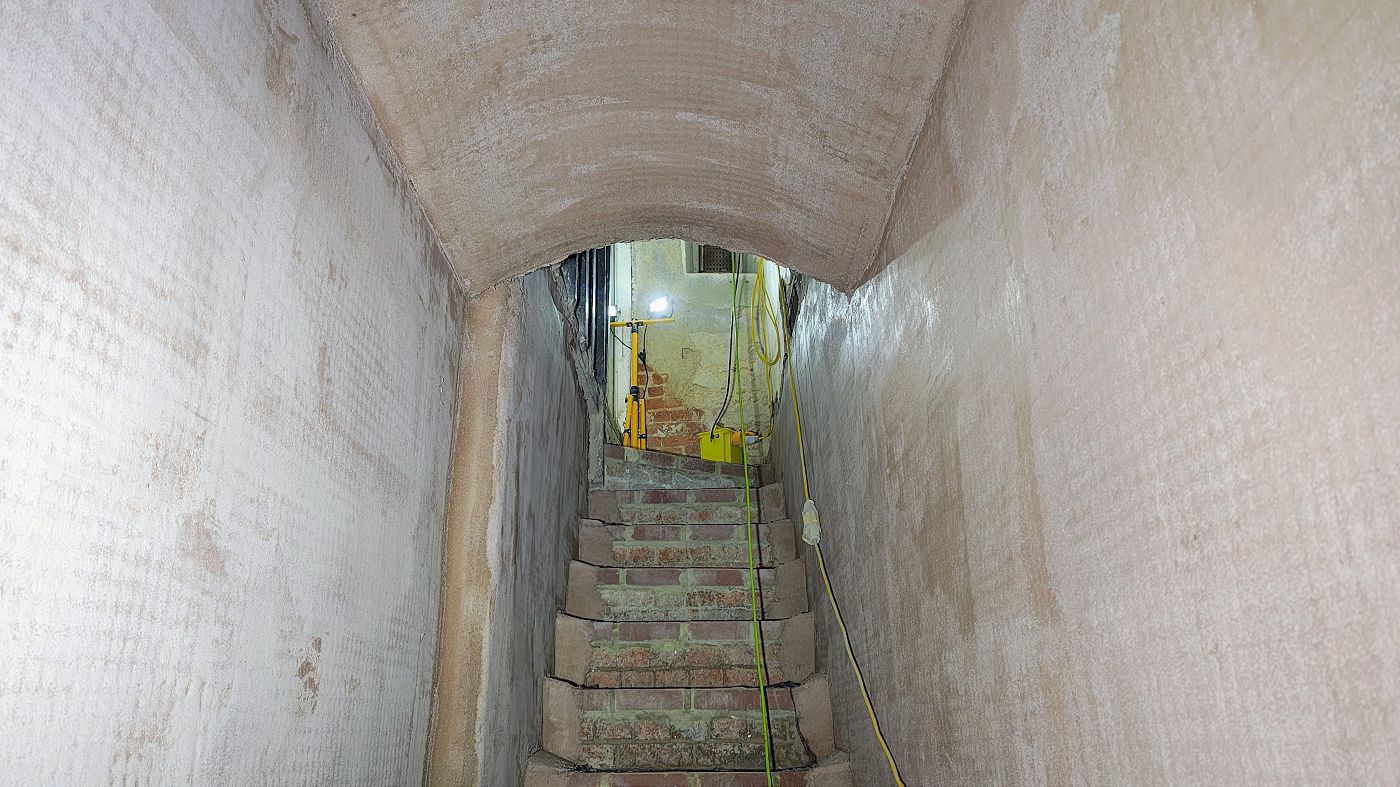
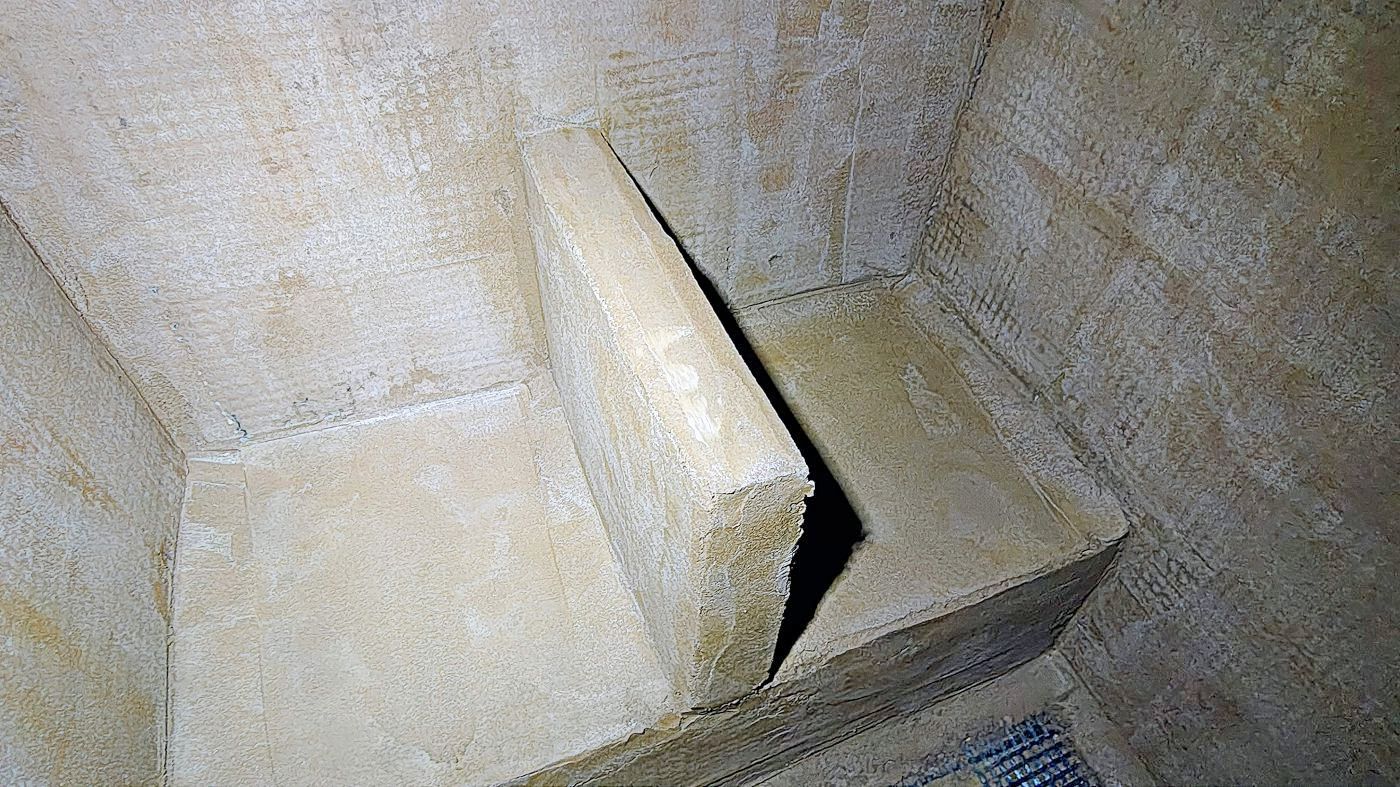
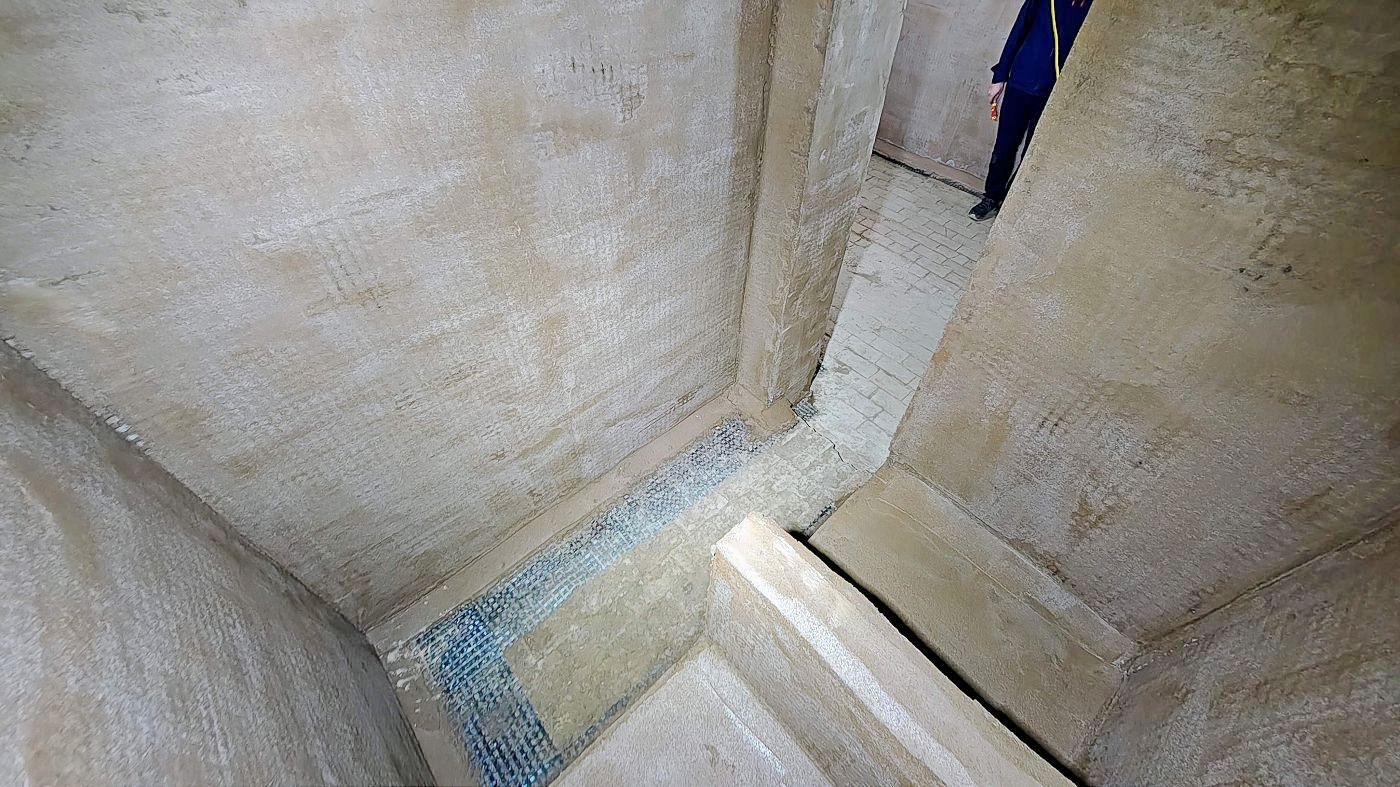
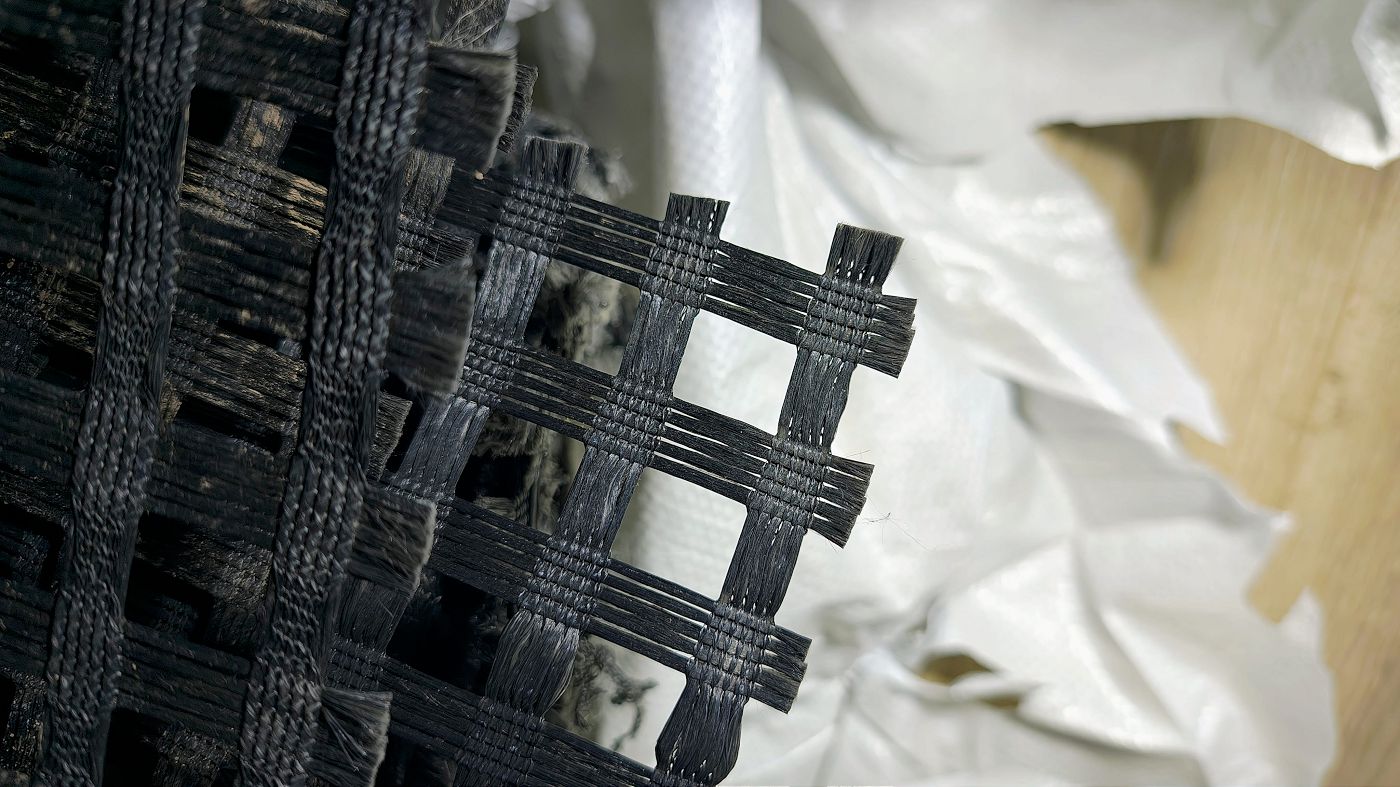
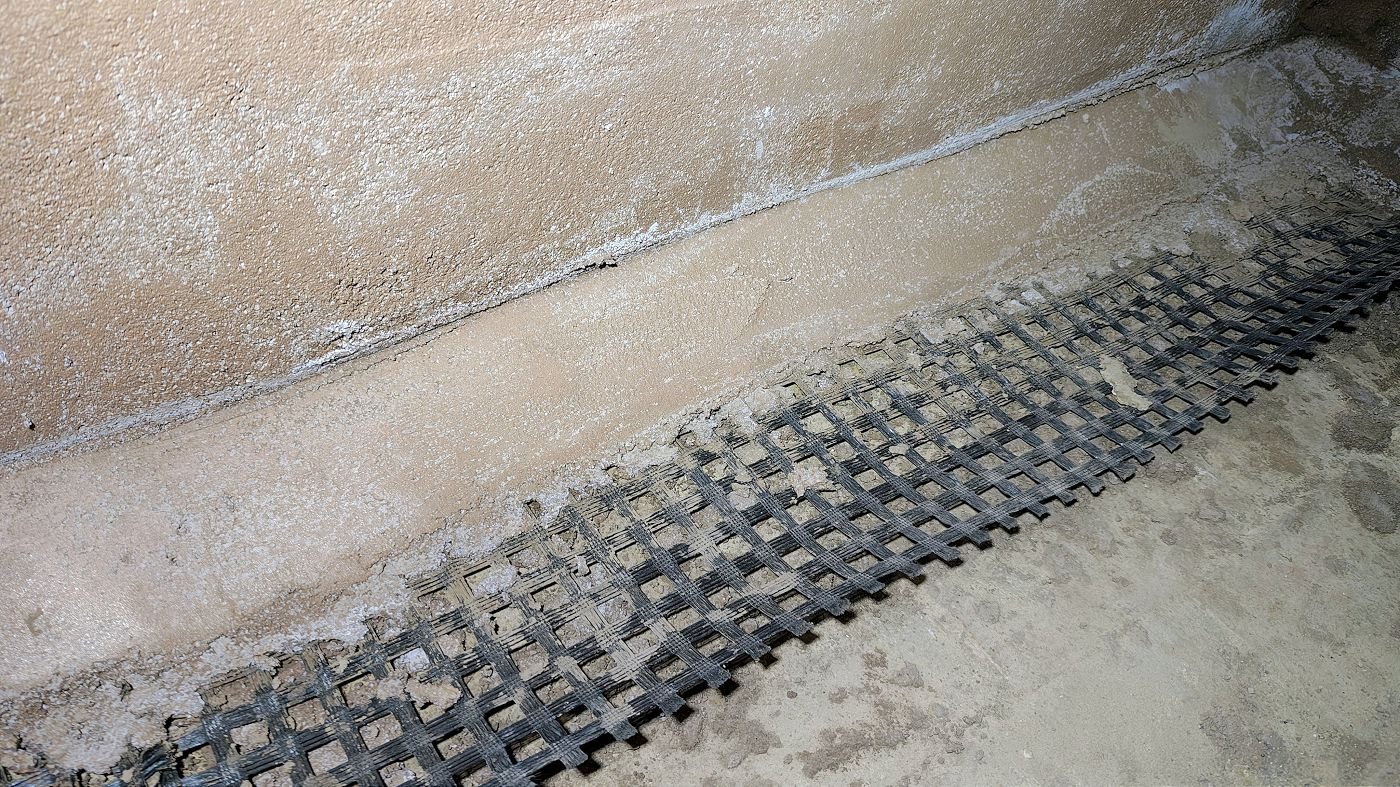
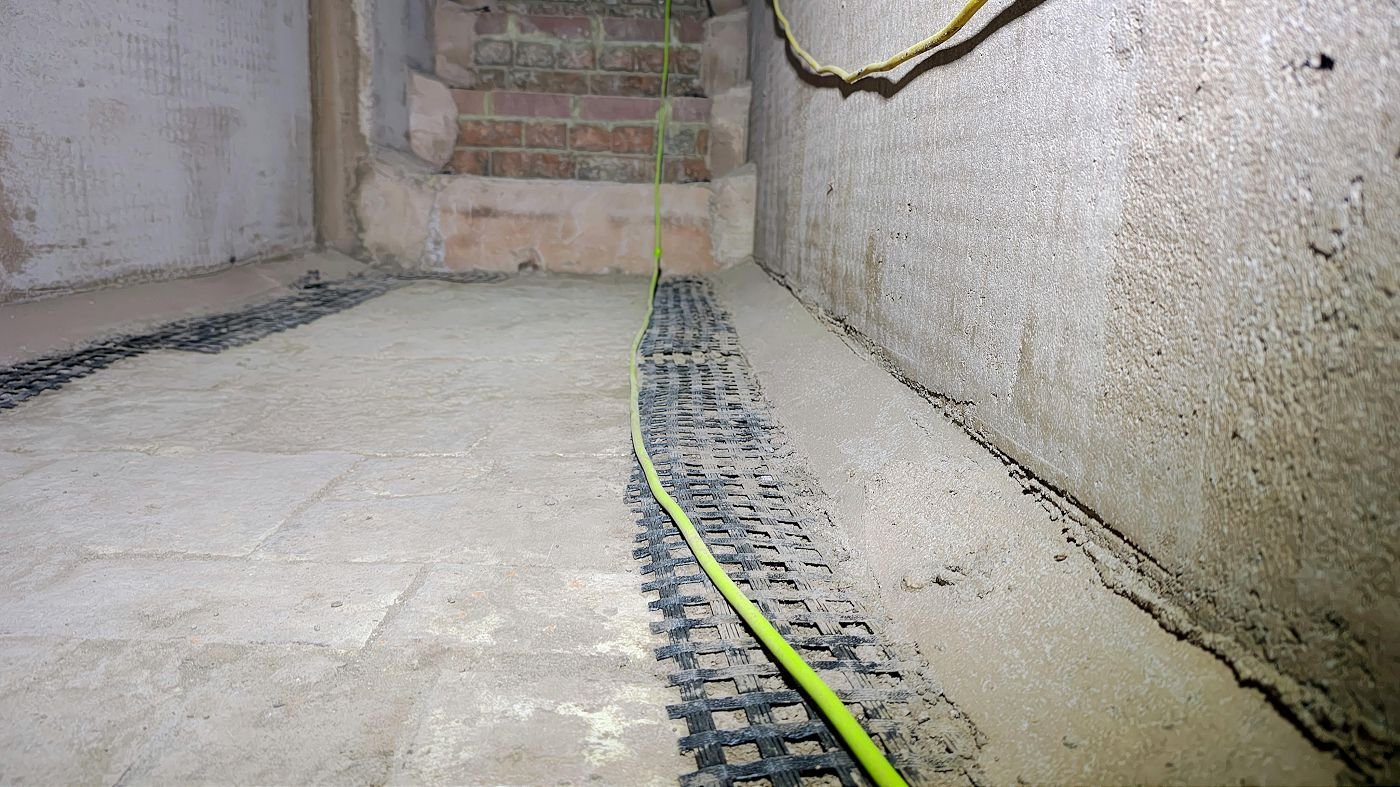
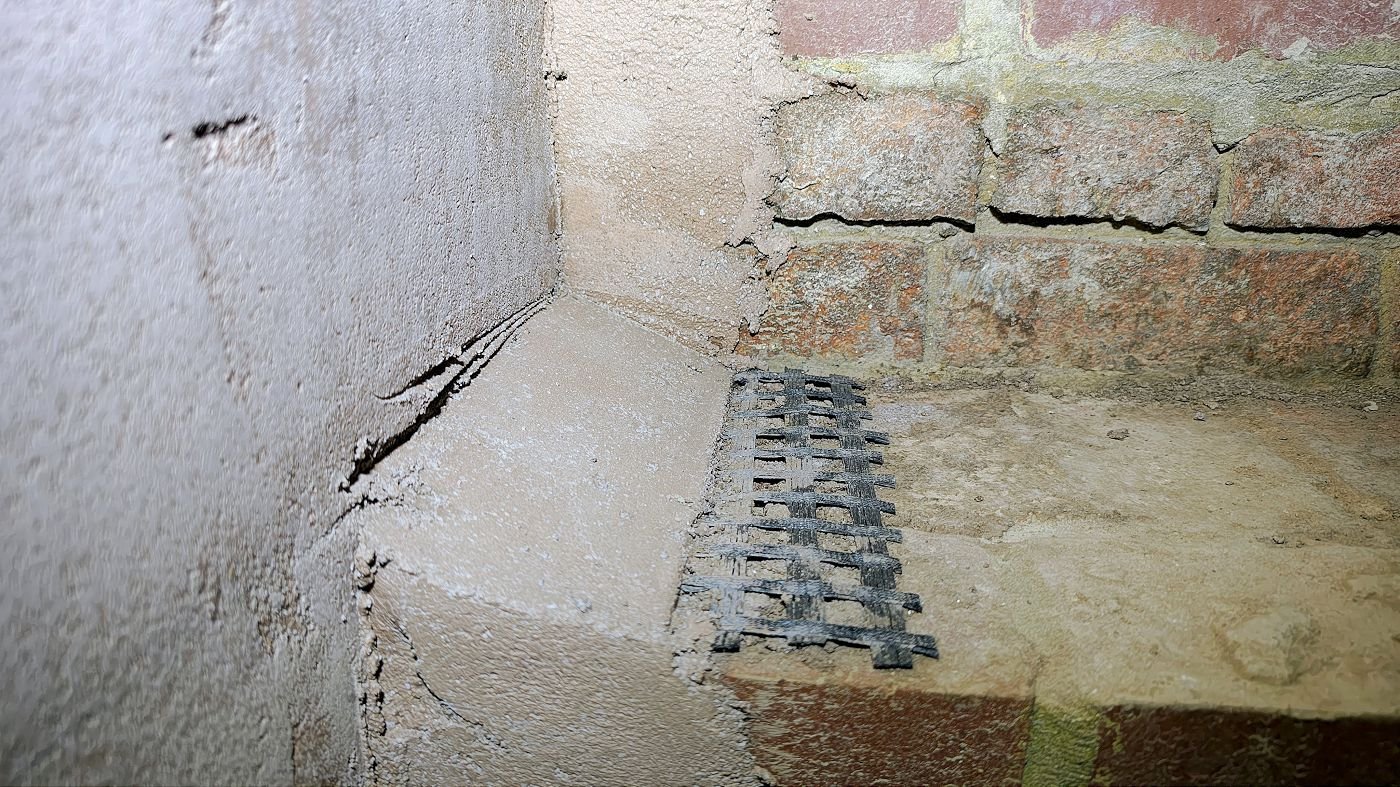
Waterproofing the service area of an old crypt with traditional Roman lime waterproofing and Cocciopesto plasters. On some parts of the room the MGN Lime-Pozzolanic Tanking Slurry System has also been applied to reinforce the waterproofing in critical areas.